
When Tim and I were planning our Hokkaido winter itinerary, we were initially looking for the quickest way to get to Niseko. You see, years and years ago, we fell in love with snowboarding. We would watch documentaries about skiers and snowboarders going on epic adventures in far away places and dreamed we could experience that too. But we were college students so those dreams stayed dreams.
Fast forward ten years and we were finding that our dream of snowboarding in powdery Niseko could be reality.
So the basis of the Hokkaido leg of our Japan trip was snowboarding in Niseko. Then we found out that Sapporo, where we would have to land to get to Niseko, hosts an annual Snow Festival. So of course we had to add an exploration of Sapporo to our plans.
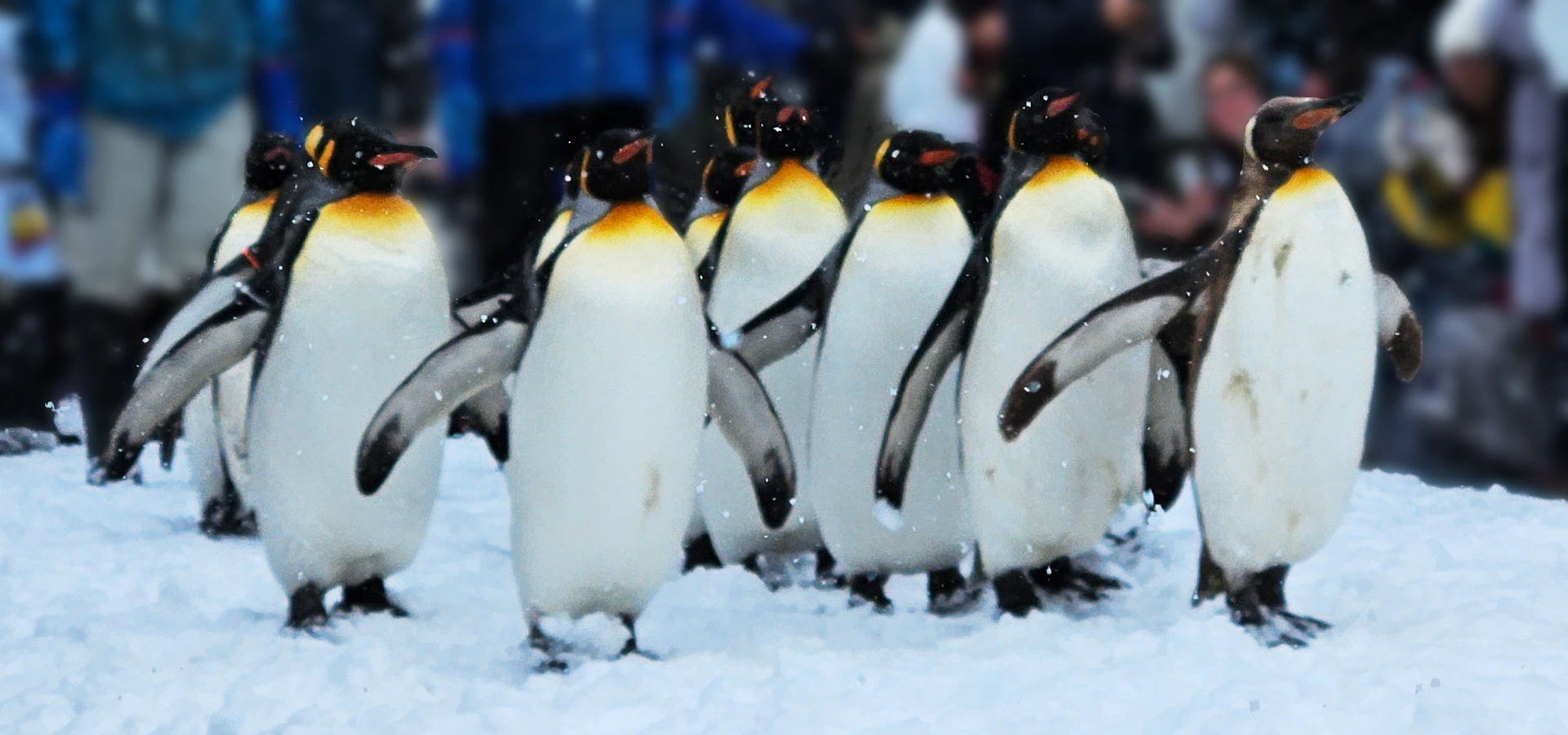
Then we stumbled upon photos of marching penguins somewhere northeast of Sapporo. Tim absolutely adores penguins.
So it turned out, on a bitterly cold Wednesday, Tim and I started our winter in Hokkaido with a flight from the Haneda airport in Tokyo to the Asahikawa local airport.
Quick Trip Summary: Hokkaido Winter Route
- The Route: Tokyo → Asahikawa → Sapporo → Niseko → Sapporo (New Chitose Airport)
- The Vibe: Winter festivals, world-class snowboarding, and finding warmth in local comfort food.
- Top Food Pick: A tie between Hokkaido’s signature soup curry to thaw out and the midnight katsu curry.
- Biggest Lesson: Booking a hassle-free, direct transport option (like the direct bus back to Sapporo) is absolutely worth the extra money. Navigating multi-step train and bus transfers in the snow is tough.
Traveling with only a backpack saved us from a much harder trip. To find out how we do it with only one bag, check out our packing list in our toolkit below.
Planning your next trip but don’t know where to start?
Join our newsletter to get our free Slow Travel Toolkit!
It includes our essential pre-departure checklist, a budget guide and tracker, and the packing list we used for 15 months of travel.
Table of Contents
Navigating a Japan Winter: Getting Around Hokkaido
When mapping out our Hokkaido route, we wanted to balance budget, convenience, and our preference for slow travel.
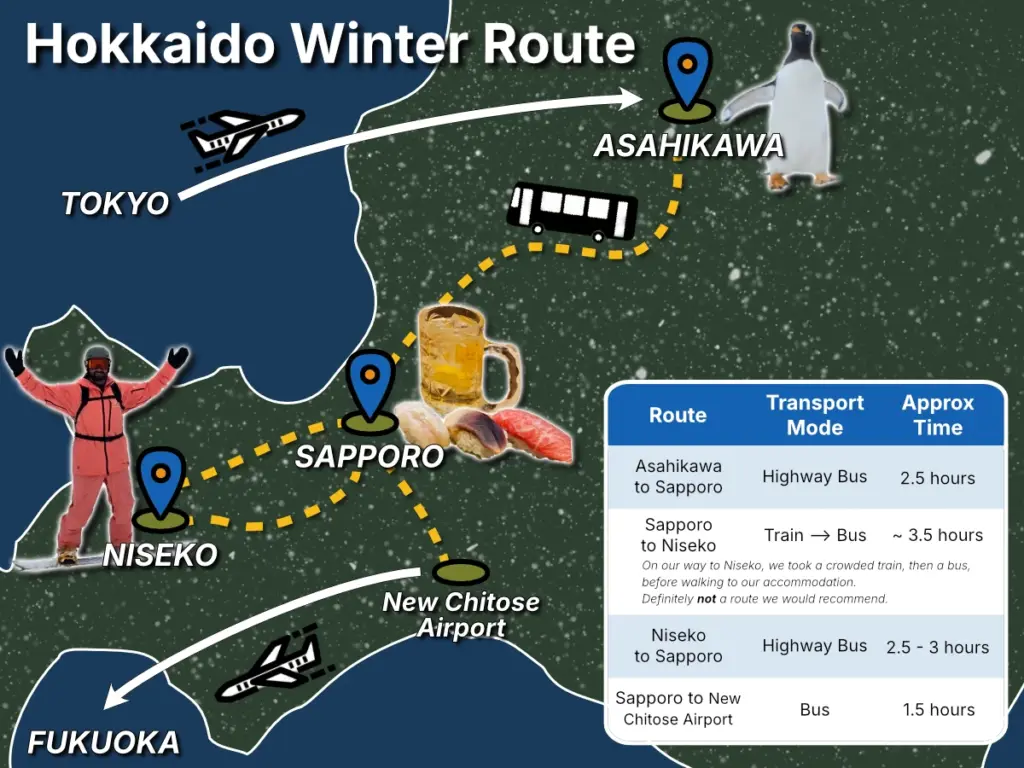
Our route looked a little something like this:
First, we flew from Tokyo to Asahikawa. From there, we took a highway bus down to Sapporo. After exploring the city, we made the trek to Niseko (which involved taking a packed train from Sapporo Station to Otaru, then a bus from Otaru to Niseko). For our return leg to Sapporo, we wanted to skip the transfers and booked a direct highway bus. Finally, we took a quick airport bus to New Chitose Airport for our outbound flight to Fukuoka.
A Note on the JR Pass
You might notice we relied heavily on buses. Because Tim and I prefer to slow travel and stay in one place for longer, an active JR Pass didn’t make sense for our timeline.
However, if you’re visiting Japan for a shorter vacation, you should definitely consider getting a railway pass before you arrive.
Japan’s train network is undeniably the fastest and easiest way to navigate the country, especially in the snow.
The JR pass offers you unlimited rides on most trains (including the Shinkansen), buses, and ferries operated by Japan Railways (JR) for a set amount of time.
- If you’re exploring the whole country, you can grab the JR Whole Japan Rail Pass.
- If you are keeping your adventures strictly in Hokkaido, the regional JR Hokkaido Rail Pass is a fantastic option to save money while hopping between cities like Asahikawa, Sapporo, and Niseko.
Asahikawa: Kicking Off Winter in Hokkaido
We were a bit lost getting from the airport to the city. We knew that there would be no train connection, so we walked over to the General Information counter and a helpful desk agent took one look at our hotel, directed us to the airport bus, and handed us a map with our stop circled so we wouldn’t miss it. It was a long drive, almost 50 minutes, but we were on our way.
As for navigating around town, the options are: buses, taxis and walking.
The primary transportation hub is at Asahikawa Station, which connects Asahikawa to other parts of Hokkaido by train. Outside the station you can find the bus terminals, with clearly labeled buses and timetables.
As a preference, we try to avoid taxis as much as we can. So our exploration was done primarily by walking around the city and taking the bus to get to Asahiyama Zoo and the Winter Festival.
Exploring the City
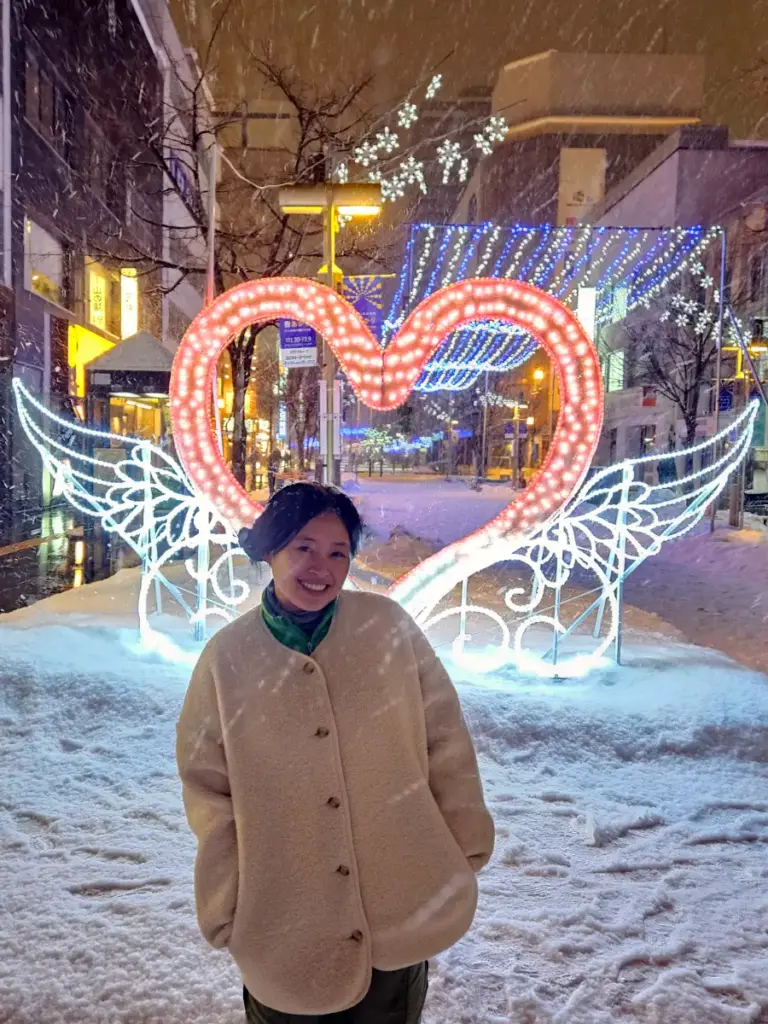
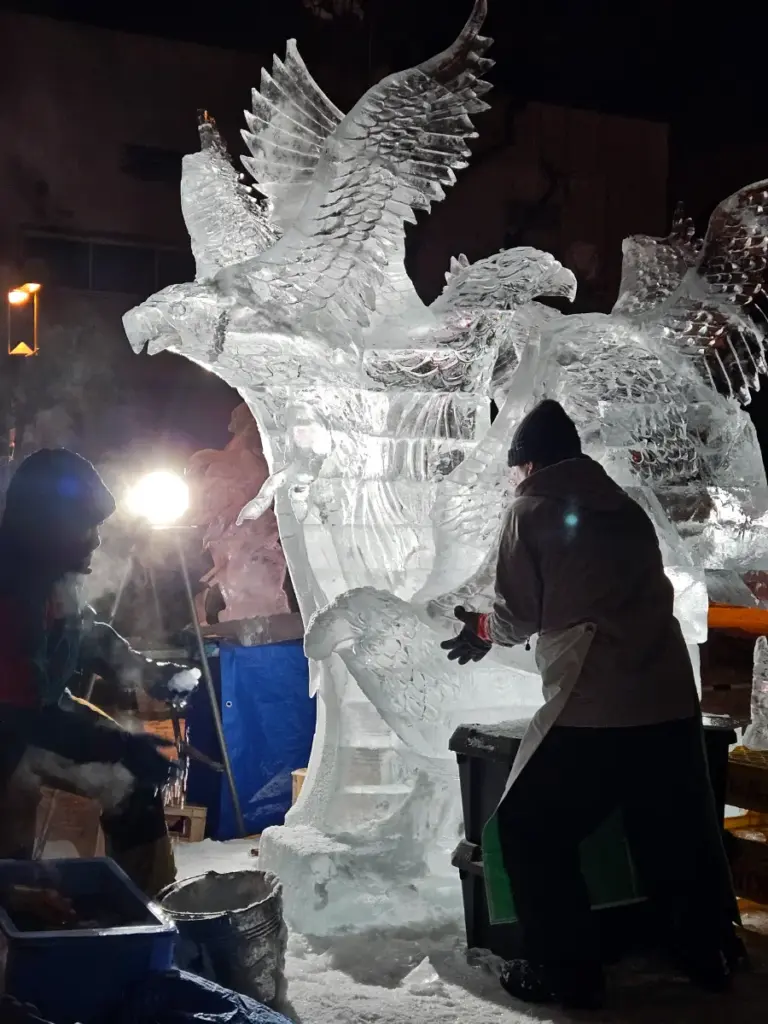
It was a winter wonderland as Tim and I walked the city streets. Gently falling snow, twinkling lights, and breaths fogging in the chilly winter night. Walking along the Heiwa Dori Shopping Park, we walked past ice sculptors chiseling away at huge ice blocks in preparation for the World Ice Carving Championship.
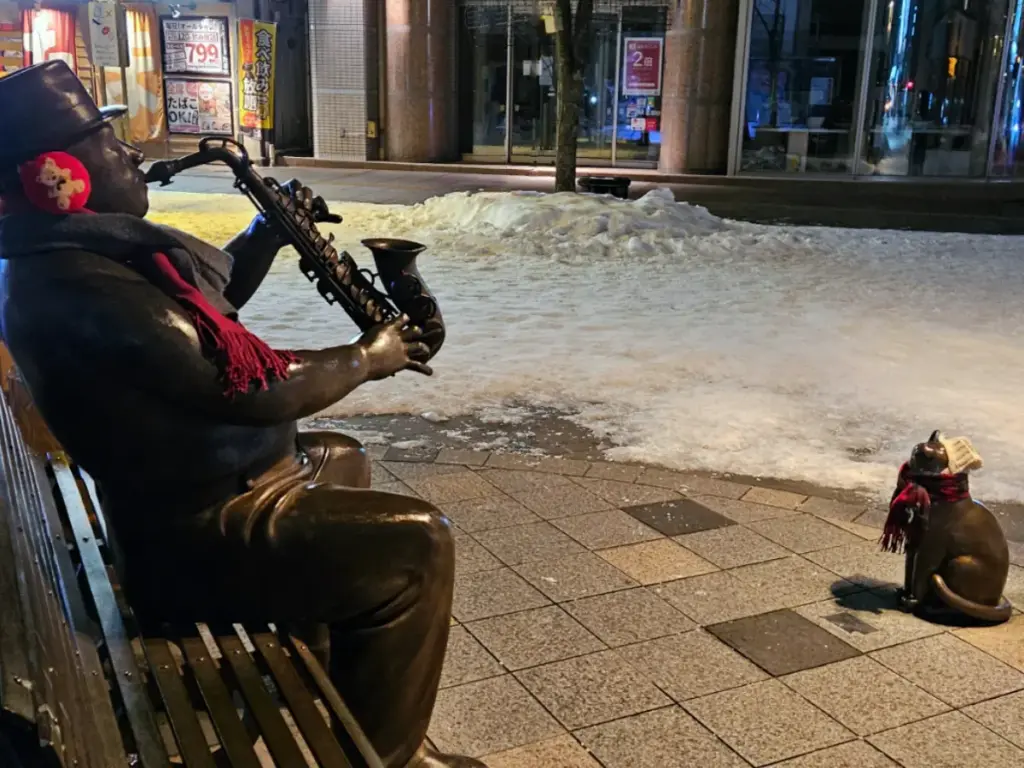
We even passed by a bench with a bronze statue of a man playing the saxophone with a bronze cat sitting at his feet. Someone had dressed them up for the cold: a scarf and earmuffs for the musician and a scarf and little beanie for his friend.
Compared to them, we were pretty underdressed (and it was freezing!) Tim and I had bought winter clothes in Tokyo in preparation for the cold of Hokkaido, but we still had to stop by for a beanie for Tim’s frozen ears. No scarves for us.
That first night we decided to have Jingisukan (named after Genghis Khan), one of Hokkaido’s signature dishes. It’s grilled lamb cooked with vegetables on a skillet. It was delicious! The staff made sure that the lamb was cooked perfectly, and the carrots and pumpkin grilled along with it were crisp and were a perfect complement to the rich meat.
Exploring the city is fun but I really looked forward to getting back to our hotel.
Because when our bones were frozen from the chilly air, we could soak in the hot baths of the onsen on site. The hot water was a distinct color, rich with minerals, and there was a cold pool that was perfect after the hot bath. The men’s bath had an outdoor pool, but even without it, the women’s side was amazing.
We stayed at the Premier Hotel Cabin Asahikawa, and they were hosting a free sake tasting during our stay. I especially like this delicious hot rice drink amazake, and little snacks called cheese okaki.
Penguins on Parade
On a clear winter day, we set off for the Asahiyama Zoo to finally see the penguins!
- Just here for the penguins? We took the local bus and spent most of our day just hanging out with the animals. If you’re doing the same, you can book your Asahiyama Zoo admission tickets in advance.
- Staying in Sapporo? If you want to see the penguins without navigating the two-hour highway bus ride to Asahikawa, this guided day-trip handles your round-trip transport and bundles the zoo with winter highlights like snowmobiling in Biei.
To survive the cold, we made a pit stop at Lawson, one of the many Japanese convenience stores, for some vitamin drinks. It’s just a short walk to the bus stop from there, and along the way we passed cute little snowmen (and even one shaped like a penguin!).
After a 45-minute bus ride, we arrived at Asahiyama Zoo just in time for the first Penguin Walk. You see, the penguins go on walks twice a day for exercise during the sedentary winter months. It’s amazing! We (the visitors) get to see the cute waddling birds and the penguins get to stay healthy.
We got there early enough to beat the queue, but the staff was already ensuring everyone gave the penguins space. If you were in the front, you had to crouch down so you weren’t intimidating to them (and so people behind could see!).
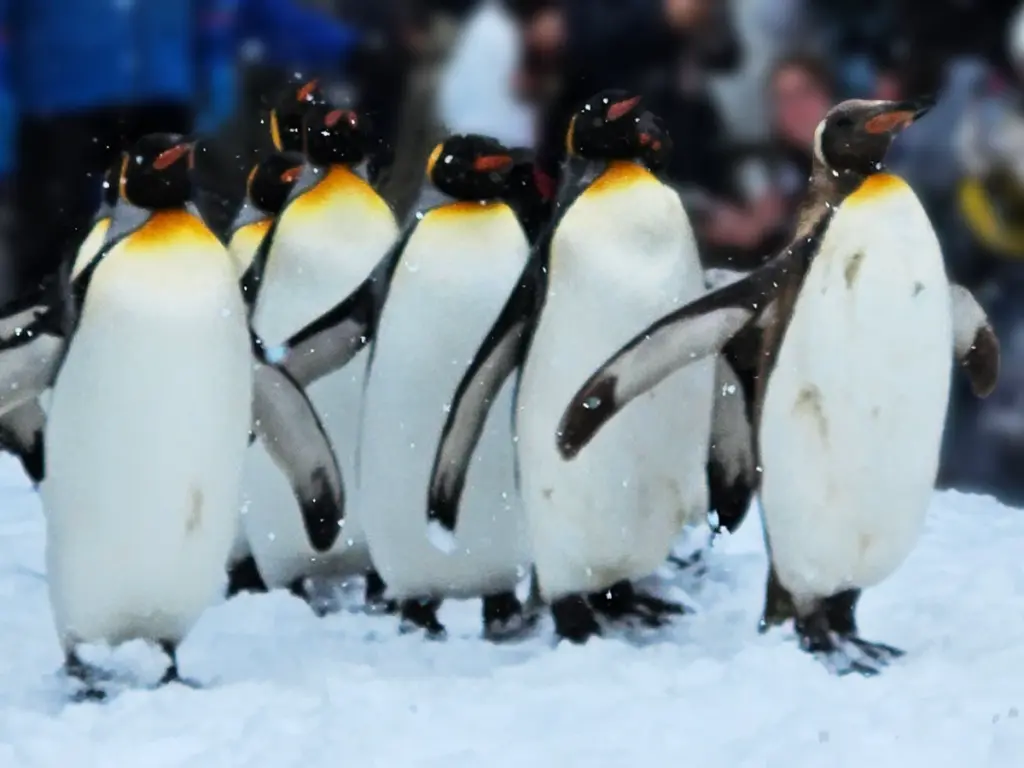
Then they came out! King penguins waddling like celebrities! It was majestic! And adorable!
Tim loves penguins, so this was a huge treat. We noticed their feet—crazy, webbed, and almost scaly.
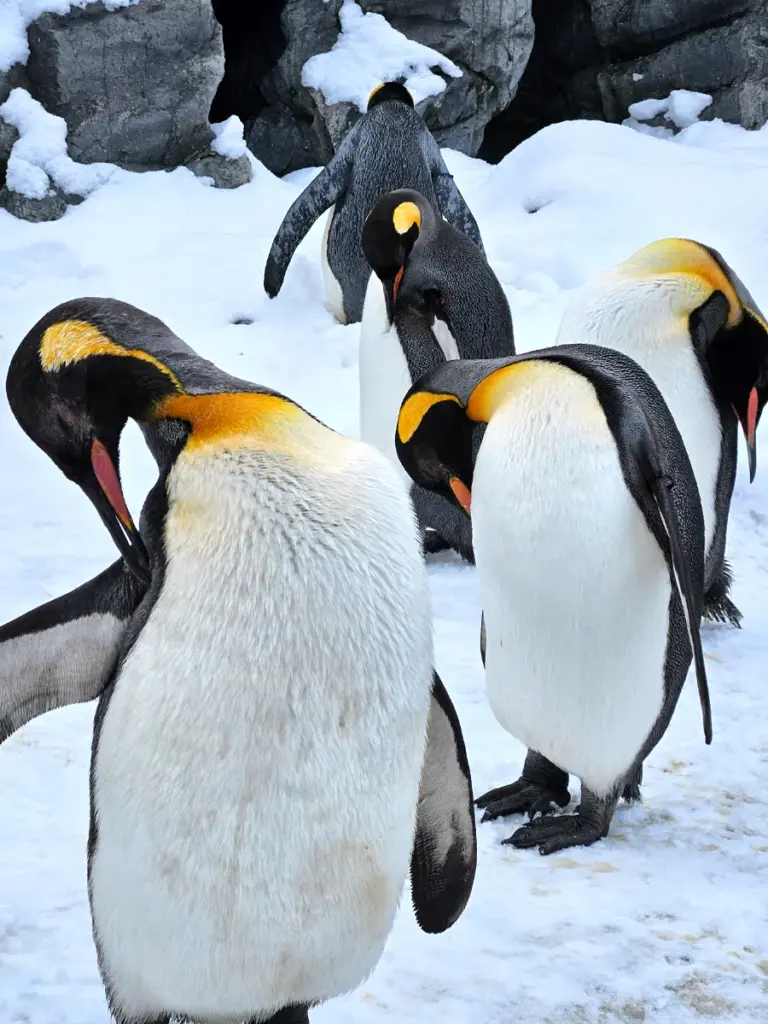
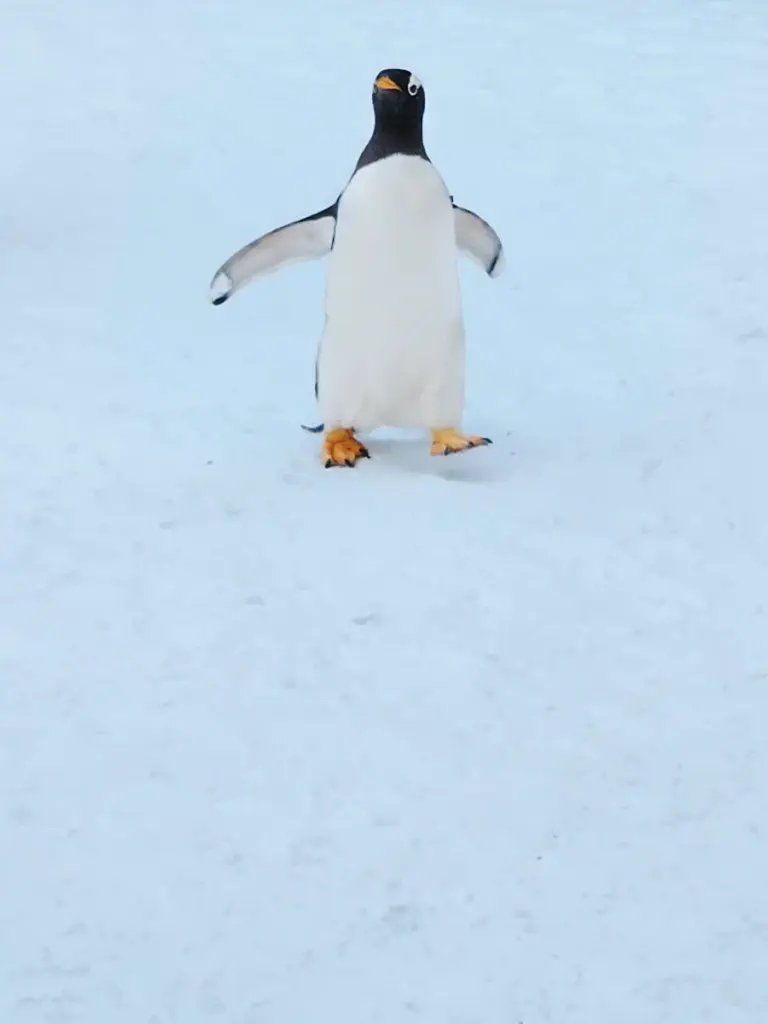
We stayed for the second Penguin Walk later in the day, and it was hilarious. A Gentoo penguin was leading the King penguins on the walk, but then decided he had enough, turned around, and waddled back to the crowd to observe us. I forget his name, but he was the star of the show.
Aside from the penguins, we saw other animals (as with other zoos) like lions and tigers cuddling to stay warm in the snow, wolves, red pandas, and snow leopards.
Because it was so cold, we found a vending machine selling hot drinks. And instead of buying coffee or tea, we instead bought hot corn soup.
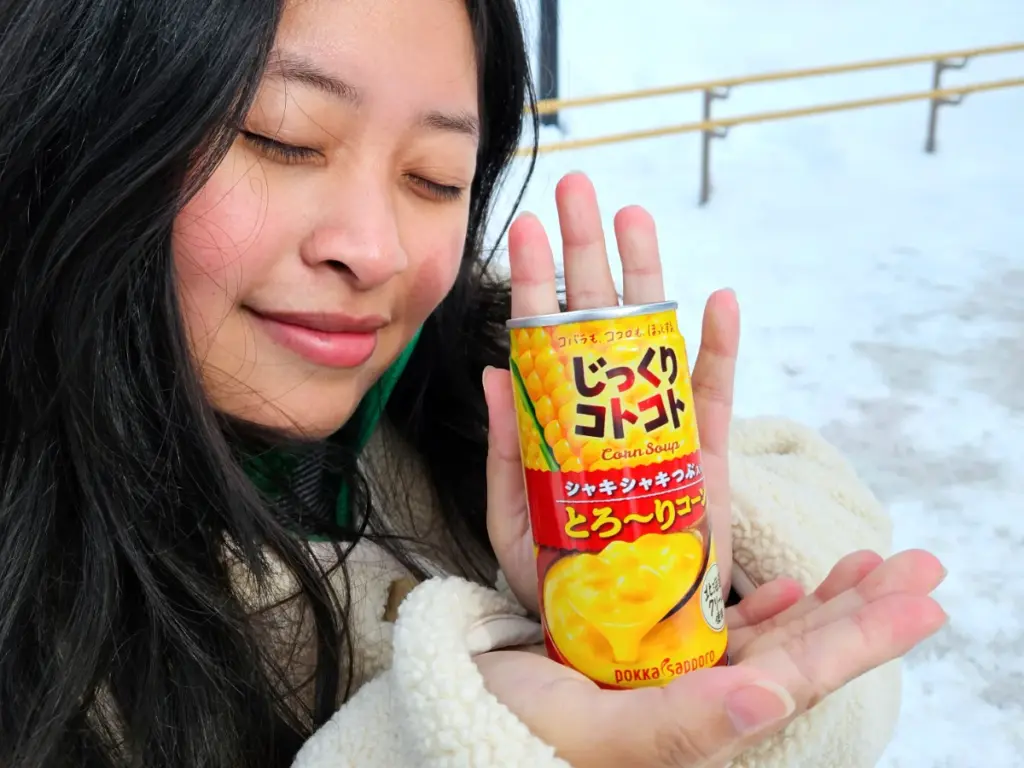
It was sweet, warm, and perfect. We literally used the cans as hand warmers before drinking them!
Asahikawa Winter Festival
The next day, we took a bus over to the Asahibashi Riverside for the Asahikawa Winter Festival.
When you arrive, you’re greeted with this massive snow wall and stage that features snow animals like penguins, a polar bear, and even a mammoth. There was also a carving of Myaku-Myaku, the Osaka World Expo 2025 mascot.
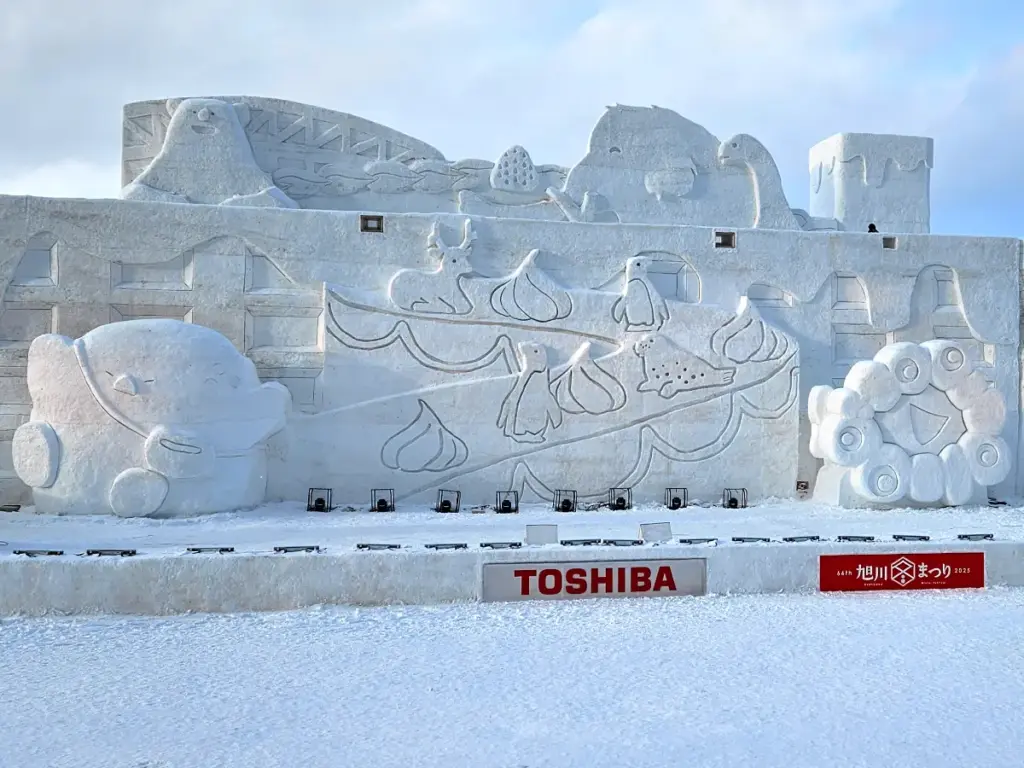
You can walk up to the top of the wall and it has this ice slide you can ride back down. So of course we had to do it. I swear I was wearing the wrong pants or something because I just would not slide! It was embarrassing.
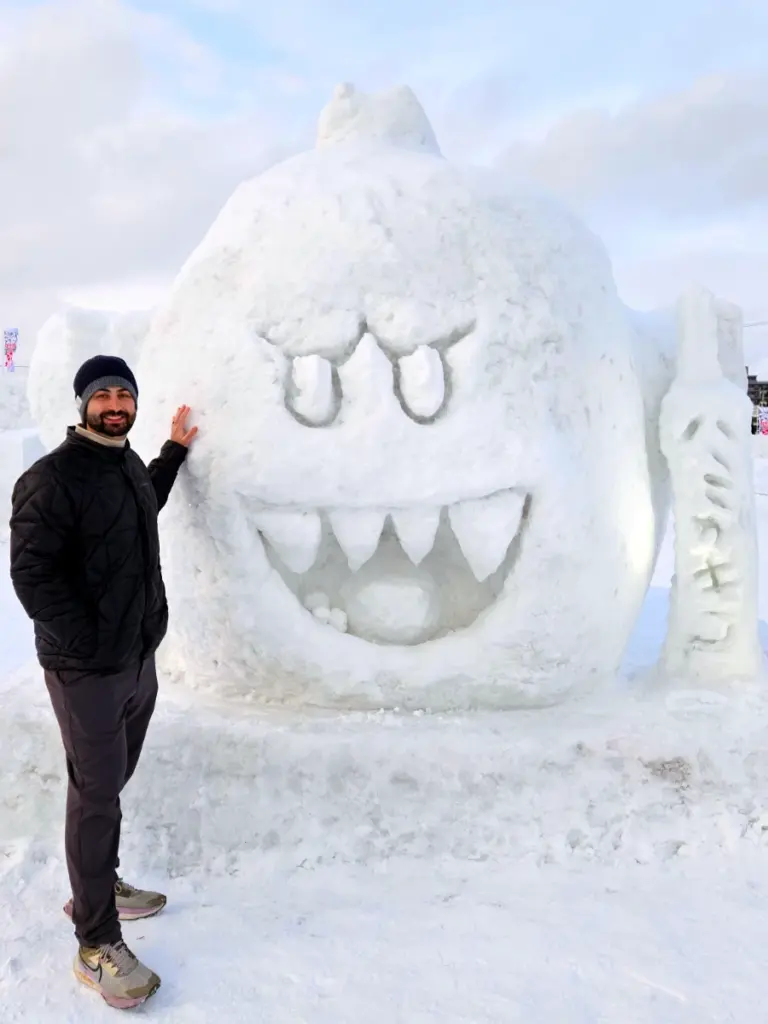
All around the park were lines of tiny, adorable snowmen wearing colorful hats and large snow sculptures like No Face from Spirited Away, a Mimic chest, Squidward’s house, and Tim got a photo with King Boo.
And of course it’s not a festival without food! There were stalls lined up serving yakitori, yakisoba, and other Japanese street food staples. We of course had to get takoyaki, as well as this curry pan that had these crunchy cubes all around it. Both so delicious!
As the sun went down, the temperature dropped to a -1.9°C (28°F) and the stage lit up in beautiful purple and blue hues. Our night ended with watching a girl group performing in tiny skirts (in this freezing weather!), and Tim breaking a cardboard sled on the giant snow hill at the neighboring Tokiwa Park because he was too big for it!
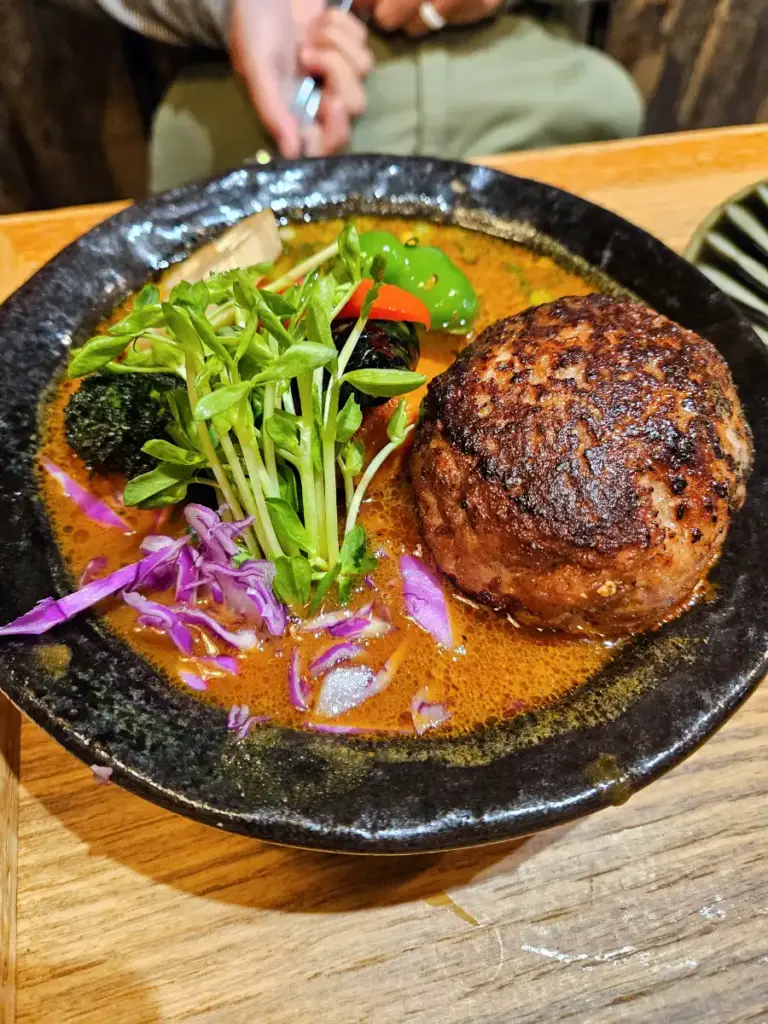
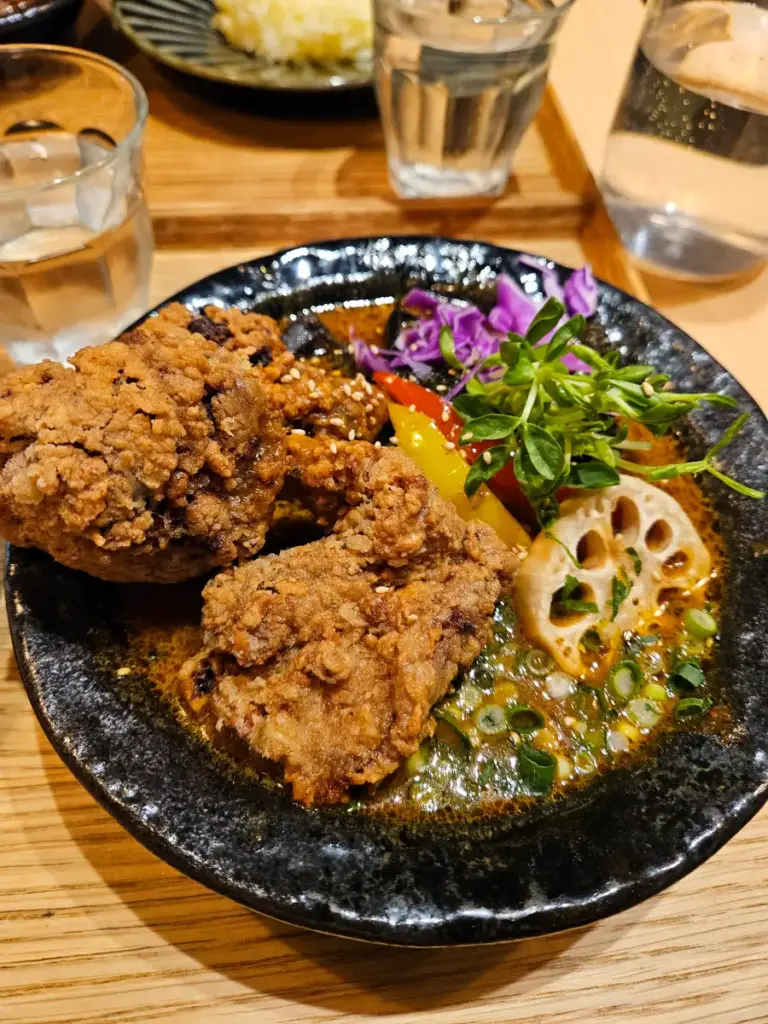
To warm ourselves from the biting cold, we stopped by for another Hokkaido specialty, soup curry. The warm broth had such a great punchy curry flavor, with vegetables like lotus root, bell peppers, and broccoli accompanying Tim’s karaage (fried chicken) and my hamburger steak.
Sapporo: A Japan Winter Highlight
We took the highway bus to travel south from Asahikawa to Sapporo. The 2-hour bus ride went by so quickly because I was asleep the whole time.
A Familiar Face in the City
This leg of the trip was especially exciting because we would be seeing a familiar face. Our good friend Sage (who was the best man at our wedding, btw) was joining us in Japan to explore Sapporo and go snowboarding in Niseko! After being away from home for months, it was so nice to see a familiar face.
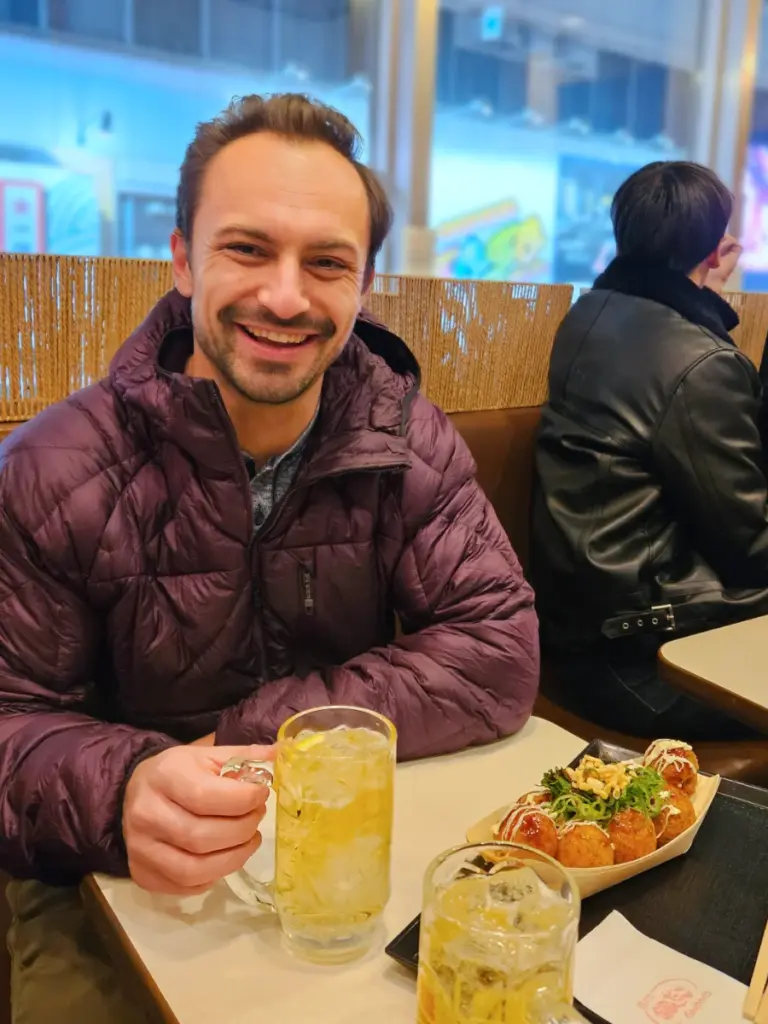
Since Sage had just gotten in from his 13-hour flight from LA, coffee was obviously the first order of business. Coffee then turned into whiskey highballs and takoyaki, our chosen fuel for exploring Sapporo.
And we needed that fuel. It was actively snowing hard at this point. And another perk of having Sage there with us was that he came bearing our snow gear from home. It was much needed. The winter clothes we bought in Tokyo might have kept us warm enough, but the added water and wind proofing from our snowboarding gear allowed us to actually enjoy walking around the snowy city streets.
Even in the cold, I will still say that walking is probably the best way to explore the city.
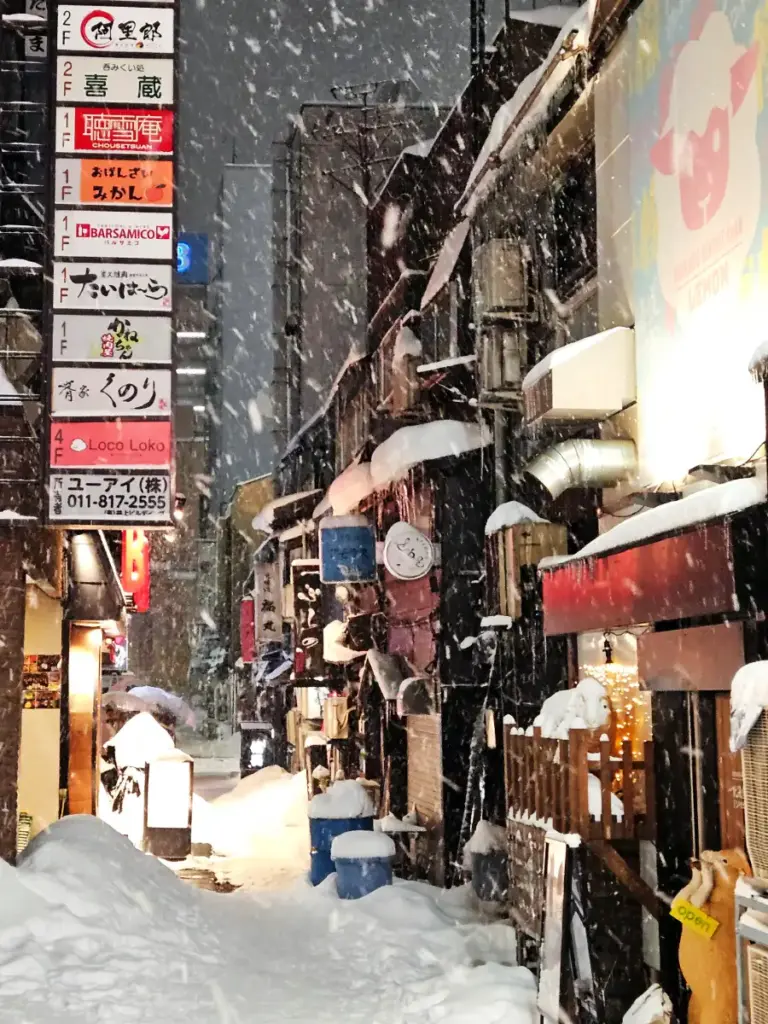
There’s just so many sights to see, neon lights everywhere and businesses tucked in every corner. Like, there’s bars next to barber shops on the 4th floor of buildings. It would be impossible to take everything in if you were driving by.
Where to Stay in Sapporo
Because walking really is the best way to explore the city, I suggest staying close to the city center when choosing a place to stay.
Be warned: the Sapporo Snow Festival is incredibly popular, so hotels book up fast!
We were lucky enough to get a room at Hotel Vista Sapporo, which is just a 3-minute walk from the Tanukikoji Shopping Street. It was a great home base for us, but The Royal Park Canvas is also a brilliant option, located right by Odori Park (where the Snow Festival is held) and close to Odori Station for easy rail access.
The Accidental Omakase
And that’s exactly how we found our dinner spot for the evening, Sapporo Taruzen.
We saw a door tucked in the side of a building with a sign that said sushi, and decided we would eat there.
A nice lady greeted us, took our coats to hang on a rack and showed us inside. She asked if we had a reservation, to which we answered “No.”
We definitely needed a reservation. The restaurant was omakase style, meaning that you entrusted your meal to the chef. There was one long counter that probably sat at most 10 people, and one sushi chef behind the counter. And that was it.
By some stroke of luck, they were able to accommodate us.
What followed was the best sushi dining experience of my life. Every single piece of seafood that I ate was the best-tasting version of that piece of seafood that I’ve ever encountered in all my years of life.
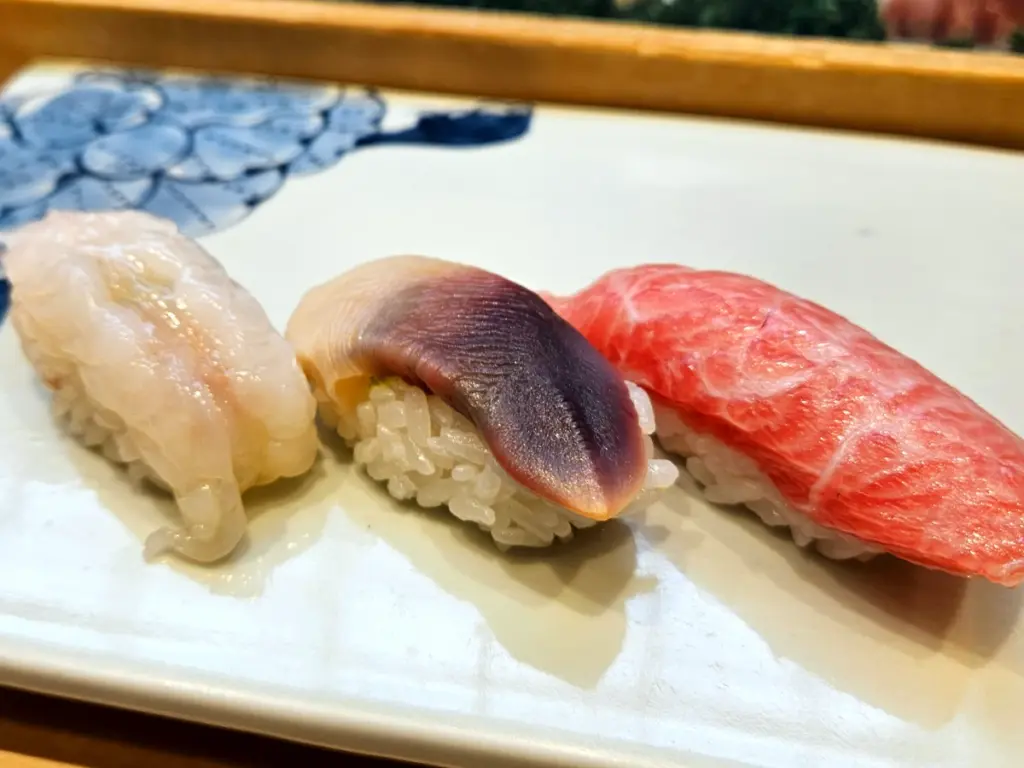
Unfortunately, we didn’t take many photos. Mainly because we ate with our hands and there was no way I was touching my dirty phone before touching my beautiful piece of tuna nigiri.
Exploring Sapporo
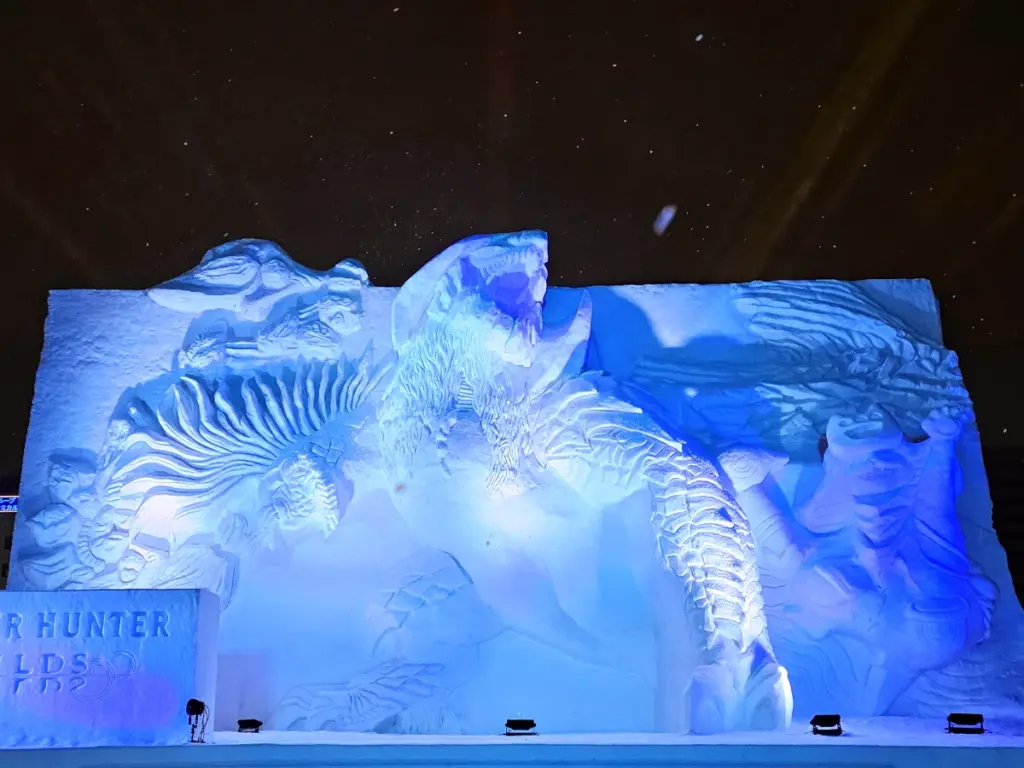
We visited the Sapporo Snow Festival at Odori Park, just a short walk from our hotel. There were massive snow sculptures depicting buildings and massive characters from popular anime and games.
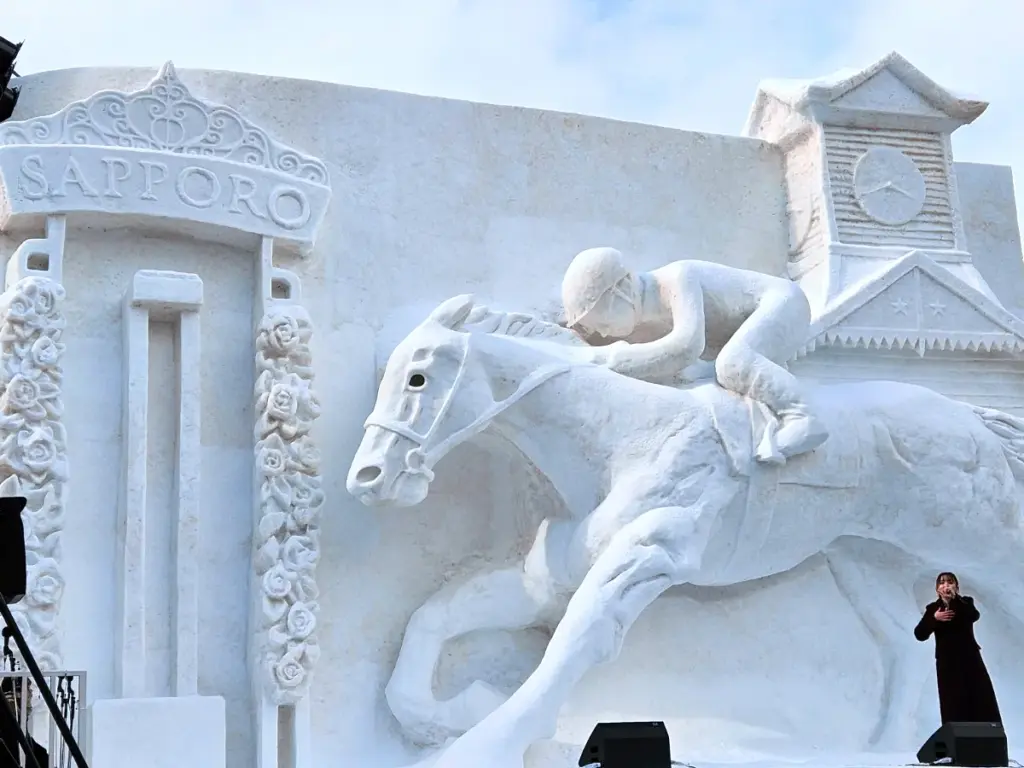
We actually visited the festival again at night to see the sculptures illuminated.
Like Asahikawa, there were also stalls lined up selling food and beverages.
And if you got too cold, hop on down to the underground Aurora Town located right under Odori Park. It’s an underground shopping district filled with boutiques, restaurants, and access to the Odori Station.
On one of the days, the boys decided to visit the Sapporo Beer Museum, while I ventured out on a solo adventure.
My plan was to wander around town until I got tired. So my first order of business was to walk to Odori Park where I knew there were plenty of food stalls.
But on my way to the park, I noticed a few people hurrying to an alley. Curious, I peeked around and saw a traditional door with noren (the linen cloth curtains you often see in front of restaurants in Japan) hanging above. Intrigued, I joined the queue.
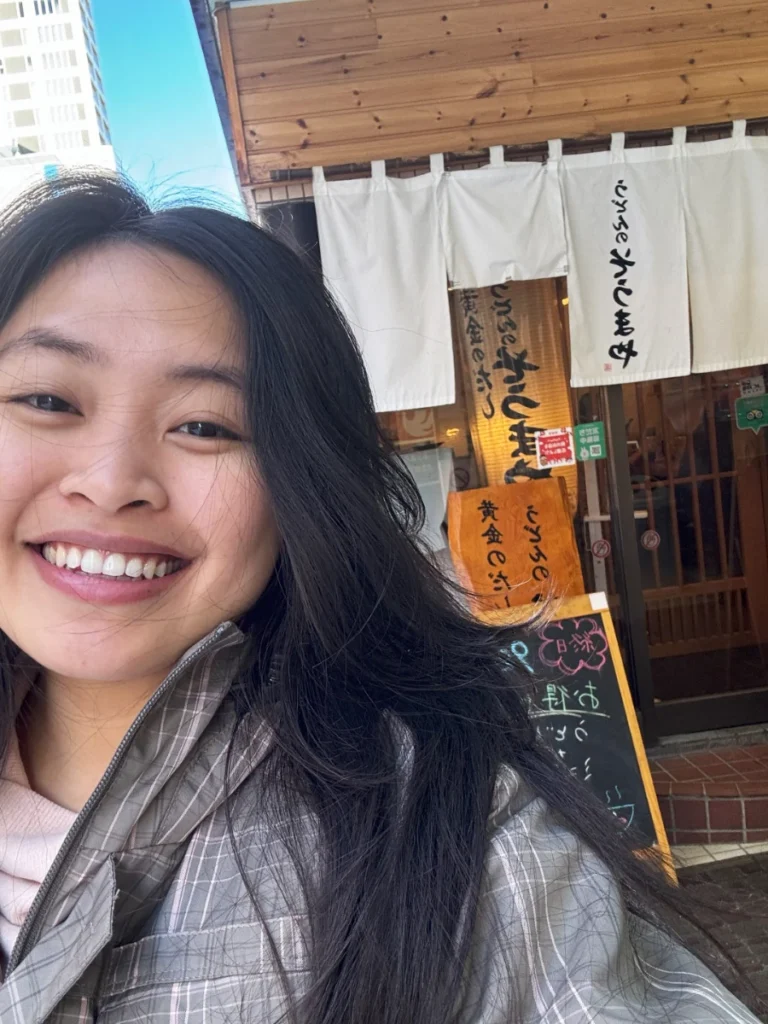
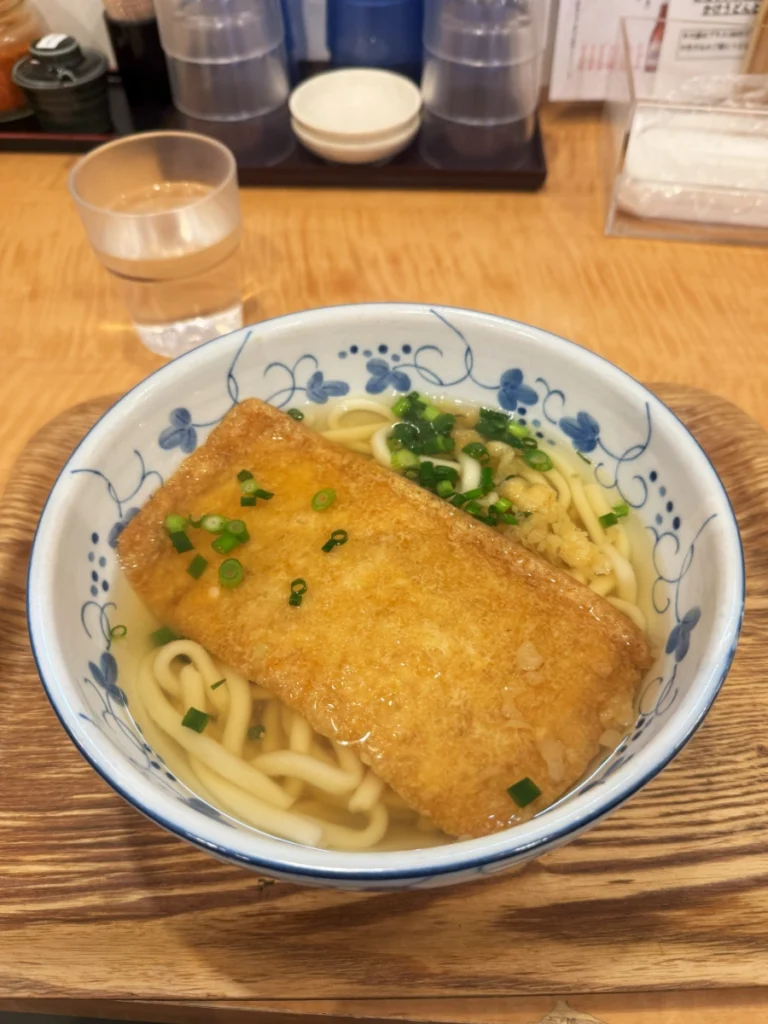
I had to look up the name of the restaurant on Google Maps by checking what restaurants were around me since there were no English signs. The name: Soumaya Udon.
Although it was lunch hour, I was quickly seated at the counter (since I was eating solo) between two businessmen in their crisp black suits. I ordered for the first time what I’ve always seen in manga and anime, and always wanted to try: Kitsune udon. The udon noodles were perfectly springy, the dashi broth was deliciously hot and savory, and the aburaage (fried tofu pouch simmered in sweet soy sauce) on top was bursting with flavor. I mixed up every bite with some wasabi, yuzu, and chili powder.
I wish Tim was there to try it with me.
Why Is It Called Kitsune Udon?
Kitsune means fox in Japanese. And according to Japanese legend, their favorite food is aburaage.
I wandered the Tanukikoji Shopping Street after lunch. It was so fun getting lost in the crowd of people and walking into all the shops that caught my eye. I stopped to eat a strawberry mochi before walking into a Taito Station.
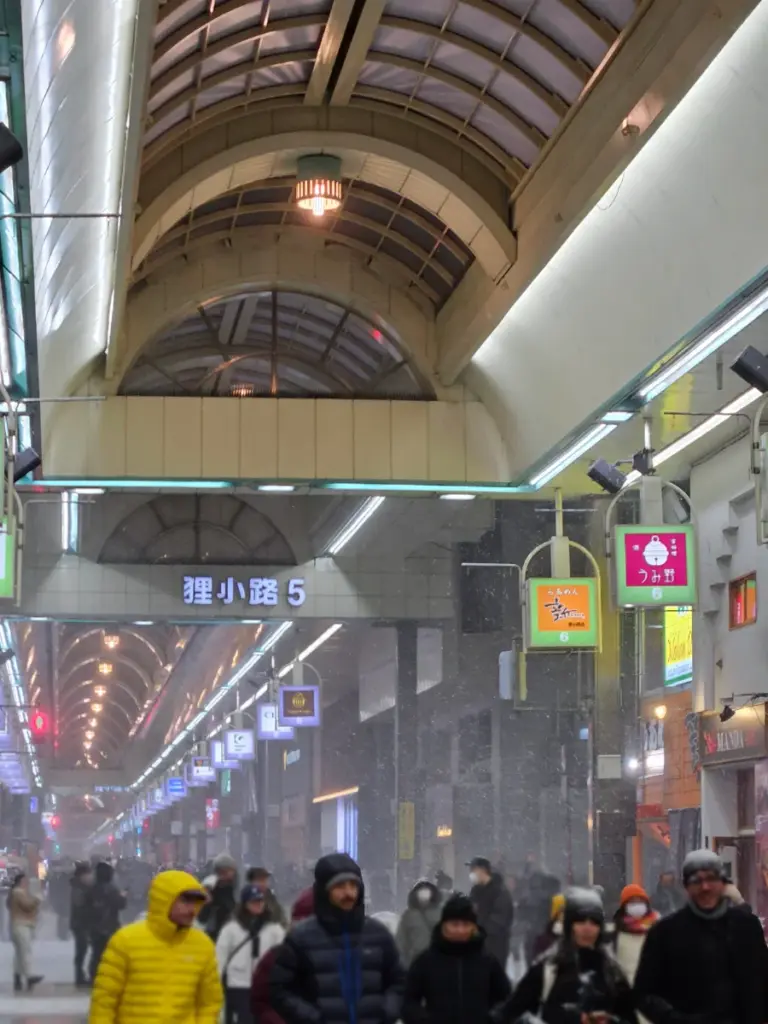
So we’ve been to arcades like this before in Tokyo and they are dangerous. The claw machines are so addicting and it so easy to spend so much yen here. So walking into Taito Station I vowed to only play one time.
I walked over to my chosen claw machine. The one with all the little plush Kirbys smiling at me from behind the glass. I tapped my phone to pay for my one attempt. Then lined up the claw to where I needed it to go. And clicked the button.
The claw drops down, plucks a smiling pink ball of Kirby, moves to the starting point, and deposits my Kirby down the chute so I can grab him!
After winning my Kirby, I wandered around some more and spotted a small, tarp-covered entrance. Stepping through, I was greeted with a breathtaking exhibit of indigenous Ainu art right in the middle of the shopping street.
The centerpiece was a massive, ice wall carved with a majestic owl and traditional motifs. I grabbed a hot drink from the stall, sat down on a thick block of ice (thankfully lined with cushions!), by a fire pit.
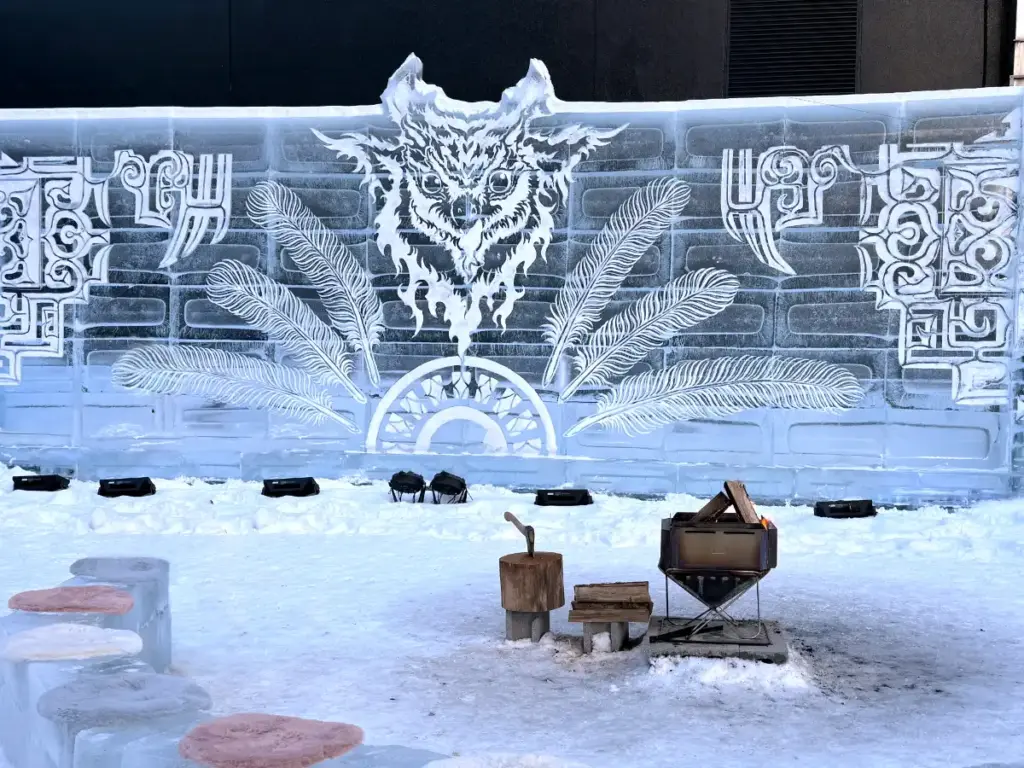
Sitting there in the freezing air, sipping a warm drink, and listening to the ambient music felt like the absolute pinnacle of slow travel. It was a moment of pure cultural immersion that I never would have experienced if I hadn’t allowed myself to just get a little lost in the city.
At 11 PM, while safe and warm in our hotel room, I decided that I was hungry again. So in the spirit of my solo adventure day, I bundled up in my snow gear, kissed a sleeping Tim goodbye, and went out into the snowy streets. There were still so many people walking around, and I felt so free walking around at night —not scared at all. I saw a couple walk into a shop with a neon yellow sign and the delicious smell of fried food, so I followed them in.
Once again, there were no English signs outside so I had to go to my trusty Google Maps to find the name of the restaurant: Tonkatsu Kyohei.
Once again, I was sat at the counter, this time with hosts from nearby clubs, watching the chef fry the katsu.
I ordered katsu curry and oh my goodness, it was the best katsu I have ever had. A thick cut of pork covered in beautiful golden panko on a bed of cabbage. Of course I had to eat it with curry and rice.
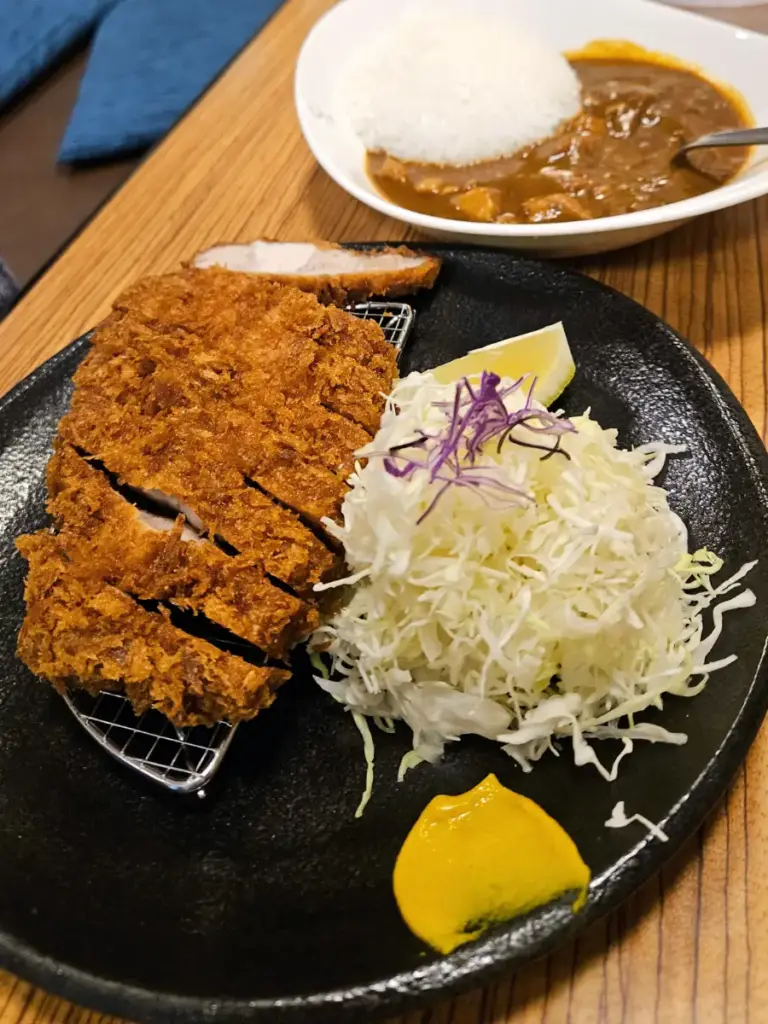
Oh my goodness. I am obsessed to this day.
Niseko: Finding Peace in the Powder
Finally, it was time for the main reason we were in Hokkaido in the first place. Snowboarding.
Getting to Niseko the first time was a multi-step mission. A bus, then the train, then another bus, and finally a walk in the snow to get to our ryokan.
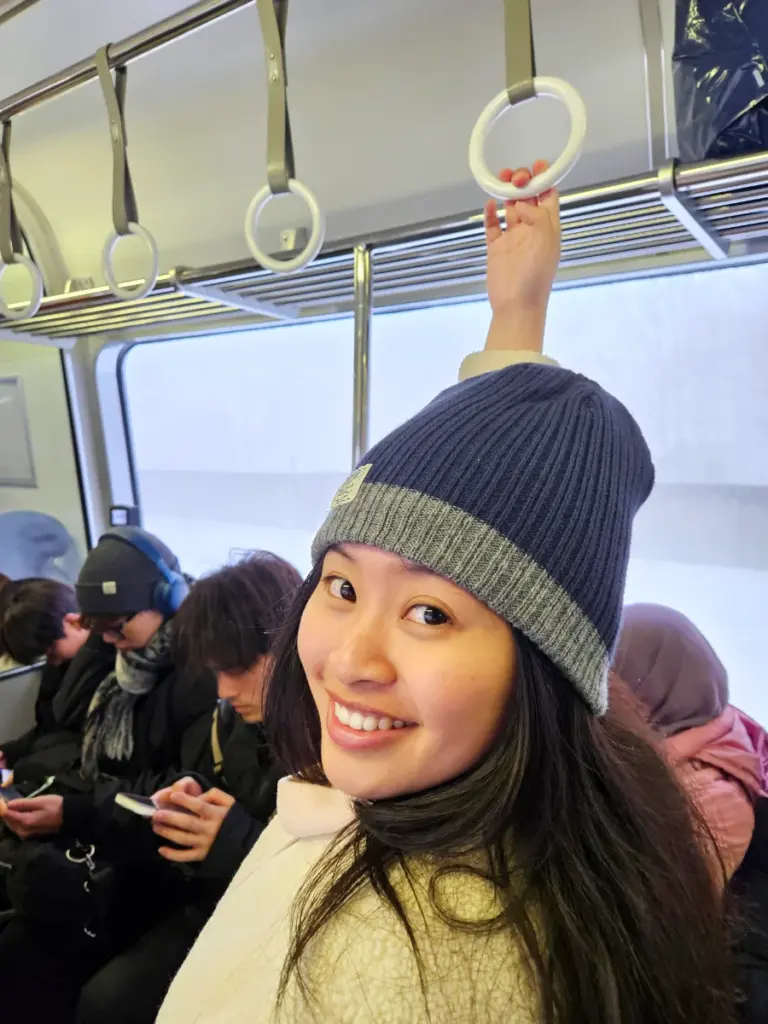
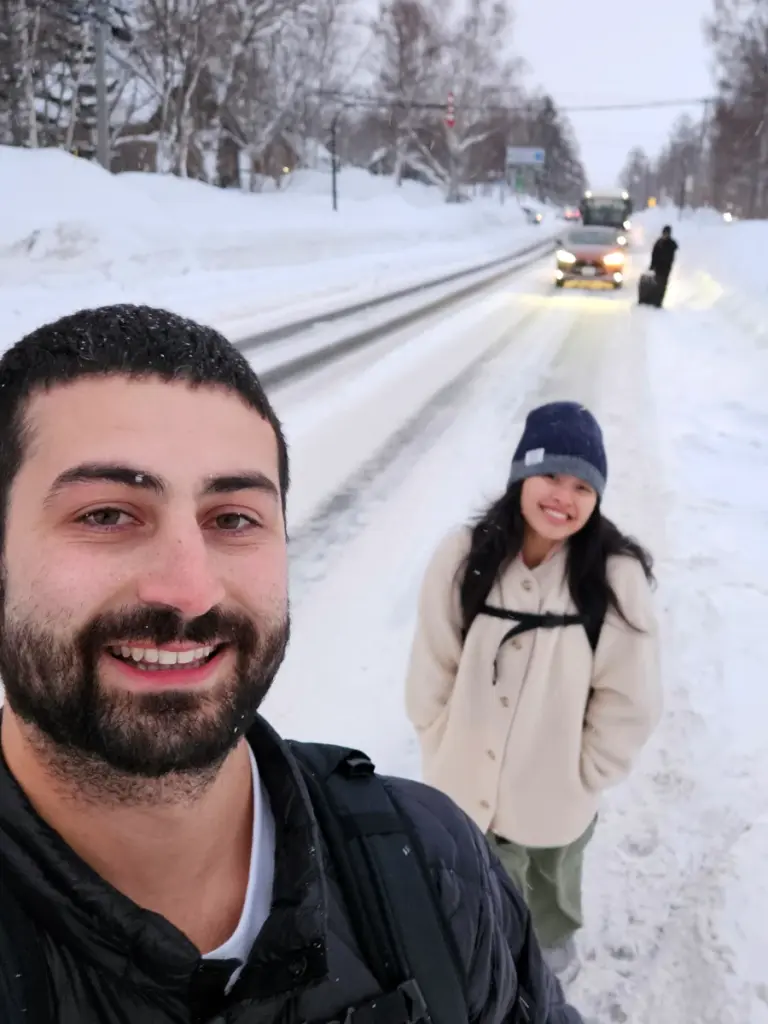
Thank goodness we only travel with backpacks because it would have been so hard with luggage.
A Traditional Ryokan Retreat
We stayed at a traditional ryokan, Niseko Annupuri Onsen Yugokorotei, where you have to leave your shoes by the front door before walking into the lobby.
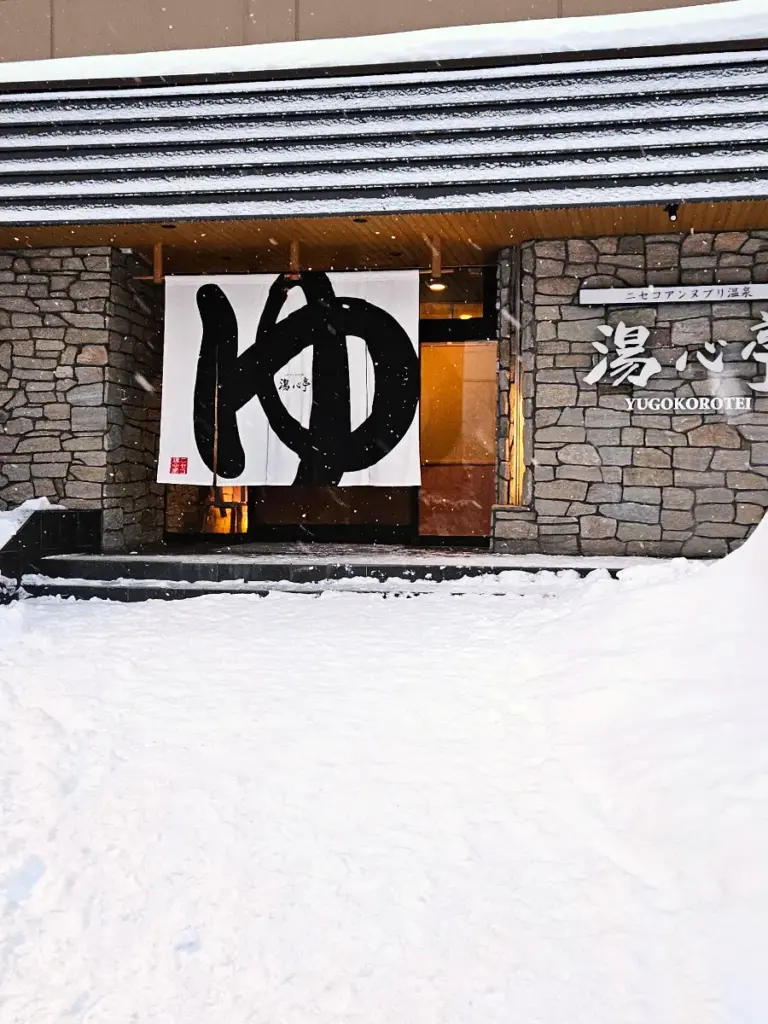

Our tatami room was so cozy with plush futons and a separate seating area where you can enjoy tea while looking out at the snowy world outside the window. And there was an incredible onsen in the property as well, with outdoor pools that were so romantic amidst the falling snow and the steam rising from it.
We immediately took advantage and had a long soak after our day of travel.
It was amazing to come home tired from a day on the slopes, slip off our shoes at the door, and spend hours soaking in the mineral-rich outdoor onsen while the snow fell around us.
It allowed us to truly recharge and connect with Japanese winter culture.
Fairytale Snowboarding
The next few days were spent entirely like this: get on the hotel shuttle bus to the ski resort, snowboard, take the shuttle or the city bus back, soak in the onsen.
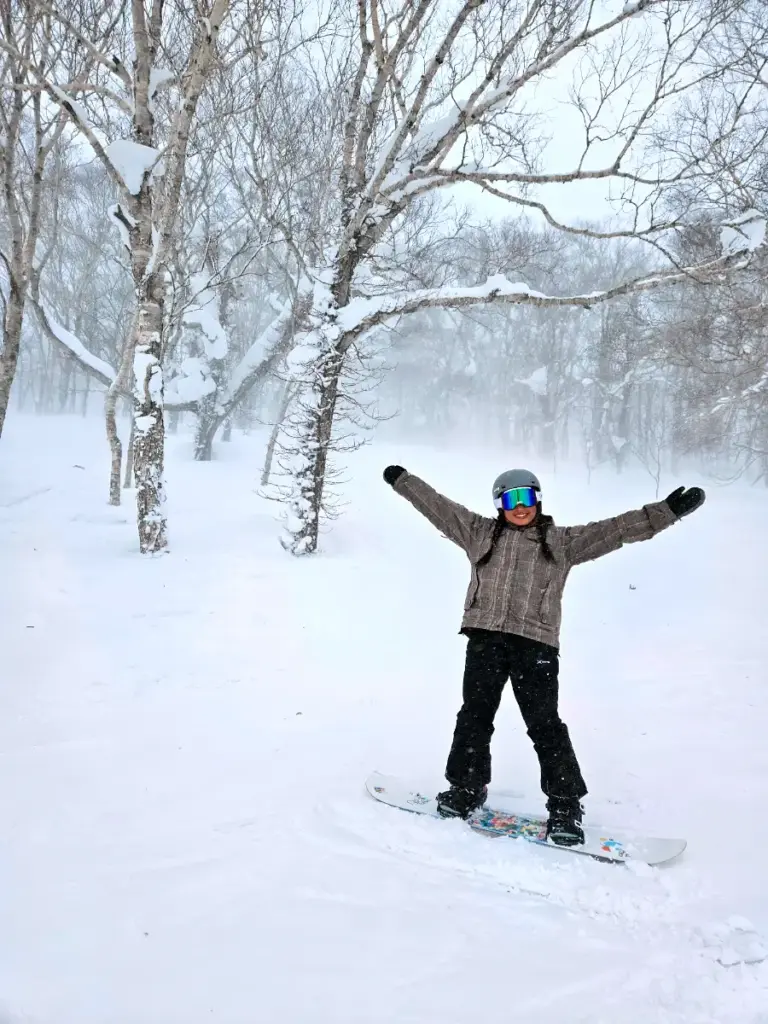
Snowboarding in Niseko is truly on another level. The powder is so soft and light.
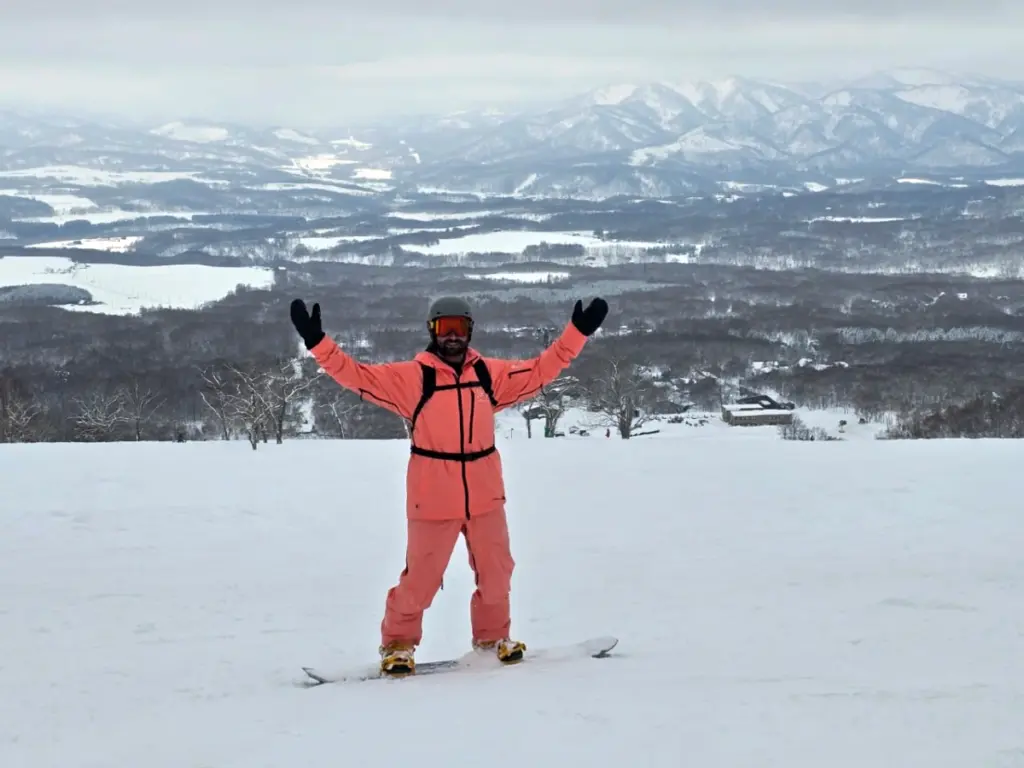
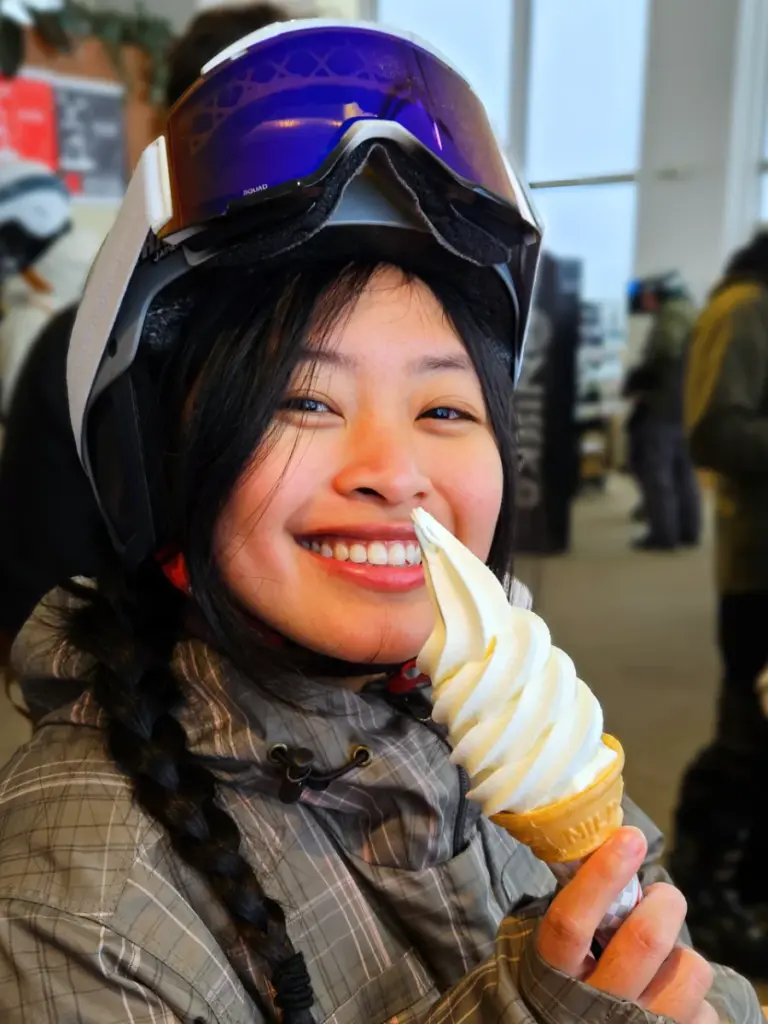
This is how we spent Valentine’s Day 2025. Weaving between snow-covered trees in what felt like a winter wonderland, sharing soft-serves made with delicious Hokkaido dairy, and admiring the mountain views.
A Scenic Farewell
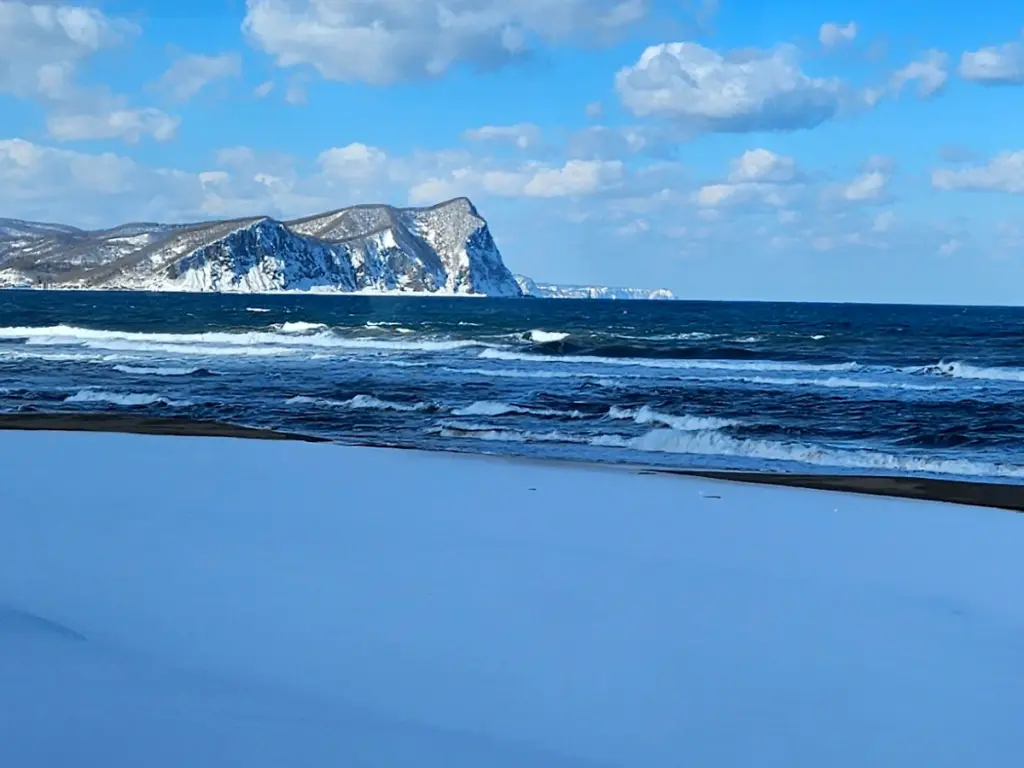
Leaving Niseko, we learned our lesson and took the direct bus back to Sapporo, which was much easier than getting there. The drive was beautiful. We passed Mount Yotei, also called Ezo Fuji because of its resemblance to Mount Fuji, and saw breathtaking stretches where the snow-covered cliffs met the dark blue of the ocean.
Back in Sapporo, I immediately took Tim to the spots I visited during my solo exploration: Soumaya Udon and Tonkatsu Kyohei.
Then, the next day, we were on another bus but this time on the way to New Chitose Airport where we would board our flight to Fukuoka!
What Hokkaido Taught Us About Slowing Down
When you think of a winter trip to Hokkaido, “slow” might not be the first word that comes to mind, especially when snowboarding in Niseko is on the itinerary.
But for us, slow travel isn’t just about the pace. It’s about the intention behind the trip and allowing space for genuine cultural immersion.
Some of our best memories come from ditching the itinerary.
Stumbling into a 10-seat, reservation-only omakase sushi restaurant that only happened because we chose to wander the snowy streets of Sapporo on foot instead of rushing from point A to point B in a taxi.
Warming up with a bowl of kitsune udon shoulder-to-shoulder with local businessmen and learning about the indigenous Ainu culture by a fire pit on a block of ice.
Balancing the adrenaline of carving through Niseko’s famous powder with the quiet, grounding tradition of staying in a ryokan.
We try to prioritize authentic, everyday moments over crowded tourist traps as much as we can (although we still love visiting touristy places).
Conclusion
Looking out the window on the drive back to Sapporo, watching the snow-covered cliffs meet the dark, freezing ocean, it was hard to say goodbye to Hokkaido.
This leg of our Japan trip started as a simple dream to snowboard the famous powder of Niseko, but it evolved into so much more.
Hokkaido in the winter is a place of beautiful extremes. It’s bitterly cold, with temperatures that will freeze your ears. But it’s also incredibly warm, found in the steaming bowls of soup curry and the welcoming locals who will happily squeeze you into a 10-seat sushi counter on a snowy night.
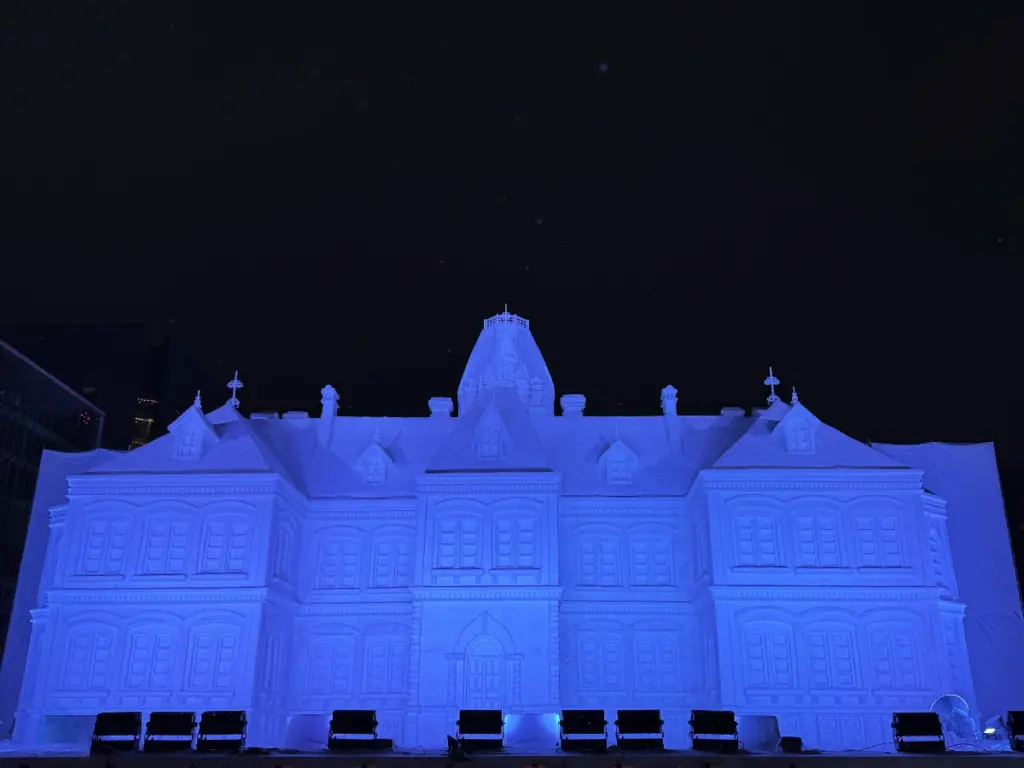
Whether we were cheering on waddling penguins in Asahikawa, getting lost in the illuminated ice sculptures of the Sapporo Snow Festival, or weaving through the snow-covered trees of Niseko, this northern island showed us exactly why slow travel is so rewarding.
It’s about letting the destination surprise you.
What about you? Would you brave the freezing temperatures of a Hokkaido winter for world-class powder and a perfect bowl of katsu curry, or are you strictly a warm-weather traveler? Let us know in the comments below!

Leave a Reply