
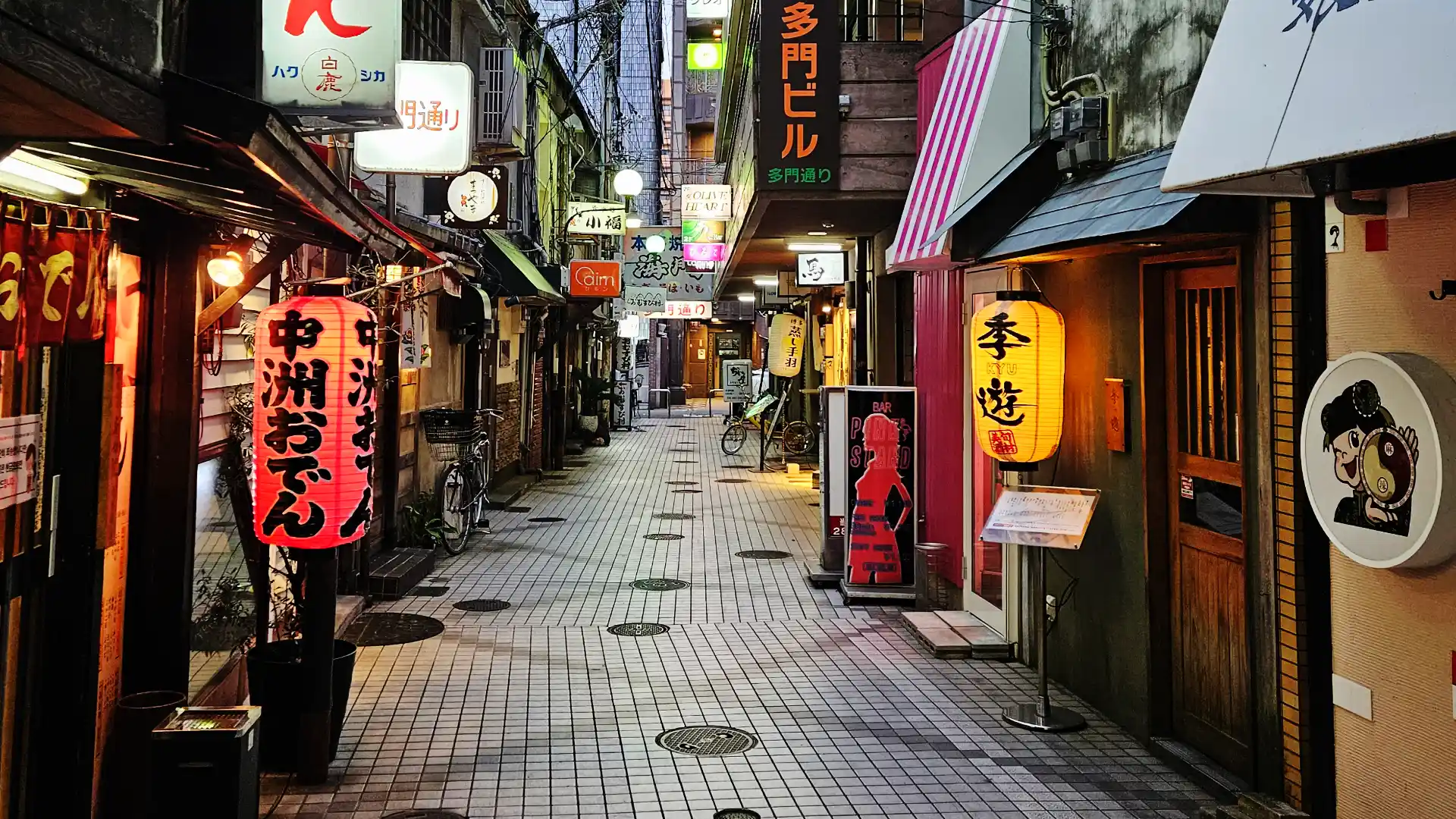
Fukuoka. It’s not really the first place that comes to mind when you’re planning a trip to Japan. But if you’re looking for an adventure that goes beyond sightseeing, for an experience where you can take your time and immerse yourself in the moment, you should come visit Fukuoka.
This city was never on my bucket list of places I needed to visit in Japan. I had never heard of it, and I never saw it on social media, unlike Tokyo and Kyoto. But one winter while trying to find a flight out of Sapporo, Tim and I chanced upon the most cost effective flight option available at that time. February 16th 10am flight from CTS to FUK. So Fukuoka became part of our travel itinerary. And I am so grateful it did.
Fukuoka, located in Kyushu, is a perfect destination for a slow travel adventure. It’s a beautiful city packed with history, nature, shopping, and amazing food. Here you can visit shrines overlooking the sea, hike among a field of flowers, shop in an underground shopping center, and have dinner at vibrant food stalls that come alive at night. It’s still a bustling city, but it’s more relaxed than Tokyo or Osaka. Fukuoka is a perfect place to get lost in and I hope this Fukuoka guide will help you add this city to your list of slow travel destinations.
Table of Contents
Getting To and Around Fukuoka
Ok, first things first is figuring out how to get there and how to move around.
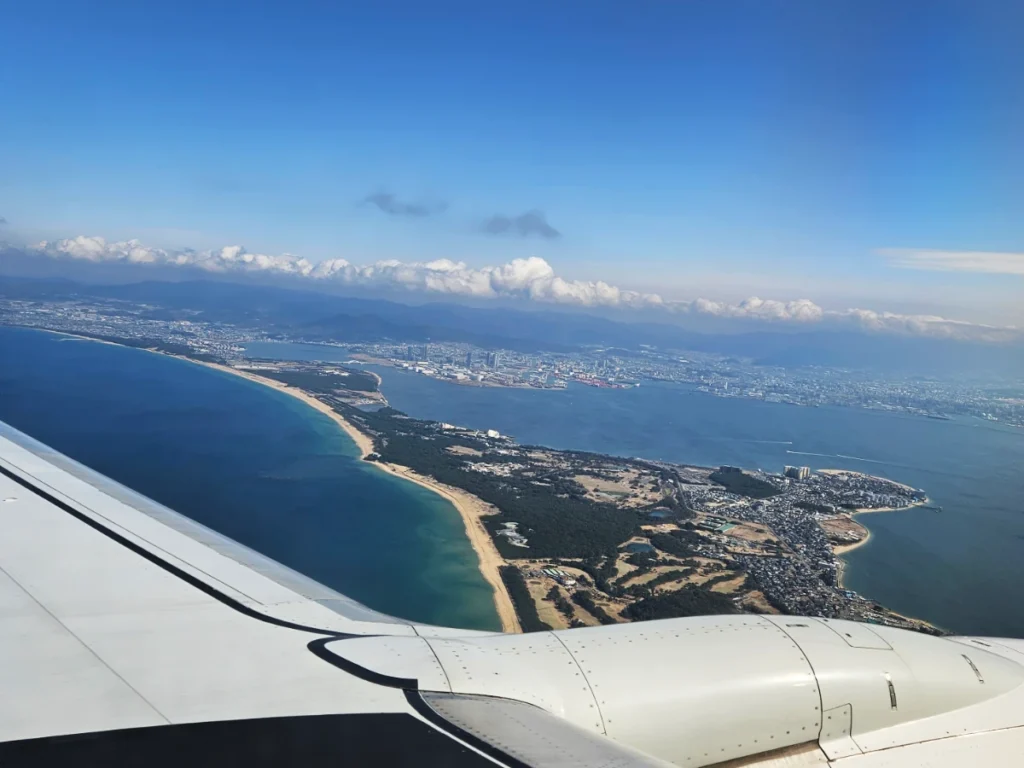
Getting to Fukuoka is really straightforward, which means less stress and more time to explore.
Fukuoka Airport is conveniently located close to the city center – we just hopped on the subway and we were quickly there. The city is also well connected by rail so you will have no problem getting to and from cities like Osaka, Kyoto, and Tokyo. And since Fukuoka is built along the shores of Hakata Bay, there are ferries that can even take you to South Korea as well as other islands in Kyushu. I wish we knew sooner about the ferry to Busan. I can only imagine enjoying the ocean views in the day or waking up in a new country after a peaceful night at sea.
Okay, so you’ve made it to Fukuoka. Now what?
Public transportation in Fukuoka is so efficient and well-connected. The subway system is clean, easy to navigate, and on time. The station signs have English translations so you don’t have to worry about juggling your translation and map apps to get to wherever you want to go.
Google Maps was actually our best friend while navigating Japan. It told us what line to get on at what platform at what times. When you get to your stop, there are multiple possible exits to take when leaving the station. Google Maps told us exactly what exit to take to be closest to our destination.
Also take advantage of the wide network of bus routes to get to places the subway may not cover. You definitely get a different perspective riding the bus instead of taking the subway. You can observe the neighborhoods you pass by outside the window. Pay attention to the timetables listed at the bus stops! Schedules can be different on weekends and holidays.
For more efficiency, grab yourself an IC card instead of buying tickets each time. More on that later.
If you’re trying to visit the surrounding areas and need to travel longer distances, grab a JR pass and take the local trains from Hakata Station, Fukuoka’s rail hub. They’re smooth and reliable. Take advantage of the scenic views as you see the landscape change outside the city.
- If you’re making trips all across Japan, check out the JR Whole Japan Rail Pass.
- If you want to explore Kyushu exclusively, look into the regional JR Kyushu Rail Pass for a cheaper option. You can even purchase a North or South Kyushu pass (even more savings!) depending on what cities you’re visiting.
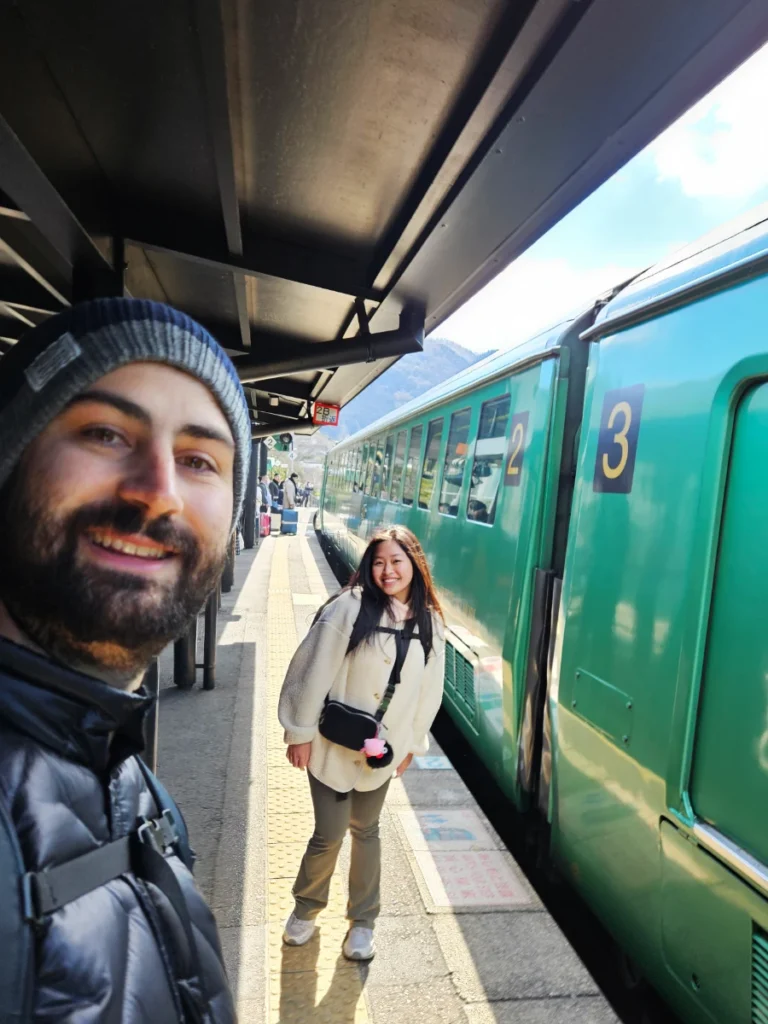
Tim and I took a trip to Beppu and Yufuin to explore Kyushu’s best onsen, and we rode the scenic Yufuin no Mori train from Yufuin to Fukuoka. We were granted with charming views of the Japanese countryside.
Because it’s such a popular scenic route, I strongly suggest checking timetables and booking your Yufuin no Mori journey ahead of time.
A quick heads-up before you buy the tickets. Make sure you have the right train. The sightseeing train is called Yufuin no Mori, and there are several regular, non-scenic trains that use the same track. So double-check the name at checkout.
There are also highway buses and overnight buses available from Hakata Station that can take you to farther destinations as well. While they can be slower and sometimes feel more complicated, they’re a cheaper alternative to traveling by train. Tim and I took a highway bus from Hakata Station to Beppu and I was pleasantly surprised at how clean and comfortable the trip was.
What about taxis? We’ve never used a taxi in Japan but we have seen plenty. You can find them driving around Fukuoka with their shiny black exteriors and well dressed drivers. They may be faster and more convenient than public transport, but they’re pricier than public transport, especially during peak hours. For a slow traveler, they’re not the best option because you miss out on the immersive experience of interacting with locals and taking part in the city’s daily life.
And finally, the truly slow ways of exploring the city: exploring on foot or by cycling.
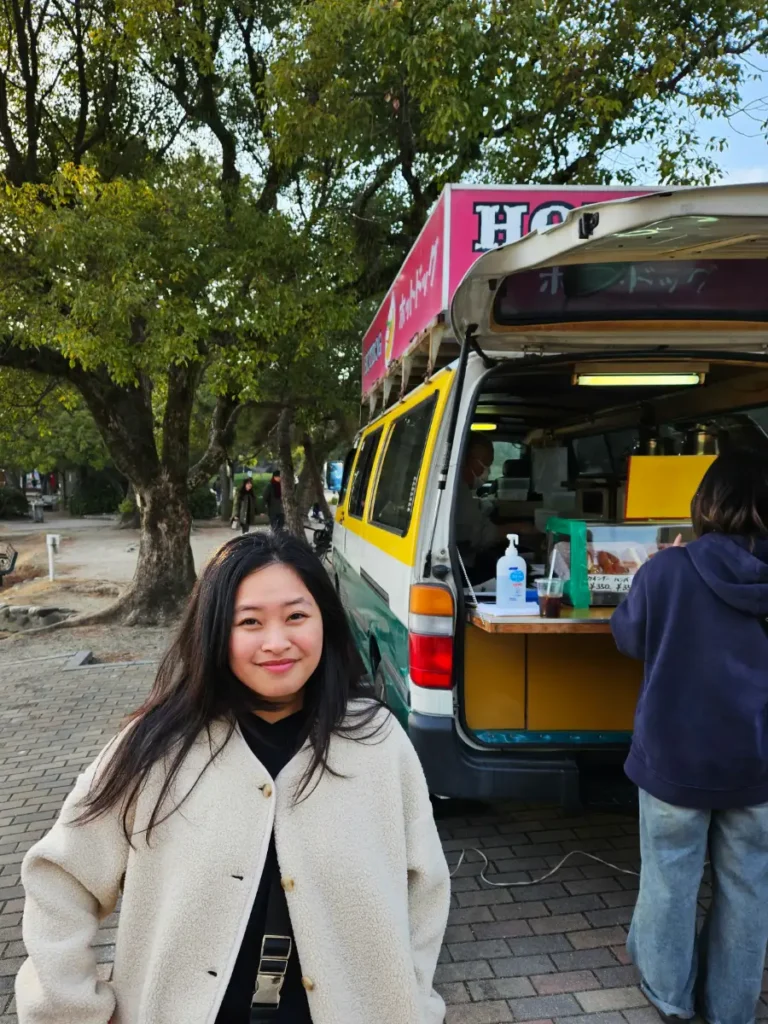
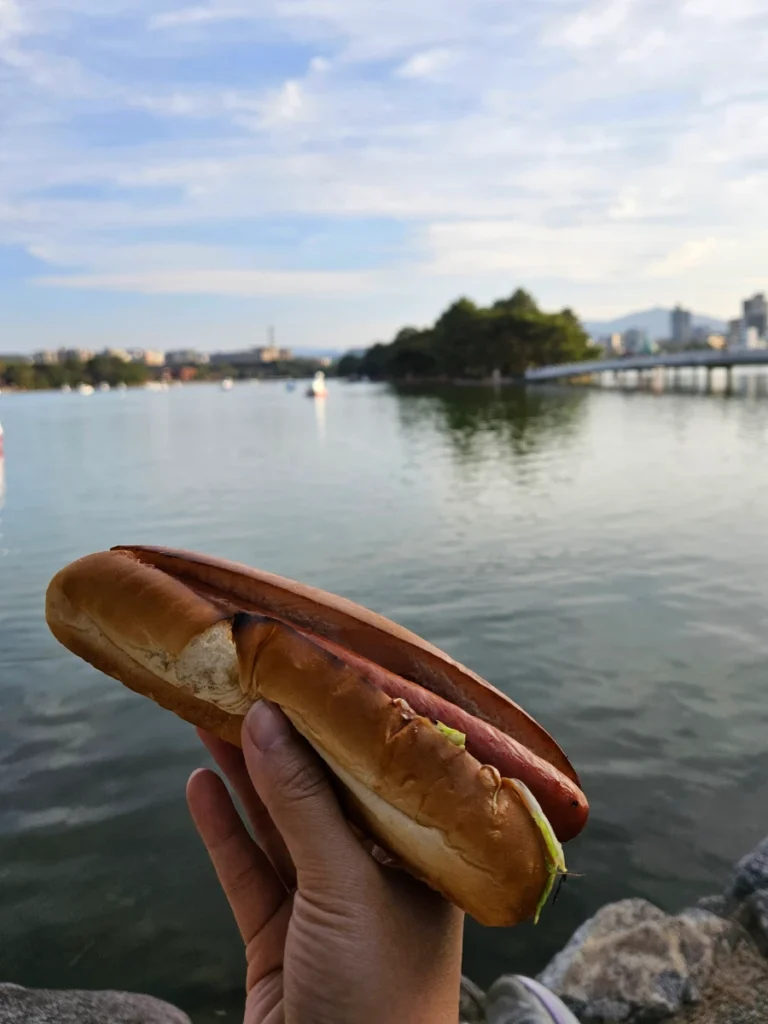
Walking is probably my favorite way to get around Fukuoka. You can just be in the moment more when you’re walking around instead of zooming by on a bus or train. I like to wander the streets, see the little details, people watch, and pop into whatever cafe or shop catches my eye. You get to wander aimlessly, set your own pace, and open yourself up to spontaneous moments (like visiting a hotdog truck because you see a bunch of people standing in line – yum!)
Biking offers the same sense of freedom, and it allows you to cover more ground than walking. You’ll see a lot of people on bikes going about their daily lives – students heading to school, older ladies with groceries hanging from the handlebars.
Getting around Fukuoka is super simple and efficient. It’s perfect for the slow traveler because it frees up your time to explore and discover the city. Maybe do a little bit of planning to avoid getting lost. If you do get lost, be open to a few detours. We discovered an amazing little bakery because we accidentally got off at the wrong stop! Download a good transport app (Google Maps is my best friend) and don’t be afraid to ask for help – friendly interactions are part of the journey!
Things To Add to Your Fukuoka Itinerary
Okay, so this is the section you’re probably the most interested in.
There’s so many great things to do in Fukuoka, and here are some suggestions on places to visit that you can add to your slow travel Fukuoka itinerary.
Ohori Park
Ohori Park is an oasis in the middle of the city. It’s a beautiful park lined with trees and boasts a large pond in the middle that you can walk across on bridges and islands. They even have swan boats you can rent. Here, sitting on a bench overlooking the pond, was where I fell in love with Fukuoka.
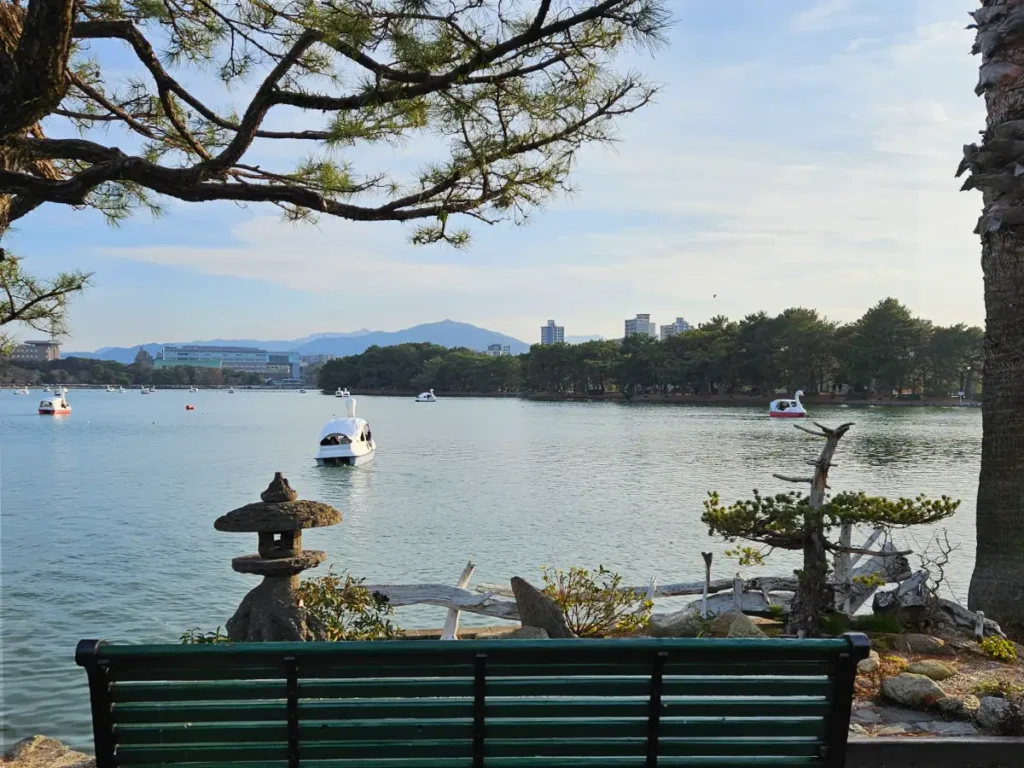
It’s so peaceful. We spent a lot of time strolling along, people watching, and listening to a man playing a trumpet for the ducks.
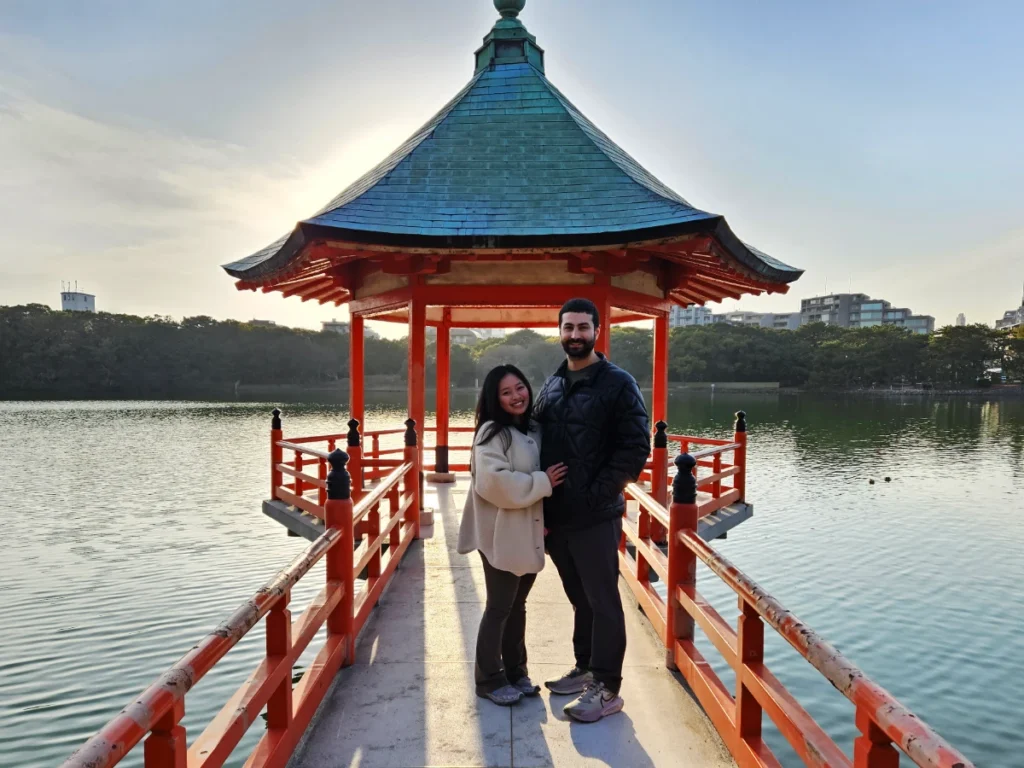
The park is built around the remains of Fukuoka Castle’s moat and you can visit the Fukuoka Castle Ruins and the Fukuoka Art Museum nearby.
Seaside Momochi
Located along the coast, Seaside Momochi has various attractions that include beaches, museums, and shopping.
On sunny days, the beautiful stretch of beach is packed with children playing by the water, couples lounging on the sand, and friends playing beach volleyball. You can spend the day lounging on a blanket basking in the sun, people watching, and listening to the sound of the waves. It’s also a great place to enjoy the sunset over Hakata Bay.
Seaside Momochi is also home to Fukuoka Tower, Fukuoka’s tallest building, with an observation deck that offers incredible 360-degree views of Fukuoka, the coastline, and even the surrounding mountains on a clear day. Stay past sunset to see the tower beautifully illuminated at night.
Shrines
For a deeper and quieter experience, explore the spiritual side of Fukuoka by visiting one (or more) of its many beautiful shrines.
Kushida Shrine is the guardian shrine of Hakata and is home to the Hakata Gion Yamakasa festival that takes place in the summer. At the entrance to the shrine is a towering ginkgo tree that’s over 1,000 years old.
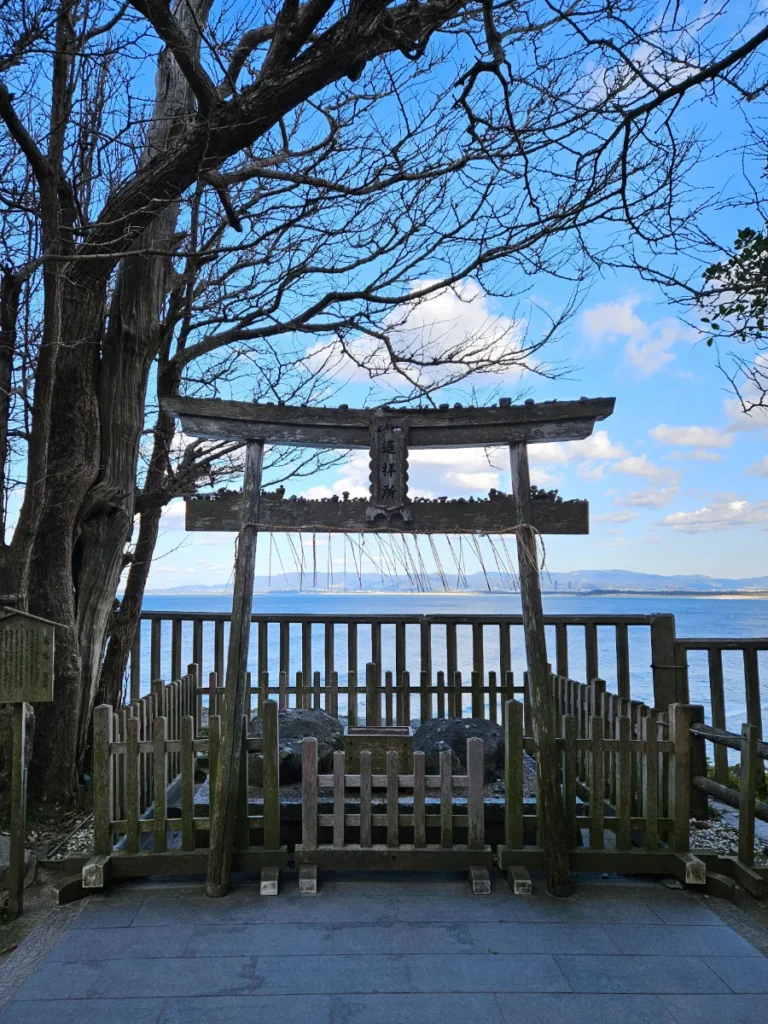
Perched on a hill, Shikaumi Shrine is a Shinto shrine dedicated to three sea gods and is the guardian deity of Hakata Bay. We passed by a torii gate and followed the stairs leading up to the shrine. Here you can marvel at the beauty and tranquility of the shrine and the amazing sea views.
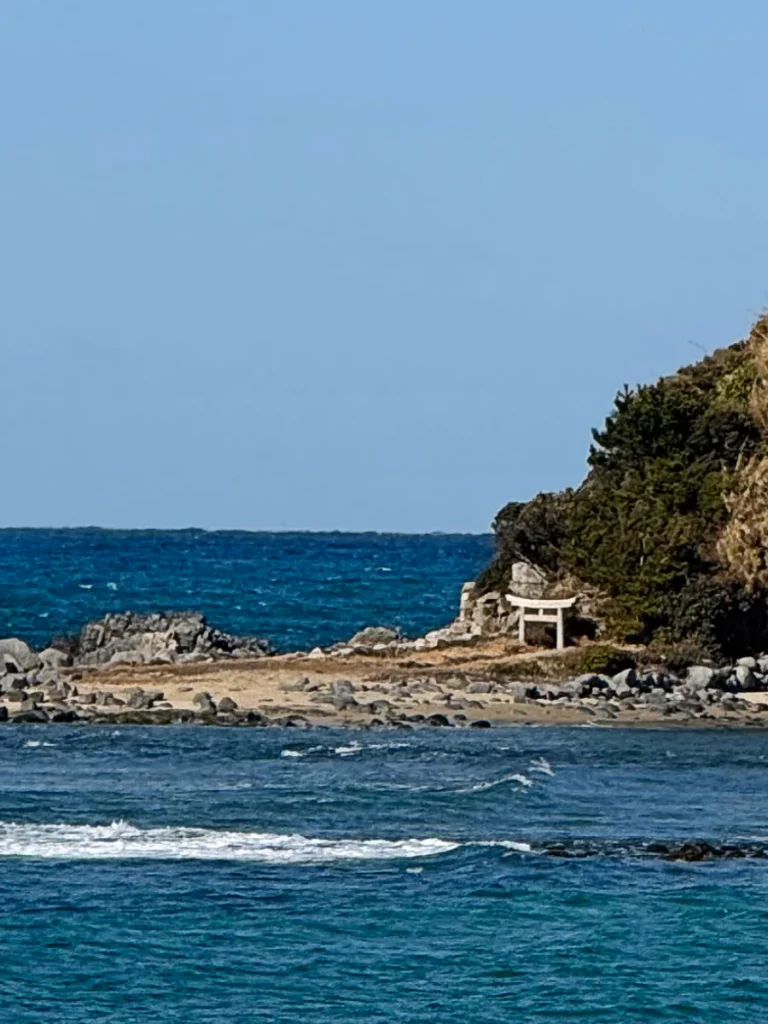
Less than an hour from the city center, Dazaifu Tenmangu Shrine is dedicated to Tenjin, the deity of learning, culture, and the arts. You can take your time strolling around the gardens, museums, ancient camphor trees, and thousands of plum trees that are also part of the shrine grounds. You can also try umegae mochi (grilled red bean mochi cakes with a plum blossom imprinted on top), invented in Daizaifu, from the shops near the shrine.
Uminonakamichi Seaside Park
A bus or ferry ride away from the city center is Uminonakamichi Seaside Park. There’s playgrounds, an aquarium, a water park, a zoo, and flower gardens.
It’s a great place for flower viewing and offers seasonal flower varieties that bloom at different times of the year. Visit their website for their Flower Calendar to see what flowers are blooming.
Rent a bike and cycle around. The park is so big, and biking lets you explore the area in a more relaxed way. And if you’re visiting in spring, you can enjoy biking under tunnels of cherry blossoms that were planted along the bike course.
Shikanoshima Island
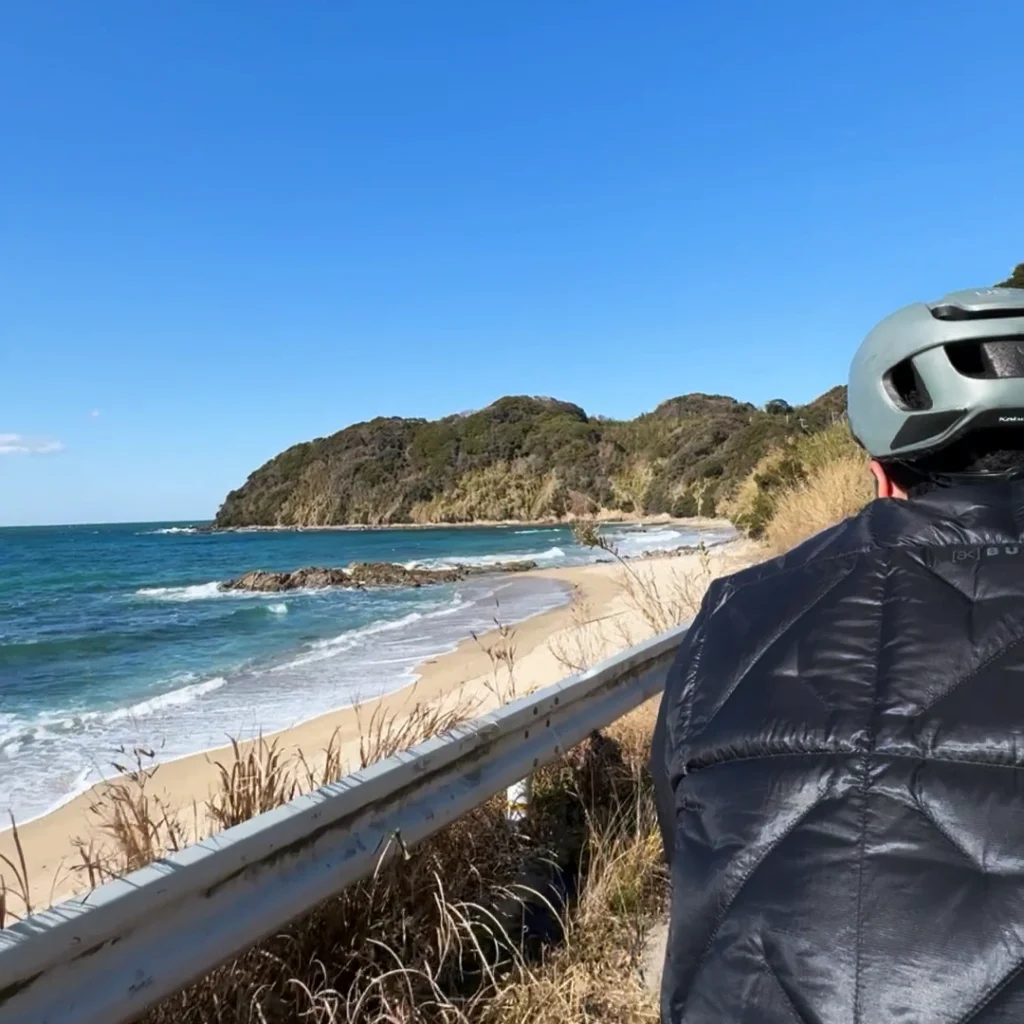
Shikanoshima is a scenic island connected to Fukuoka by a narrow strip of land. Visiting Shikanoshima is a perfect day dedicated to nature. You can enjoy stunning views of the ocean and nearby islands, feast on fresh seafood, and play in the beaches or go snorkeling.
We especially loved biking around the island and seeing all the beautiful views.
Canal City
For something completely different, go to Canal City Hakata. It’s more than just a shopping center – it’s a massive complex that’s like its own little city within the city. There’s a canal running through it, fountains that put on incredible water shows set to music, shops, restaurants, hotels, a movie theater, and an arcade. It’s super vibrant and a fun place to wander around, especially in the evening when it’s all lit up.
Yatai
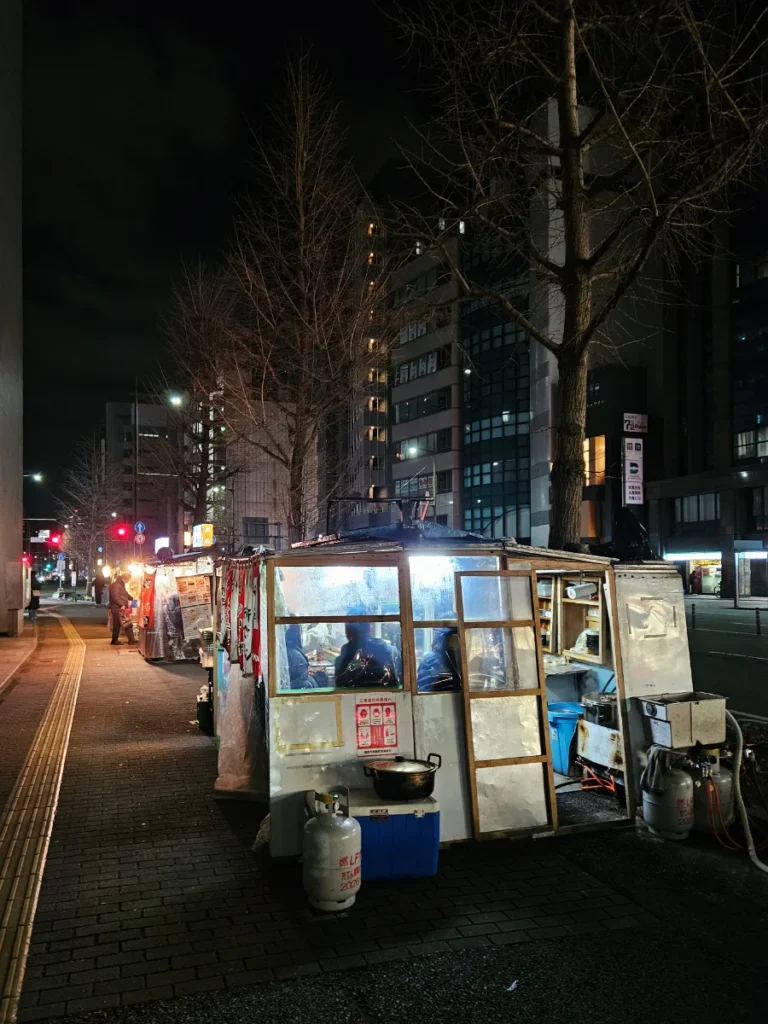
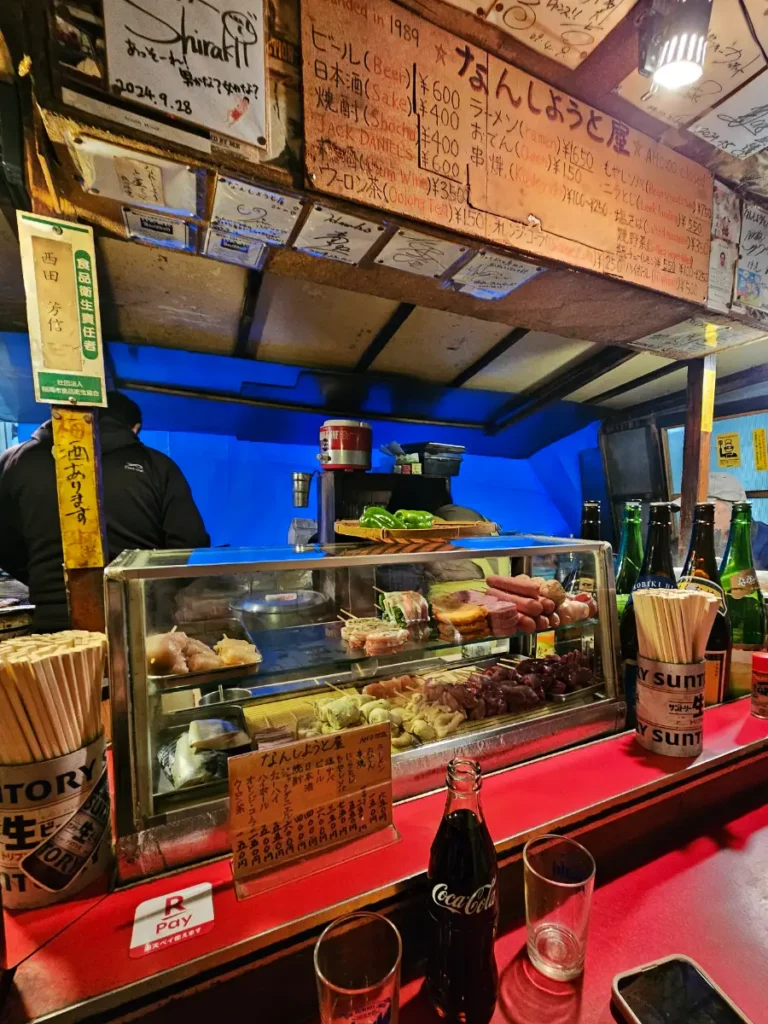
Last, but definitely not least, on this list is visiting a yatai. Yatai are mobile open-air food stalls serving up dishes like yakitori, oden, and Hakata ramen. You grab a seat at the counter that typically seats about 8 to 10 people at a time, so cozy up with your neighbors! Yatai are a perfect place to meet locals, grab a drink, and enjoy delicious food. You can find yatai all over the city, but they’re mainly concentrated in the Tenjin and Nakasu areas.
There’s a fantastic mix of places to see in Fukuoka.
Whether you’re into serene parks, historical sites, modern entertainment hubs, or unique architecture, there’s something to capture your interest and make your trip truly memorable.
Planning your next trip but don’t know where to start?
Join our newsletter to get our free Slow Travel Toolkit!
It includes our essential pre-departure checklist, a budget guide and tracker, and the packing list we used for 15 months of travel.
The Fukuoka Food Scene
If there’s one thing Tim and I love more than anything, it’s eating. We travel to eat. So imagine how excited I got when I read about all the local specialties that Fukuoka has to offer. The pins in my Google Maps were majority restaurants.
Hakata Ramen
The number one food you have to add to your Fukuoka itinerary has to be Hakata ramen. This ramen originates in Fukuoka and is made with thin noodles in tonkotsu (pork bone based) broth. The broth made from pork bones is simmered for hours until it gets this cloudy milky look and super rich and mouth watering flavor. The toppings are simple but effective: slices of chashu pork, green onions, and pickled ginger.
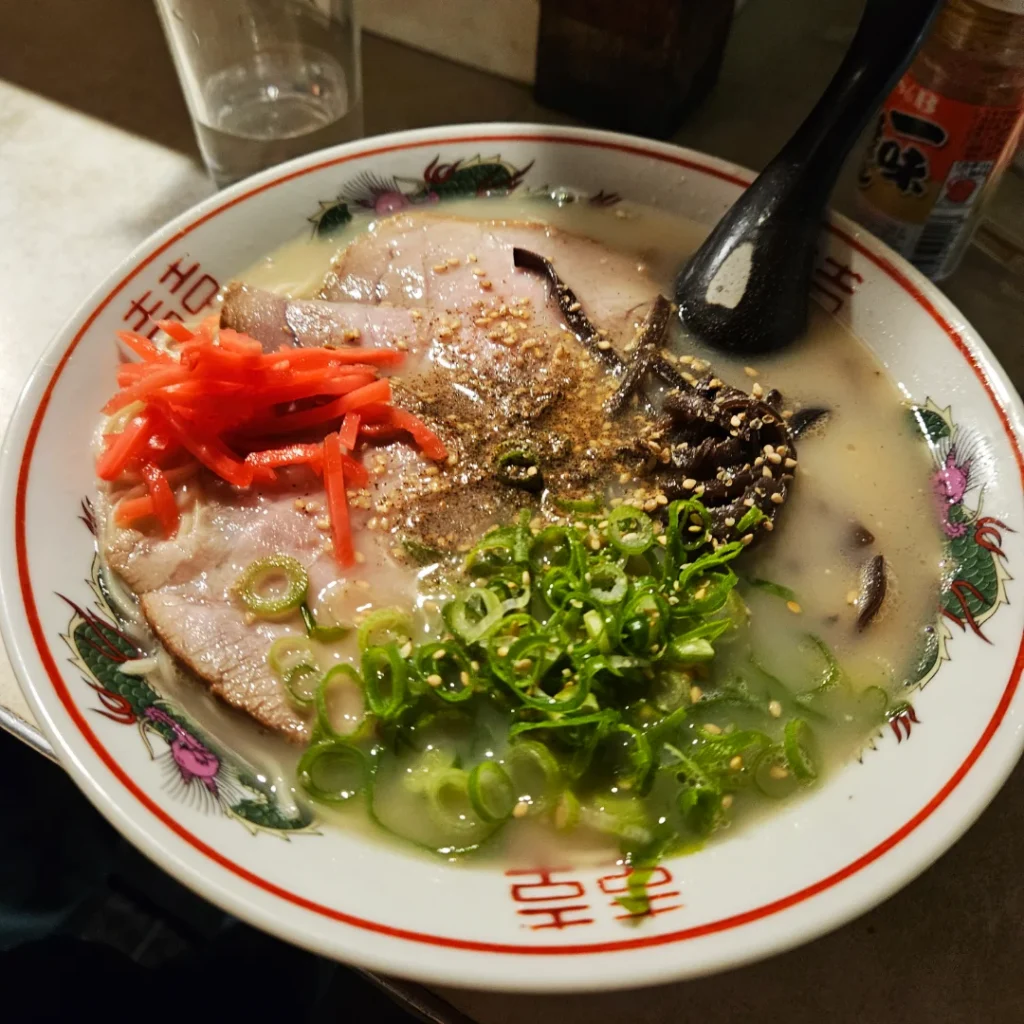
My favorite Hakata ramen has to be from a yatai in Tenjin called Nasuno Daihachi. Tim and I decided to share a bowl because we already finished off so many orders of yakitori. I knew we shouldn’t have shared the moment I tasted the punchy flavors of the broth and had a bite of the springy noodles. Amazing.
Motsunabe
For something a little more adventurous, try motsunabe. This is a hot pot with beef or pork tripe simmered with vegetables like cabbage, chives, and garlic in a savory broth. Tripe sounds a little intimidating if you’re not used to it, but when cooked right, it’s incredibly tender and flavorful. We were in Fukuoka in February so sharing a pot of motsunabe on a chilly evening was very satisfying.
Yakitori
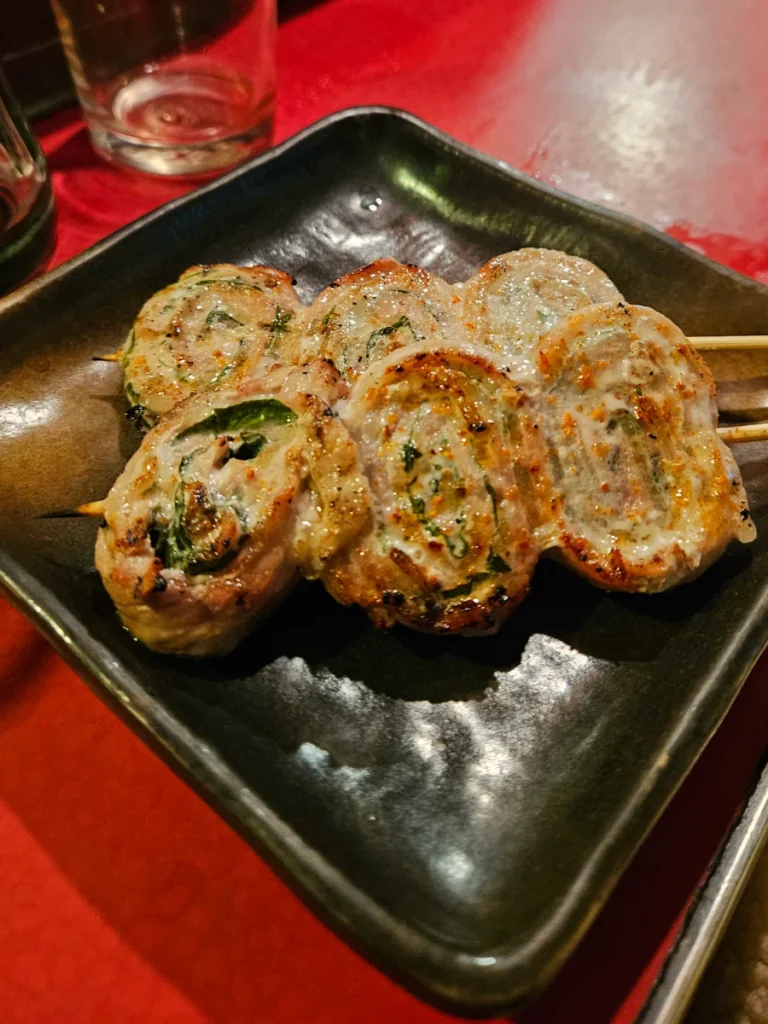
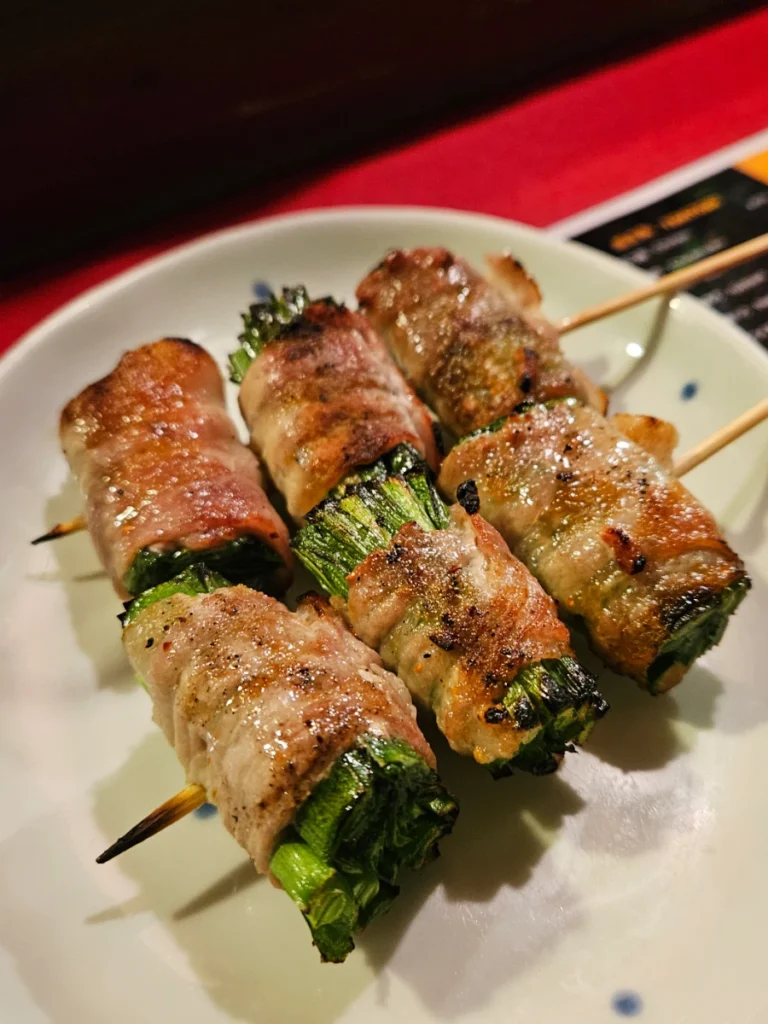
You can’t leave a yatai without having yakitori! Yakitori are grilled chicken skewers, made to order and grilled over charcoal. The meat is so juicy and flavorful and carries that smoky taste from the grill. At some stalls and restaurants, yakitori can also refer to other skewered meats other than chicken. I personally really love the pork belly with shiso leaf. Tim loves the pork belly with green onion. Yum!
Pro Tip: Yakitori goes perfectly with a frosty glass of beer. Cheers!
Mentaiko
Finally, we have mentaiko. This chili marinated cod roe is a Fukuoka specialty, and you’ll find it everywhere. It’s got this unique briny, slightly spicy flavor that’s totally addictive, and you can eat it with rice, pasta, or even on toast. I really, really love mentaiko pasta, a creamy dish made with cream, butter, parmesan, and of course, mentaiko.
Where To Stay in Fukuoka
Where you stay shapes your experience, so finding the right place should be at the top of your list when planning your Fukuoka itinerary. Are you looking for a place close to public transportation? An area where the places you want to visit are clustered together? A neighborhood filled with cute shops and cozy cafes? Or maybe you want to find a sleepy community perfect for peaceful mornings and relaxing evenings.
Fukuoka’s got a great mix of options depending on what you’re looking for and what kind of vibe you’re after. When planning our trip, I realized that the different neighborhoods in Fukuoka have their own distinct personalities, which definitely influenced where we wanted to stay. Here are some of the more popular ones.
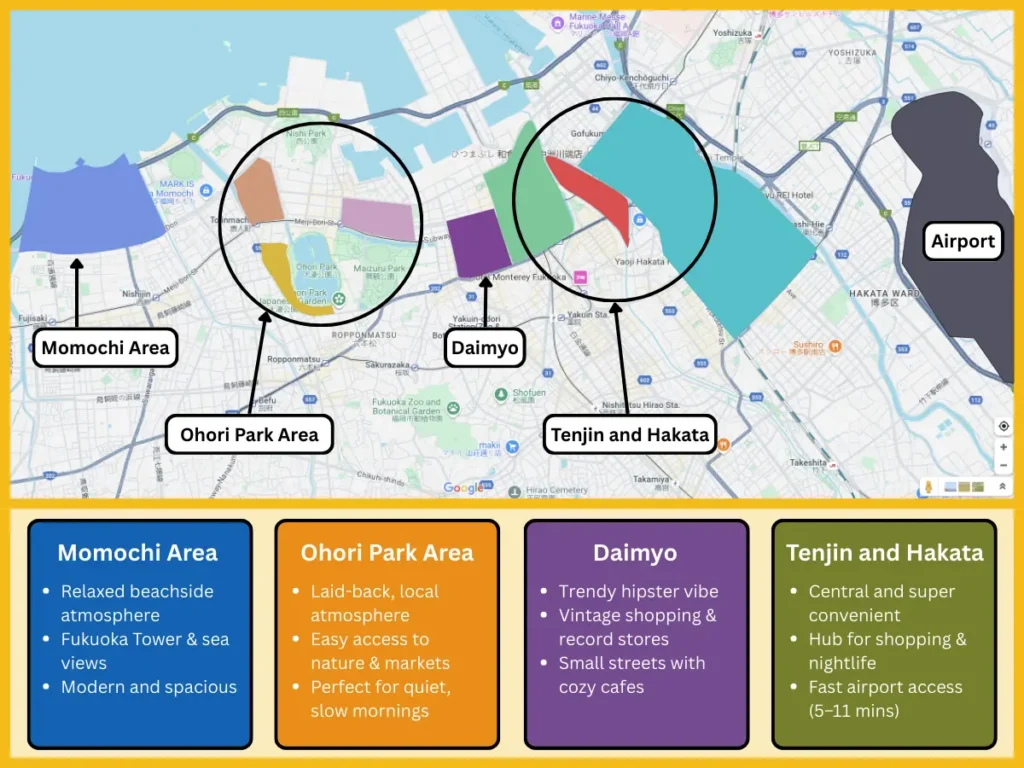
Momochi Area
The Momochi Area has the Momochi Seaside Park so you will have easy access to the beach. It’s perfect if you want a more relaxed vibe and ocean views. Make sure to catch the sunset overlooking Hakata Bay if you’re staying in this area!
Ohori Park
We chose to stay at Heiwadai Hotel Otemon near Ohori Park because we were after a more-laid back atmosphere. In this general area there’s Tojinmachi, Otemon, and Ohori.
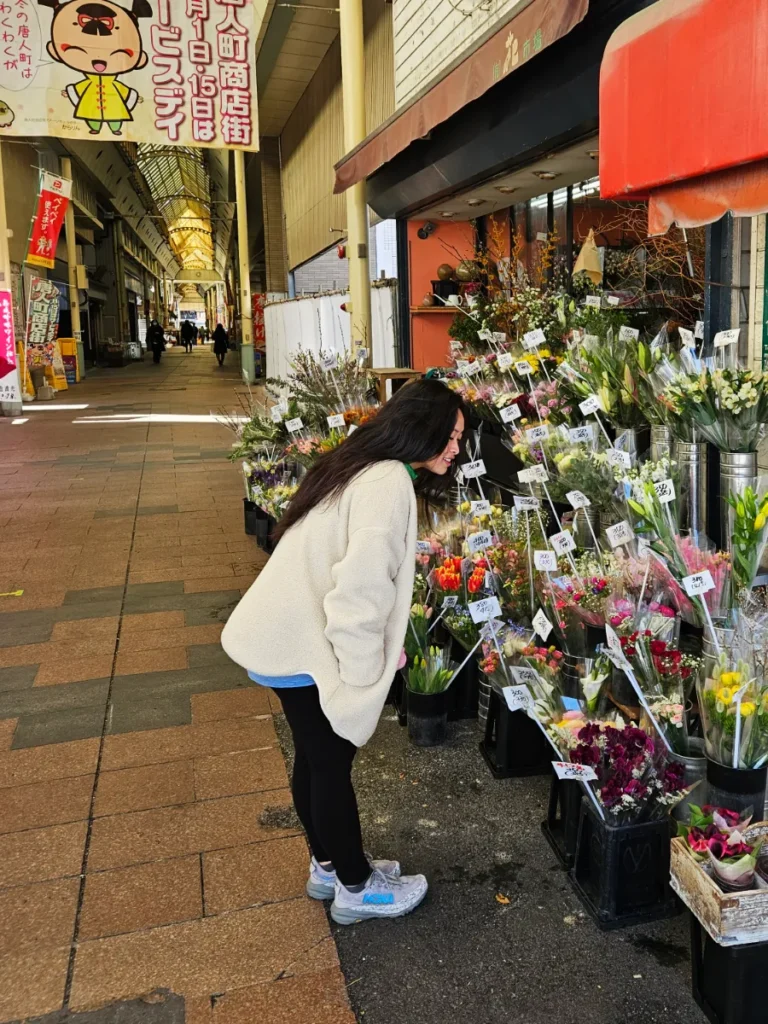
You will have easy access to nature and culture, and we loved walking around the local markets and shopping streets. And though it might seem like an escape from the city, it’s actually only a short bus or subway ride to the city center.
Daimyo
For a more hipster vibe, Daimyo is the place to stay. It’s still popular but it feels less touristy than Tenjin nearby. Here you can wander the streets as you shop vintage clothes, browse record stores, and sip coffee at the trendy cafes. It’s not the biggest area, but it’s definitely a vibe.
Tenjin or Hakata
If you want to be right in the thick of things, close to major transport hubs and lots of shopping and dining, stay in Tenjin or Hakata (consider Nakasu or the area around Hakata Station). They’re both super convenient with easy access to public transportation. And if you’re looking for nightlife, there’s plenty of bars and clubs in the area.
We stayed at the TKP Sunlife Hotel after getting back from our Beppu and Yufuin onsen trip and it was only a 2-minute walk to Hakata Station!
While these areas may be busy, you can explore the smaller streets and visit smaller eateries and shops for a slower vibe. And because it’s so well-connected, you can easily take day trips by bus or train away from the city.
Accommodation Types for the Slow Traveler
Once you’ve decided on a location, it’s time to decide the type of accommodation you’re going with. There’s plenty of options like guesthouses and homestays for a more local experience or private accommodations (like Airbnb) for longer stays. For those looking to make connections and meet like-minded travelers, you can even opt for hostels with common areas. No matter where you choose to stay, your accommodation is your temporary home so you should find a place where you feel comfortable
Booking in advance is always a good idea. Especially if you’re traveling during peak season. Think about your budget too, of course. Prices can vary quite a bit depending on the location, type of accommodation, and time of year. Do a little research and compare prices online!
Planning Your Slow Travel Adventure in Fukuoka
When preparing a slow travel experience, identifying a list of must do’s is important. But it’s not all about filling your schedule, it’s also about giving yourself the freedom to explore and be open to the unexpected. Here are some planning tips:
Timing Your Visit
First off, when should you visit? The “best” time to visit Fukuoka really depends on what you’re looking for.
- Spring (March to May) is a great time to visit and see the cherry blossoms. The weather is gorgeous and you can experience hanami (flower viewing). Find a spot at parks like Ohori or Uminonakamichi and spend hours picnicking and soaking in the beauty along with the locals. Spring is peak season though, so expect more crowds and higher prices, especially with accommodations.
- Summer (June to August) can get pretty hot and humid, but there’s plenty of events like the Hakata Gion Yamakasa festival held from July 1st to the 15th and fireworks displays. I typically avoid the heat so I would explore during the cooler mornings and evenings and hunker down in air-conditioned cafes and shaded green spaces during the hot times of the day.
- Fall (September to November) brings mild weather and vibrant autumn foliage. It’s perfect for long walks, exploring parks, and enjoying outdoor markets without the intense summer heat.
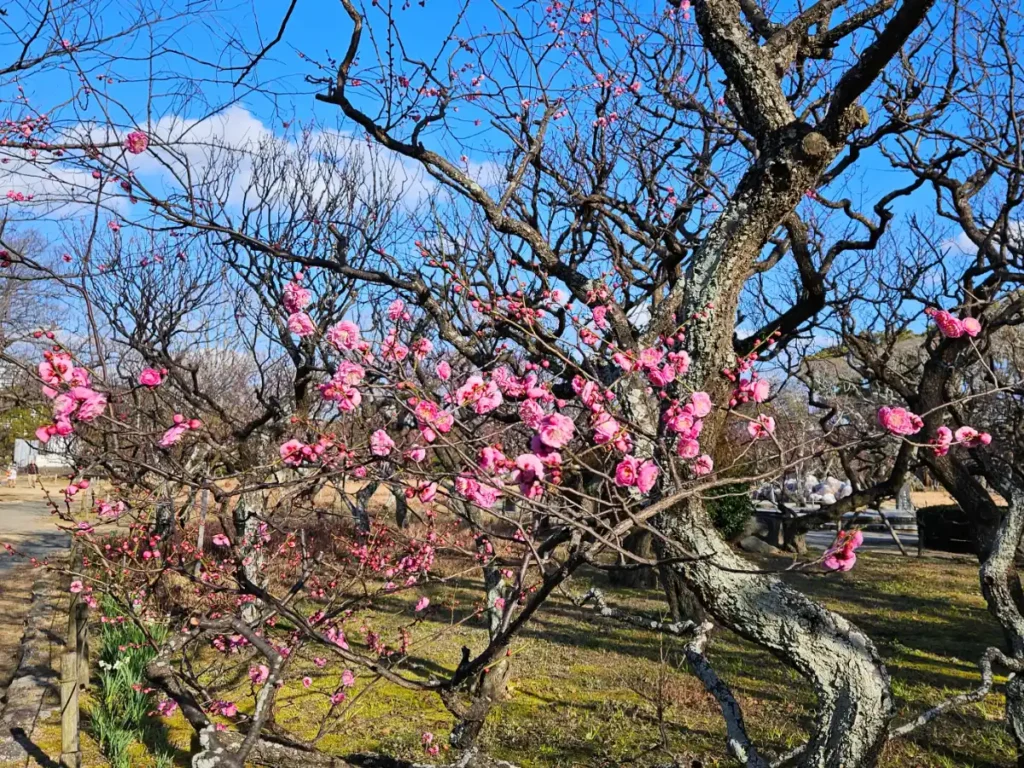
- Winter (December to February) is a great time to enjoy cozy indoor activities, visit onsen (hot springs) and experience a quieter side of the city. We visited in winter, and found that winter in Fukuoka was milder compared to other parts of Japan. We even got to see plum blossoms! There’s also less crowds which can mean a more relaxed pace at popular sites.
Respect Local Customs
Familiarize yourself with basic local customs. Some of them include:
- On Public Transport: Keep conversations quiet and refrain from talking on the phone to respect fellow passengers. Offer your seat to the elderly or those in need. Wait for others to exit before boarding.
- Entering Homes or Traditional Establishments: Remove your shoes when entering someone’s home, temples, shrines, and any place that requires it. There should be an area where you can place your shoes.
- Dining Etiquette: Avoid sticking chopsticks upright in rice, passing food directly between chopsticks, or using chopsticks to point. What shouldn’t be avoided is slurping your noodles!
- Politeness: A simple bow when greeting or thanking someone is appreciated.
Learn Simple Phrases
You can get around Fukuoka speaking English. The city is very accommodating to English speakers, but learning a few Japanese phrases can be incredibly helpful and is always appreciated by the locals.
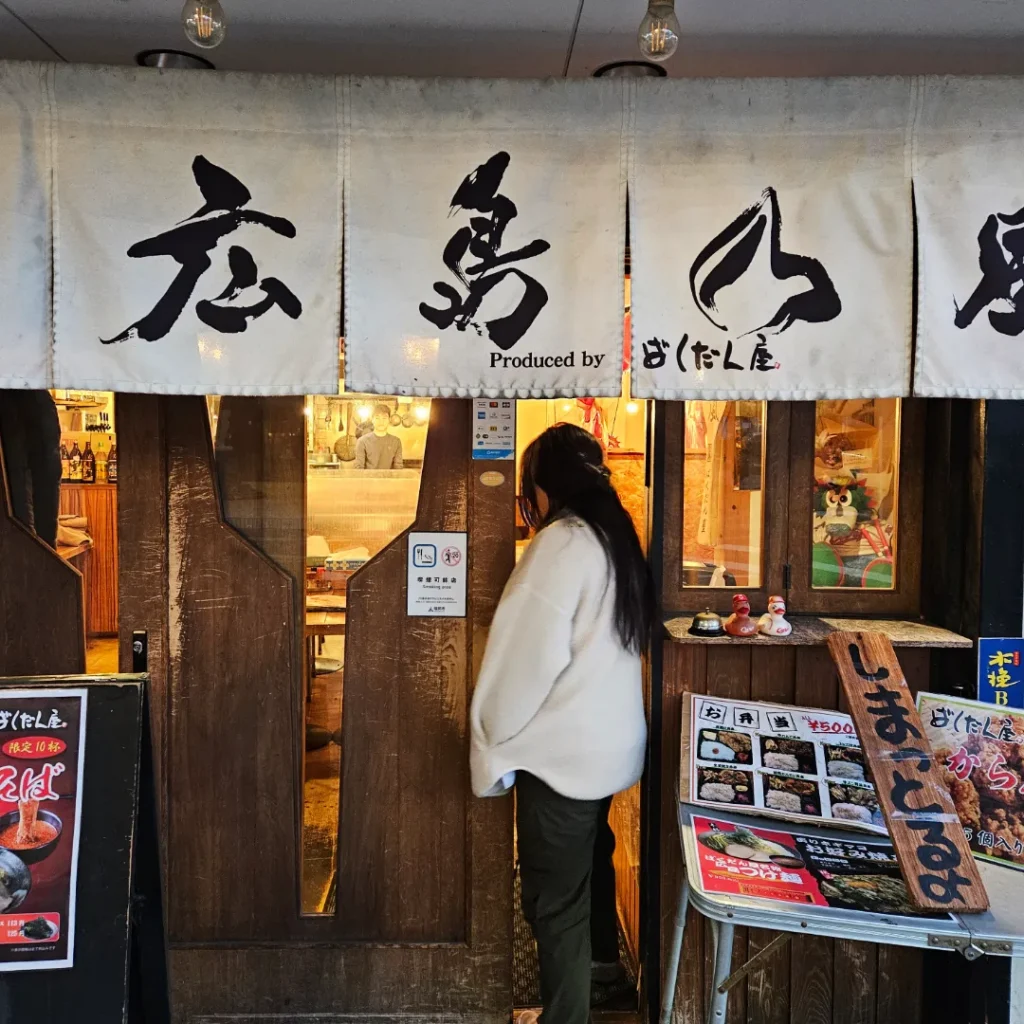
- You can start with essentials like Konnichiwa (hello), Arigato gozaimasu (thank you), and Sumimasen (excuse me/I’m sorry). Whenever we walk in to a restaurant, we always call out a Konnichiwa in greeting.
- My most used phrase had to be Oishii desu (it’s delicious). I used this every single time I went out to eat, which was always. The simple (and true! Japanese food is next level) compliment was always met with smiles.
- Knowing how to ask for the check (Okaikei onegaishimasu) or pointing to something and asking Kore wa nan desu ka? (What is this?) can make local eateries and shops more relaxed and enjoyable.
Don’t be afraid to try. All the locals we interacted with were very patient and encouraging.
Stay Connected
Staying connected is a necessity nowadays, especially for safety, navigation, and easier planning. You have a few options:
- Local SIM card: Gives you data and a local phone number, which can be handy.
- Pocket Wi-Fi: Provides a personal Wi-Fi hotspot and is great if you have multiple devices or are traveling with others
- International data plan: Convenient because you use your existing phone number, but it may be costly.
We have international data plans so we haven’t needed the first two options. With our data plan, we’re able to call and text, but we’re limited to a certain amount of data usage per month. We haven’t run out of data yet but if we do, getting one of the previous options is always doable!
Navigate with Ease
Grab yourself an IC card like Suica or Pasmo. IC cards are prepaid, contactless cards that can be for public transportation and shopping. You just tap them on the reader when you get on and off buses and trains. You don’t have to stop at the ticket machines and buy tickets every time.
Here’s our chonky good luck charm with Tim’s Pasmo card.
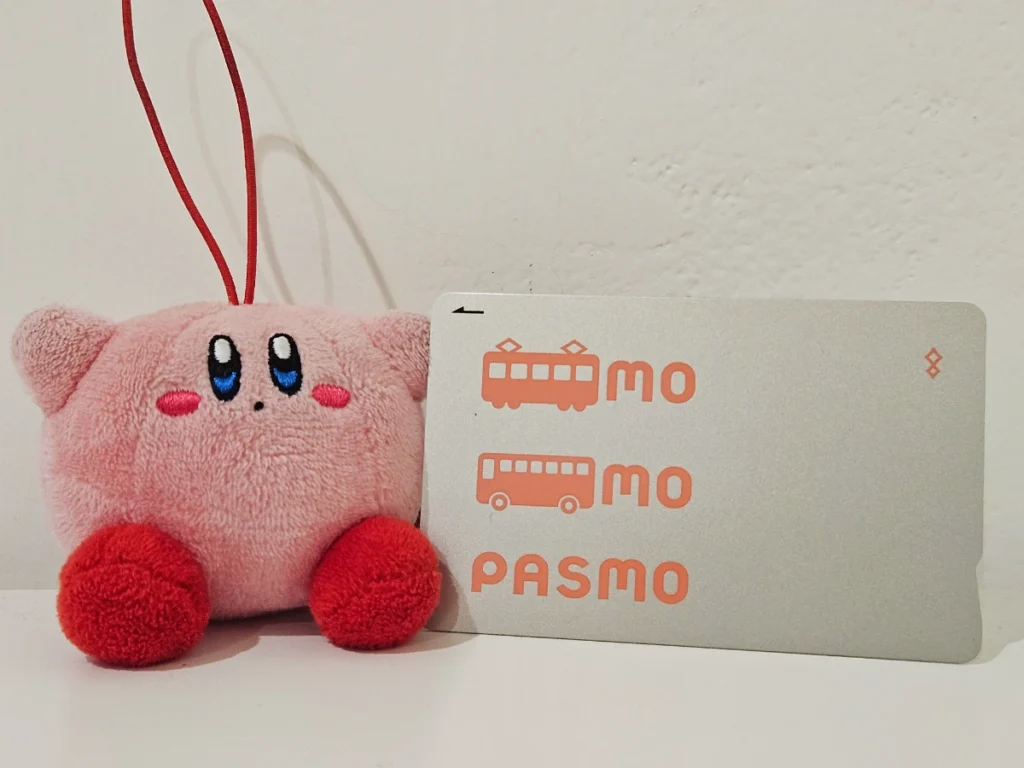
IC cards can also be used to pay for purchases at convenience stores, vending machines, and even some restaurants and supermarkets.
You can purchase IC cards at major stations and top them up at convenience stores or ticket machines at metro and train stations. Top-ups require cash so make sure you have some handy!
You can also buy an IC card online and pick up the physical card from the airport upon arrival in Japan.
Pro Tip: If you have an iPhone, you can add an IC card to your Wallet and skip purchasing a physical card. This means that you can use your phone to tap the train and bus readers and you can add more money to your Suica with a credit card. You just do it in the Wallet app using Apple pay.
Managing Money
Credit cards are widely accepted in Fukuoka, but you should still have some cash on hand. This is especially true for smaller shops, local restaurants, and those awesome yatai.
You can exchange currency at the airport or at banks in the city. For cash withdrawals, our go to place is at the 7-Eleven ATMs since they’re everywhere. Be aware of the exchange rates and any fees.
Carrying cash and card provides flexibility for both convenience and supporting local, cash-based businesses.
Embrace the Unexpected
Finally, and most important to me, is to allow for flexibility. Be open to the unexpected. Having a plan is great, but some of my favorite moments happened when I stumbled upon something I didn’t plan.
- Don’t Over-Schedule: You don’t have to plan every second of your trip. Leave free blocks of time in your itinerary. Maybe you want to stay a little bit longer at the museum, go down a curious looking alley, stop and pet someone’s dog.
- Follow Your Curiosity: If a side street looks interesting, wander down it. If a small shop catches your eye, pop in. If you see locals lined up in front of a restaurant, get in line right behind them.
- Take a Detour: Just like when we got off at the wrong subway stop and found that amazing little bakery, your best discoveries can happen by accident. Don’t be scared of getting a little lost or taking a detour. Take it as part of the adventure.
Walking around a sleepy shopping street allowed us to find the best aji fry we’ve ever tasted and striking up a conversation with strangers at a yatai led to drinks and recommendations on the best hot springs in Beppu.
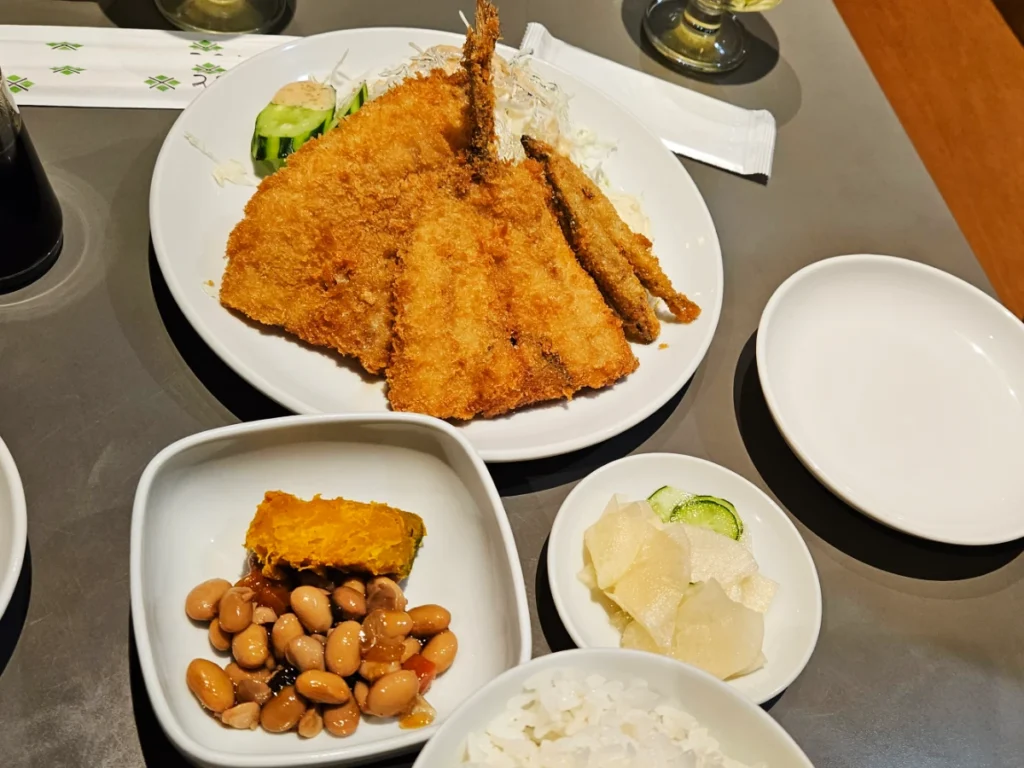
By embracing the unexpected, you get to truly experience Fukuoka at your own pace.
Conclusion
I hope you found this Fukuoka guide valuable. Fukuoka is a beautiful place for your slow travel journey and I hope you end up loving the city as much as I did.
As you’re putting together your travel plan, I hope this guide helps as a starting point to help you immerse in the unique mix of culture, nature, and incredible food that Fukuoka offers.
And don’t be afraid to go off-script a little. Linger at the shops a little longer, get lost in the crowd, connect with the people, and maybe try that odd-looking street food.
The city offers endless things to do, but don’t forget to savor each experience. Enjoy every unhurried moment. And happy slow travels!

Leave a Reply