
It is summer in Southern Taiwan. The days are scorching and the nights aren’t that much better.
At this point, Tim and I have spent a week in Chiayi working on a farm and living above a tea shop.
Steve, who owns the farm and the tea shop and who we’re volunteering for, pulls us aside and encourages us to join in the festivities of Taiwan’s Dragon Boat Festival.
It doesn’t take a lot for us to get on board. Ever since we started our travels, Tim and I have been eager to participate in as many festivals as we can. What better way to spend the day than immersing ourselves in a Taiwanese festival?
Table of Contents
What is the Dragon Boat Festival?
The Duanwu jie, or Dragon Boat Festival, is a traditional holiday celebrated on the fifth day of the fifth month of the Chinese calendar (which also gives it the name Double Fifth Festival). This means that it’s held around late May or early June.
This year, the Dragon Boat Festival will be held on June 19, 2026.
The festival is celebrated with activities like dragon boat racing and eating (and preparing!) zongzi.
A Local’s Duanwu Jie: Offerings, Altars, and Sticky Rice
Tim and I were very fortunate to be able to take part in a local Duanwu jie and it’s all thanks to Steve who invited us into his family’s celebration.
Visiting the Temple
Steve took us to the Jiuhua Mountain Temple in Chiayi, a beautiful multi-storied building dedicated to the Ksitigarbha Bodhisattva.
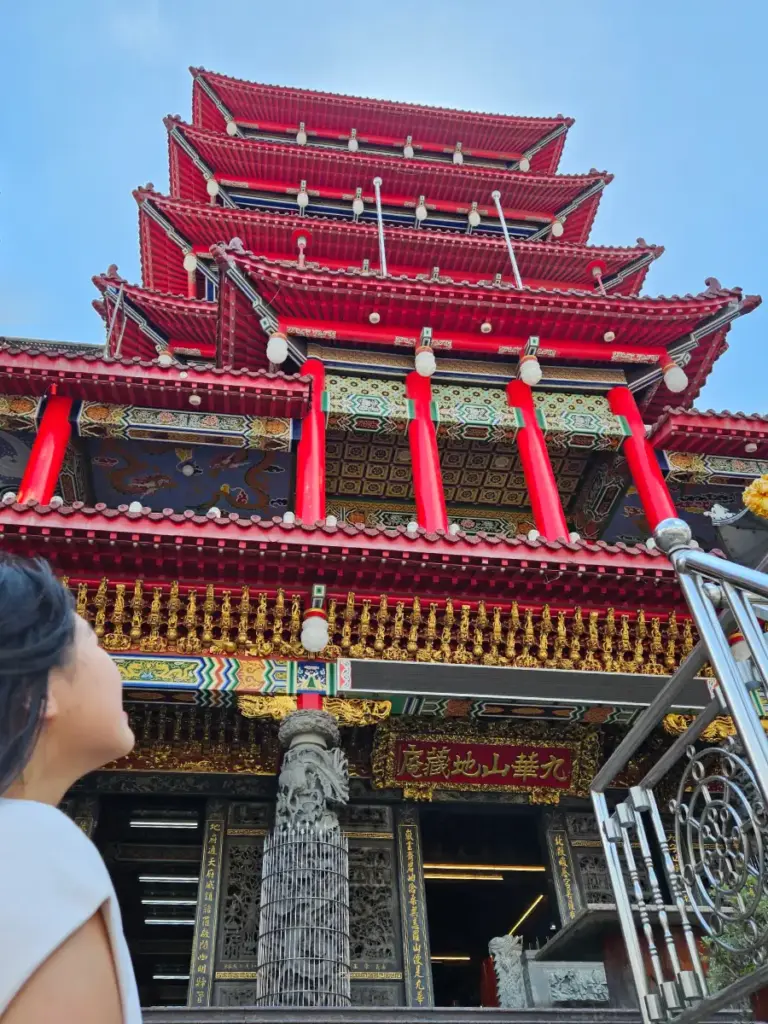
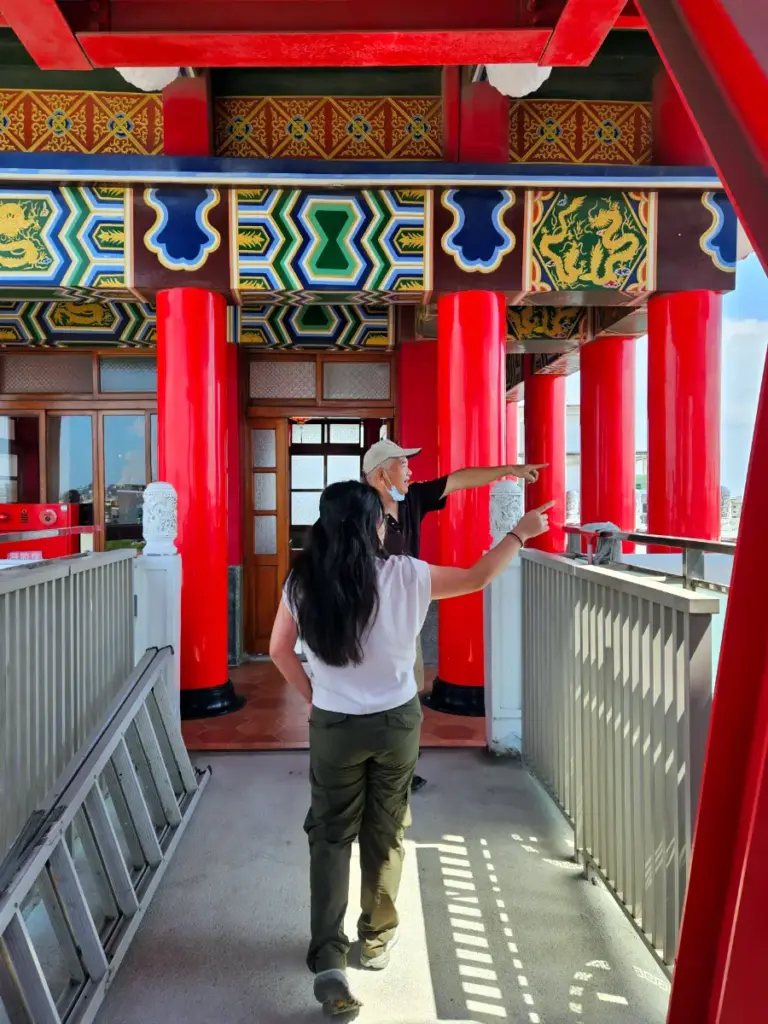
He showed us around each floor of the building, telling us stories of growing up in Chiayi and visiting this temple to watch performances like dances and plays as a child.
Steve also taught us how to use jiaobei (moon blocks) and kau chim (fortune sticks) for divination.
The jiaobei come in pairs and are thrown to ask yes or no questions to the deities. Then a kau chim is drawn. The sticks are numbered, and the number corresponds to a drawer that you can draw your fortune from.
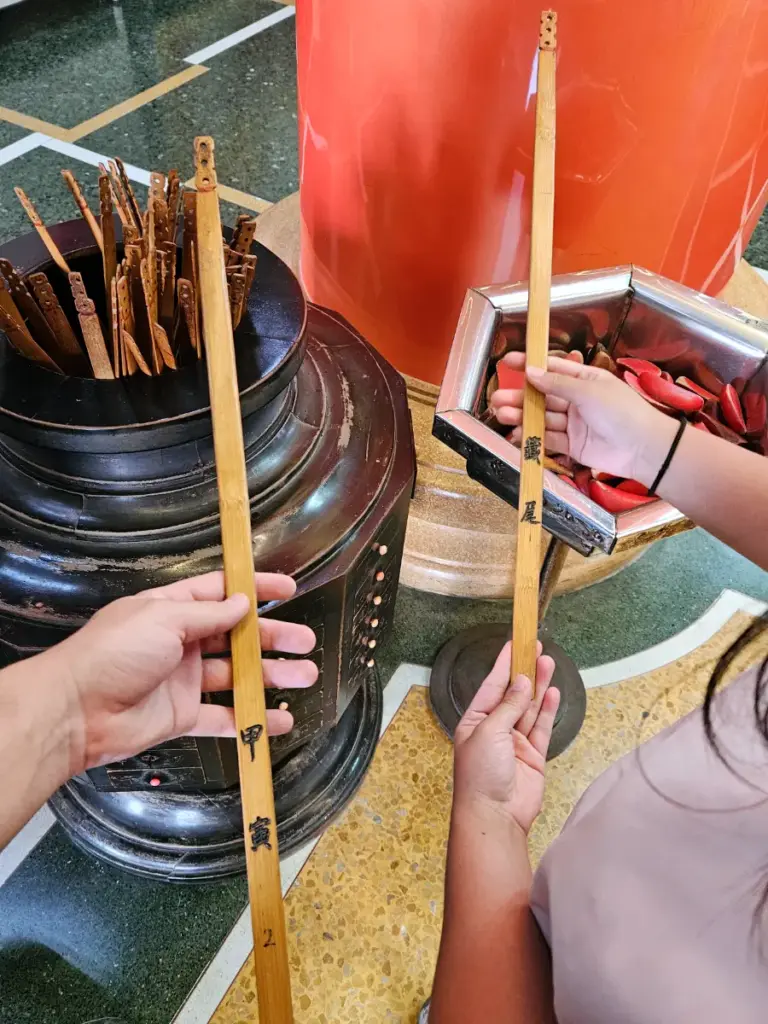
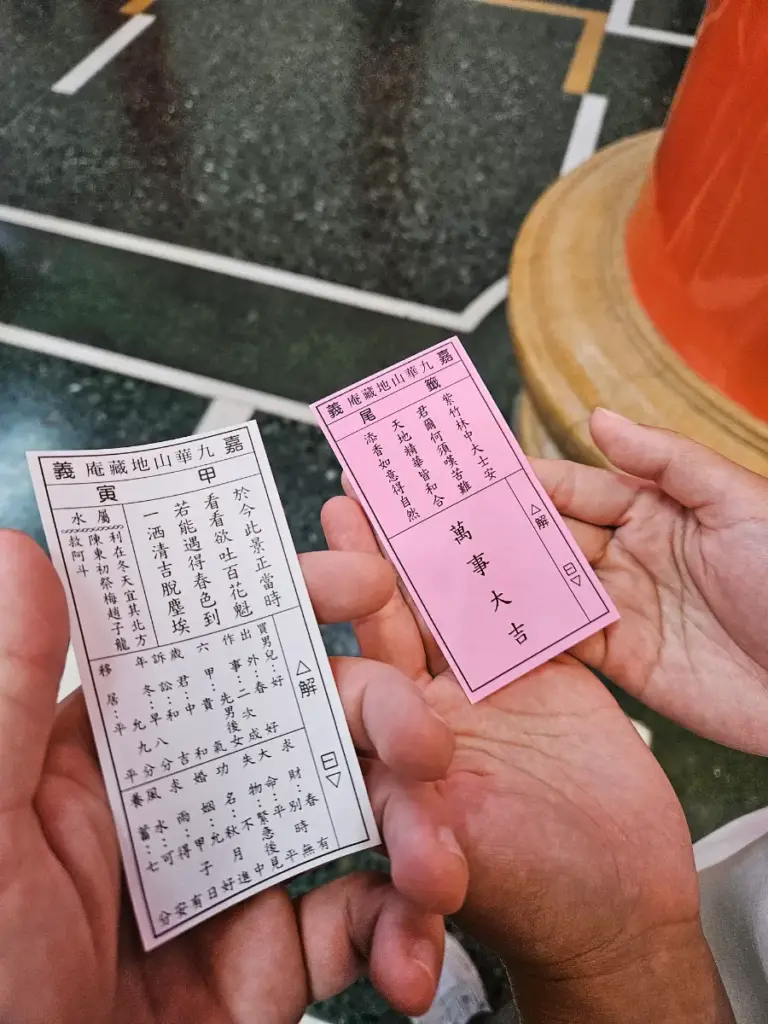
My fortune was printed on red paper which really surprised and excited Steve. He said it was really rare, the best luck possible, and it meant that I was very auspicious. Tim got a white fortune that also signified good luck. Still, Steve told Tim to stick to me so he can benefit from my great fortune.
It was such a unique experience to visit the temple with a local. Tim and I have visited many temples in the past, but it’s so different when you have someone there who shares their stories and guides you through the experience.
Home Traditions
Steve also invited us to his home as he and his family prepared for the Dragon Boat Festival.
Tim and I greeted Steve’s mom, a cute old lady with endless smiles and the uncanny ability of knowing when you finish drinking a milk box so she can place another one in your hand.
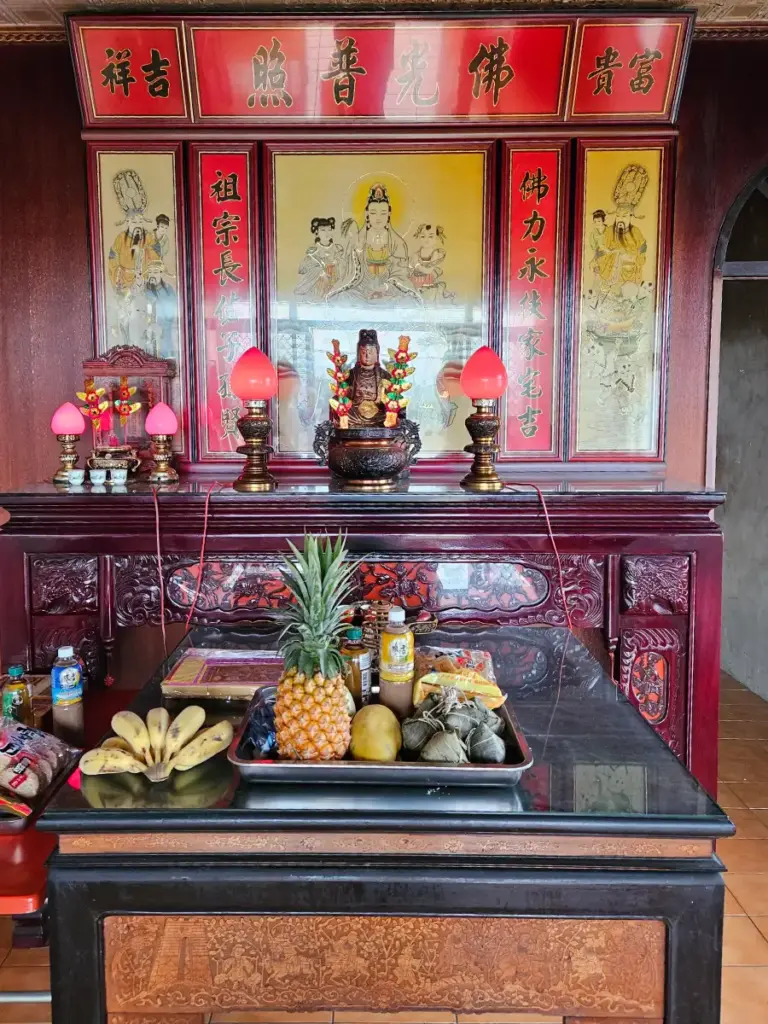
We helped bring in fruits and watched as Steve arranged them in front of the family altar.
Steve then handed us incense sticks, the smoke curling up into the humid air, and showed us how to hold them and bow in respect to the deities. Steve then collected our incense sticks, placing them into the bronze urn directly alongside his own.
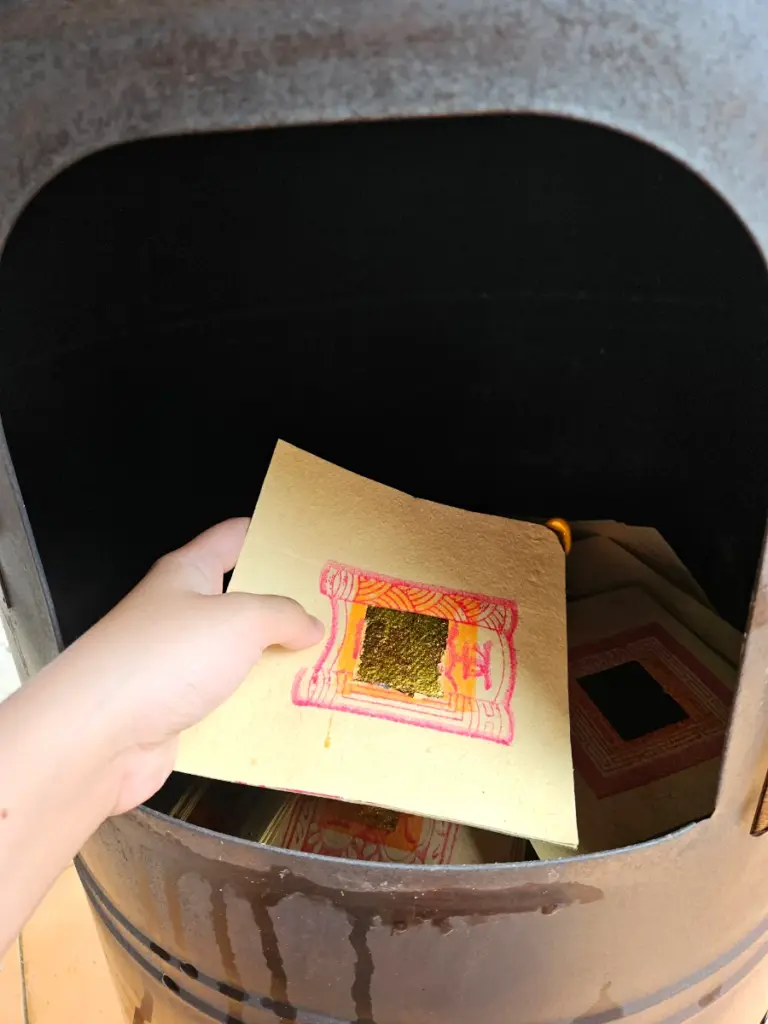
Next was the burning of the ghost money. Ghost money (or joss paper) is a paper offering that is burned to send wealth to your ancestors so that they will have a prosperous afterlife.
Tim and I stood by the wood burning stove, feeding it pages and pages of ghost money to send off to Steve’s ancestors. We were so blown away that we were able to participate in such a personal event and see how locals celebrated the Dragon Boat Festival.
Unwrapping Zongzi
It’s not a Dragon Boat Festival without zongzi, which are sticky rice dumplings with various fillings that are then wrapped in bamboo leaves and cooked.
The zongzi can be either sweet or savory, with fillings ranging from red bean paste and lotus seed to salted duck eggs and mushrooms. They can also be cooked differently, steamed (common in Northern Taiwan) or boiled (common in Southern Taiwan).
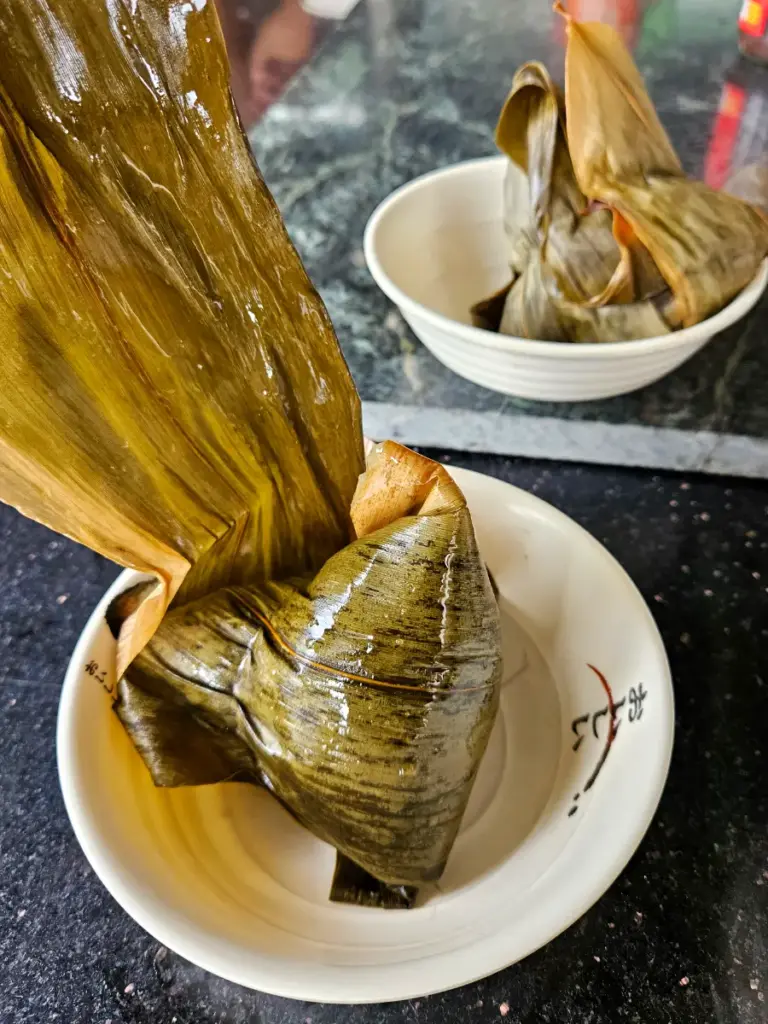
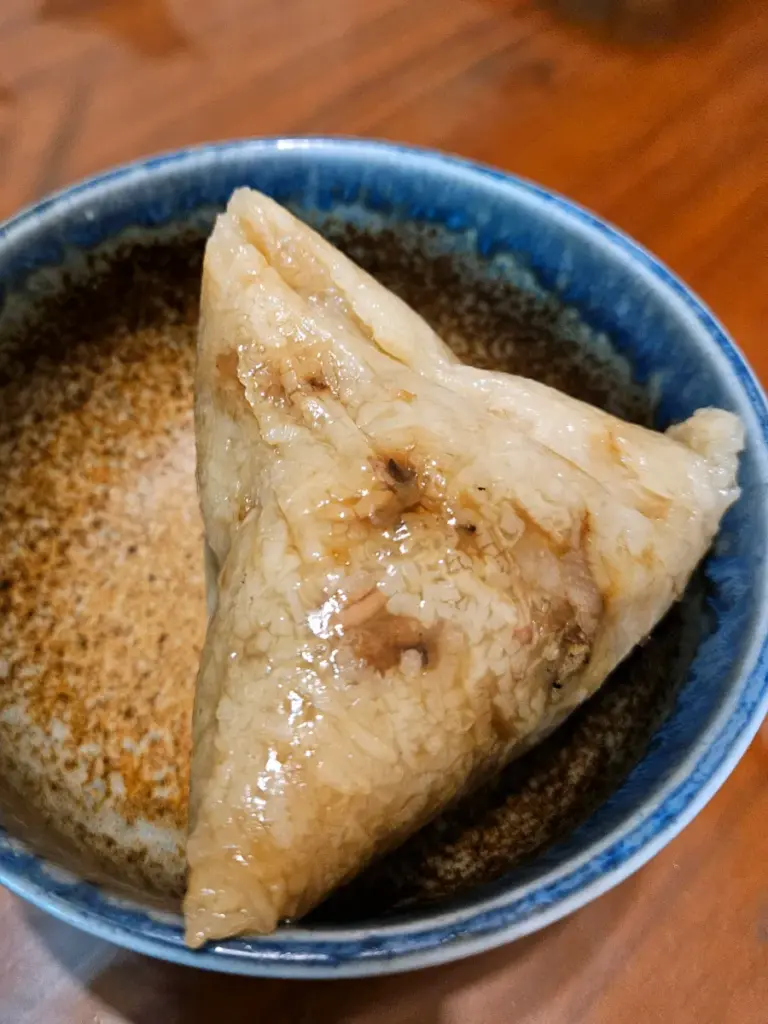
Steve’s mom prepared zongzi and they were present at the family altar alongside the offerings of fruit.
I have had zongzi from restaurants in LA before, but hers were just so much better. Unwrapping the bamboo leaves to reveal the glossy sticky rice inside. Taking a bite and getting bites of different flavors from all the fillings inside: pork, salted duck egg, mushroom, and dried shrimps.
Getting There: Riding a Scooter from Chiayi to Dongshi
So when Steve told us to join in the festivities of Taiwan’s Dragon Boat Festival, he meant for us to visit Dongshi, a harbor town several cities away from Chiayi.
I was already pulling up the local bus schedule, trying to plan when exactly we would have to leave Chiayi and how long we could stay in Dongshi, when Steve tells Tim to just drive a scooter there to avoid the 2-hour long bus ride each way.
Tim has plenty of experience driving scooters in Southeast Asia, but hadn’t yet in Taiwan. So Steve accompanied Tim to a local rental place to rent a scooter for the day.
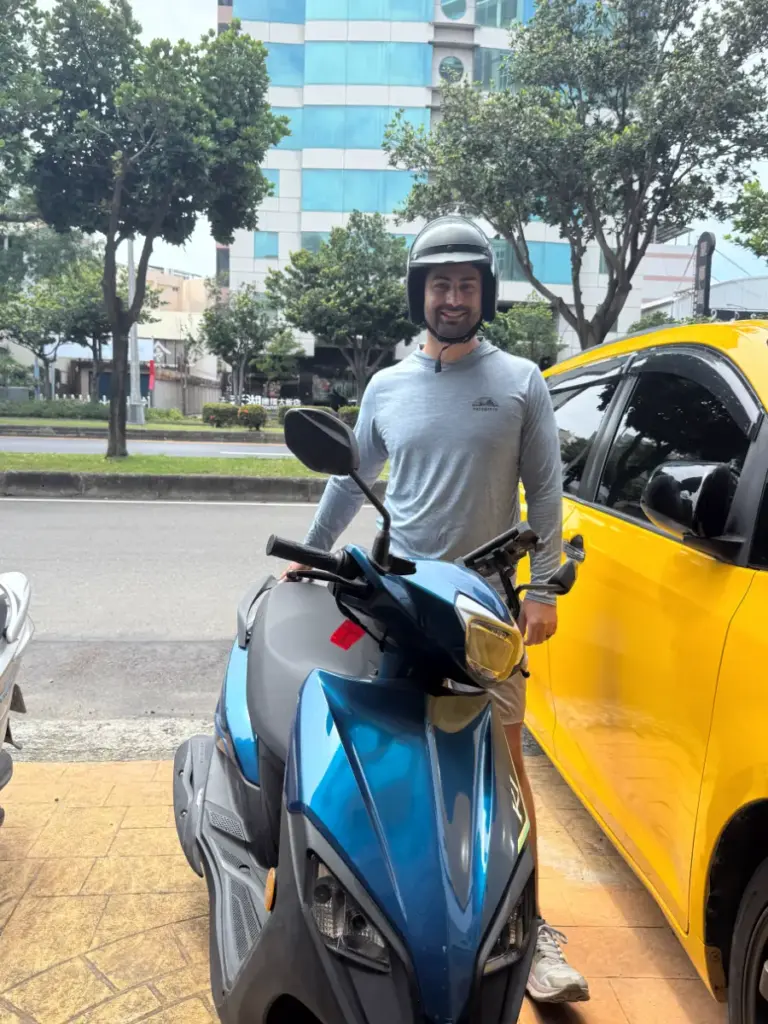
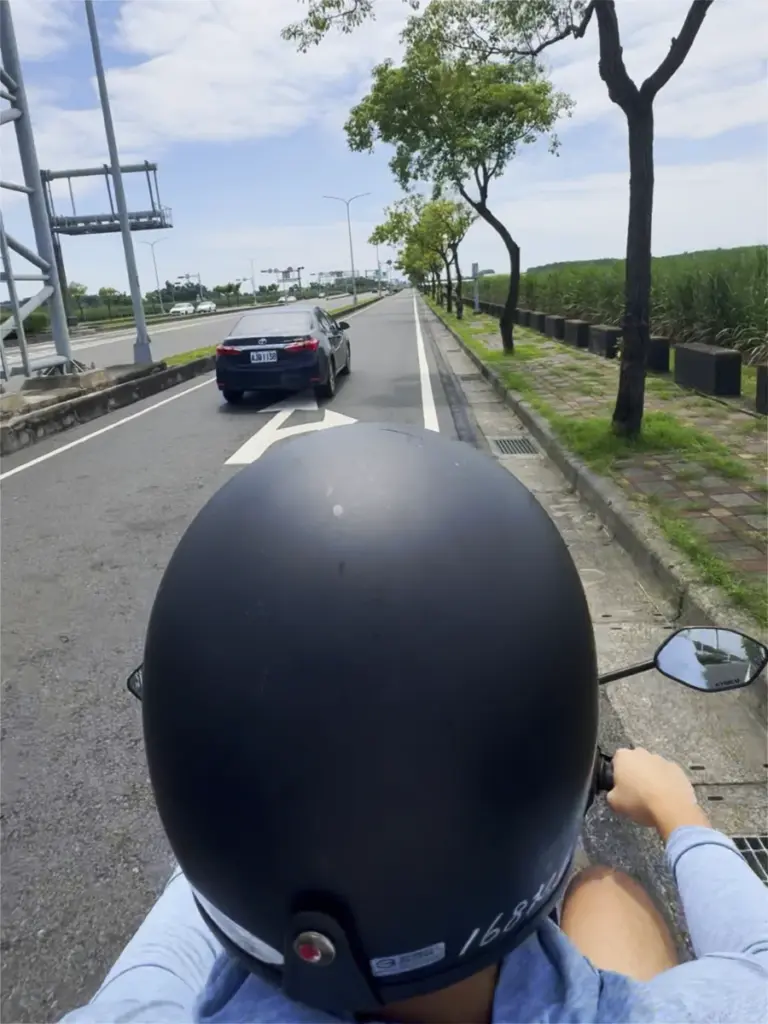
Armed with our new ride, sunshirts to protect from the heat, and a bag packed with water, Tim and I made our way to Dongshi!
The ride reminded me of just how convenient scooters are. We were able to easily bypass traffic thanks to the dedicated scooter lanes, and parking was so much easier than it would have been if we were driving a car.
Experiencing the Dragon Boat Festival at Dongshi
The Sights and Sounds of the Race
We arrived at the Dongshi Fishing Harbor around midday, when the sun was the hottest in the sky.
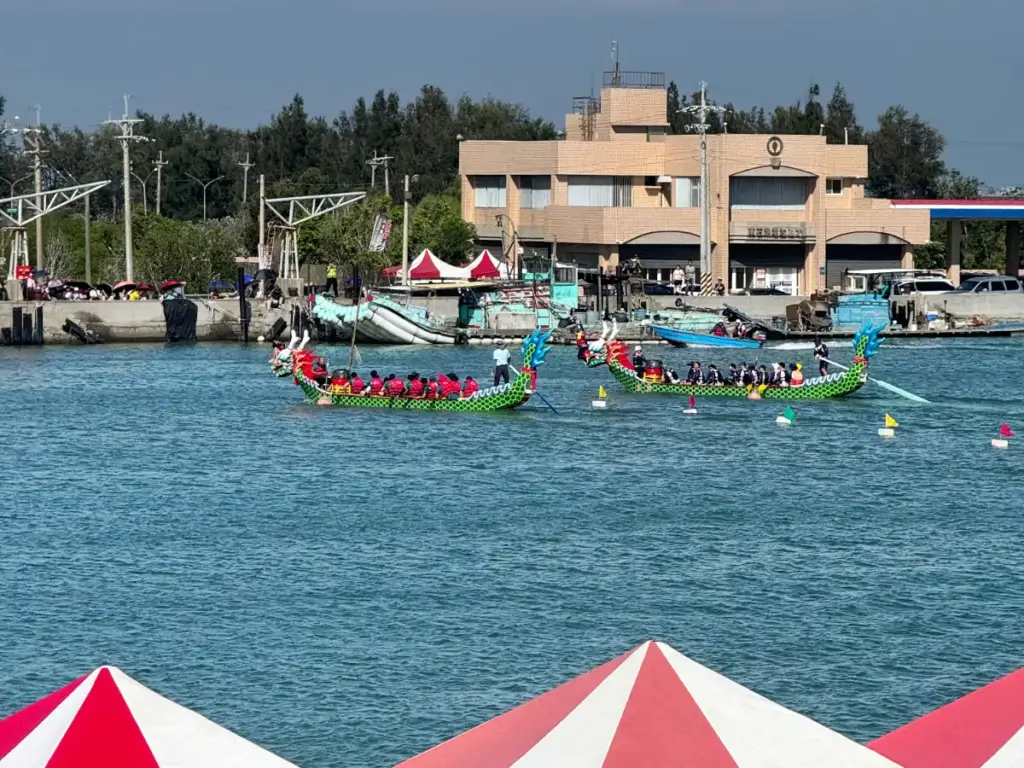
After the breezy scooter ride, stepping into the Fisherman’s Wharf was like flipping a switch. The quiet of the road was instantly replaced by the sound of drums from where the boat races were being held. We hadn’t even seen the water and we could already hear the drumming.
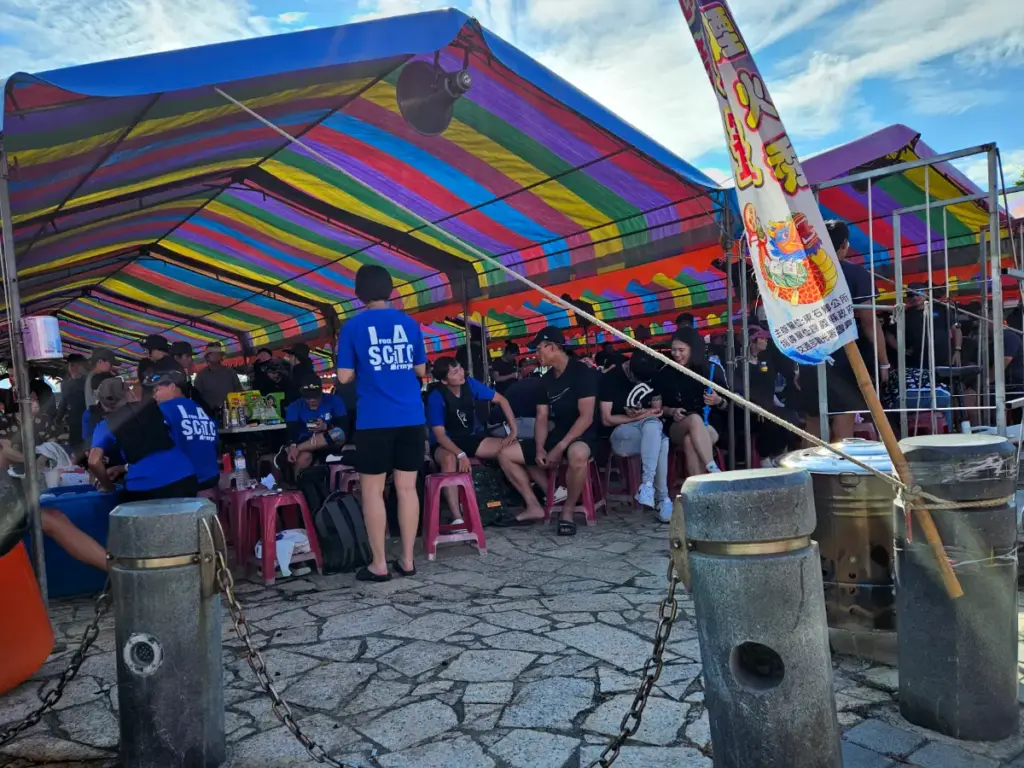
There were already a lot of people. Vendors yelling out from their stalls, children playing, chatter everywhere. The harbor was lined with colorful tents and packed with locals cheering for their favorite teams.
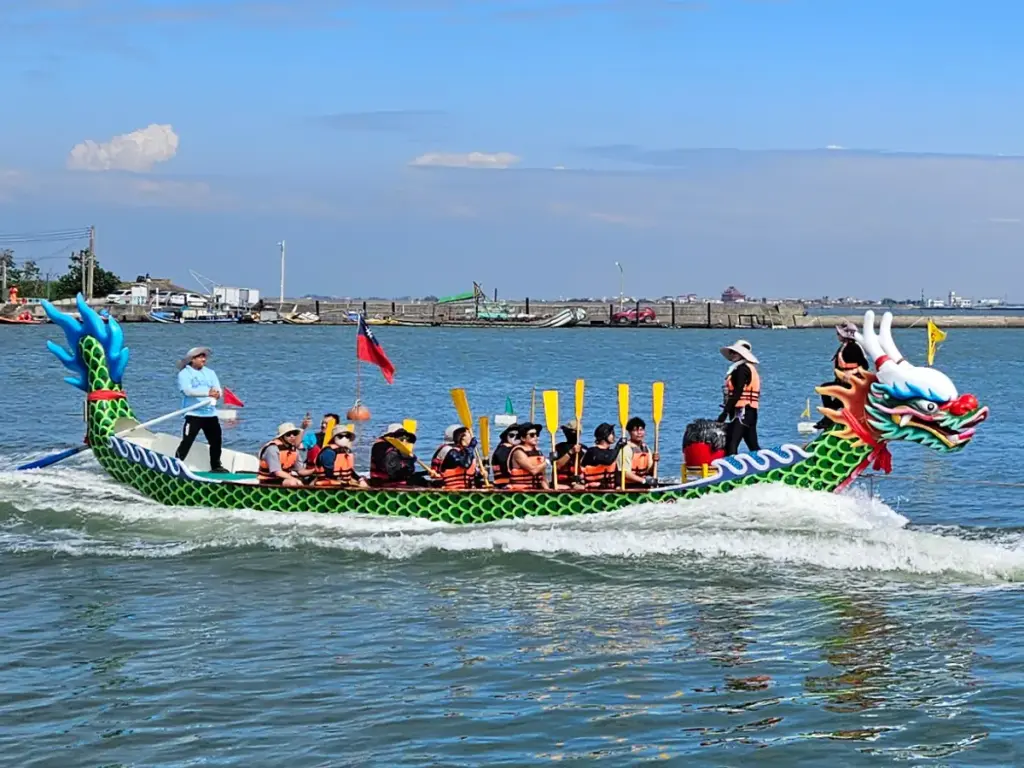
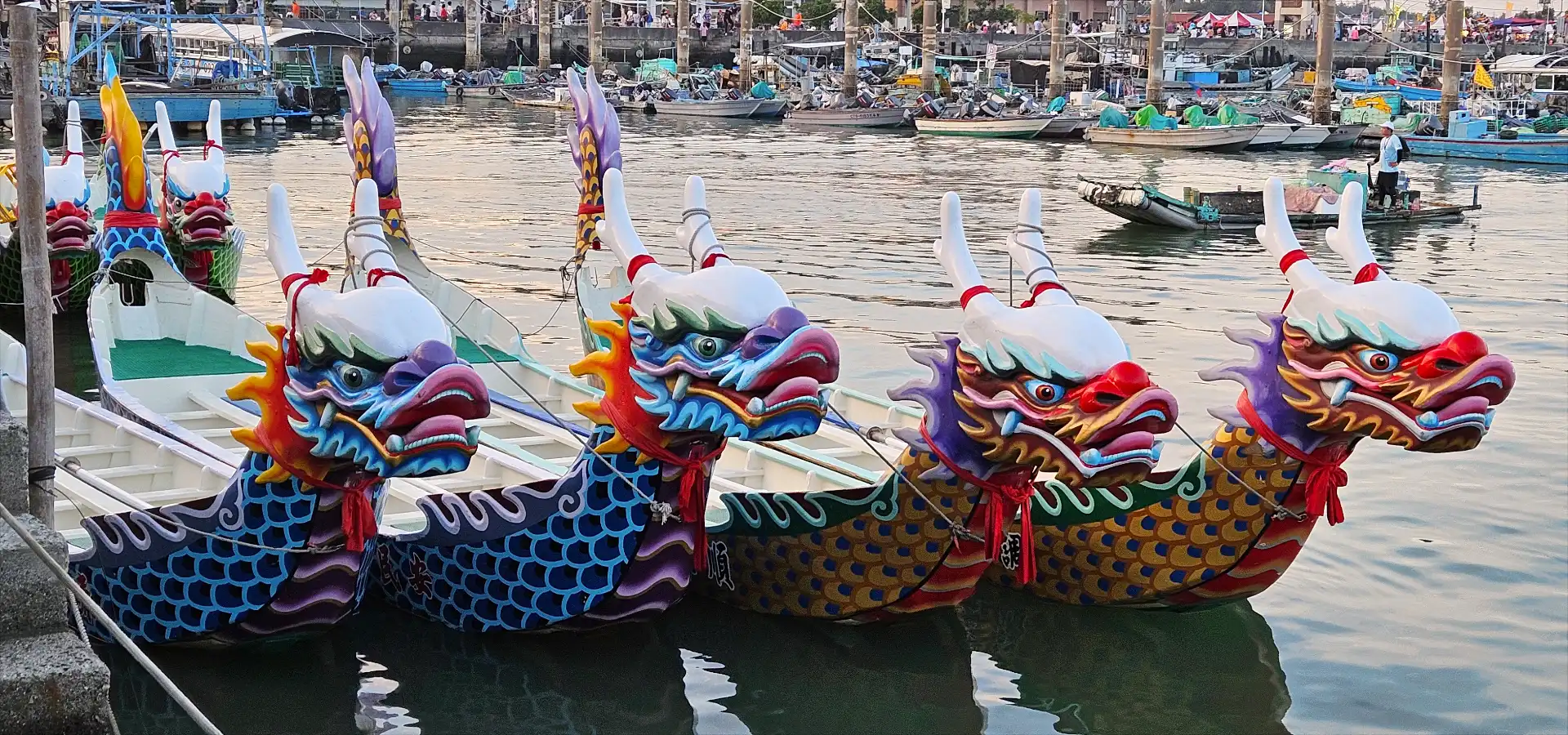
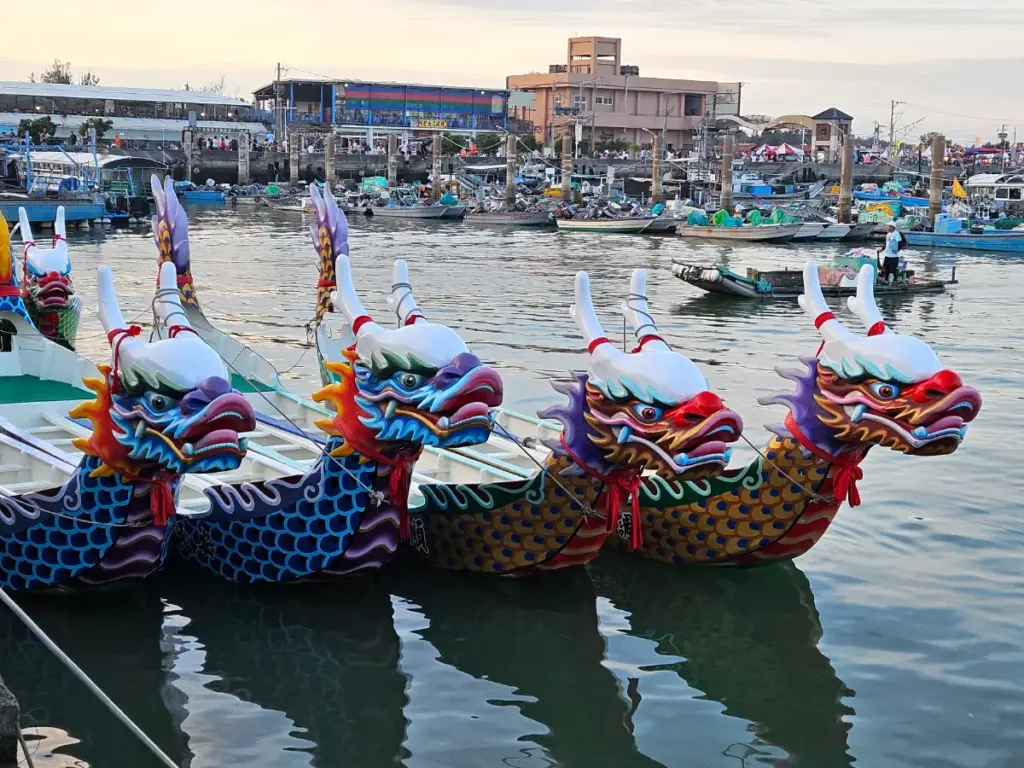
When we finally made our way to the water’s edge, we were amazed by the colorful dragon boats and the rowers who paddled in sync, their movements dictated by the drummer seated at the front of each painted dragon boat.
Exploring the Food Stalls and Beating the Heat
Of course, Taiwanese festivals are just as much about the food as they are about the activities. We wandered through bustling food stalls, the air filled with the smell of sizzling meat and hot oil.
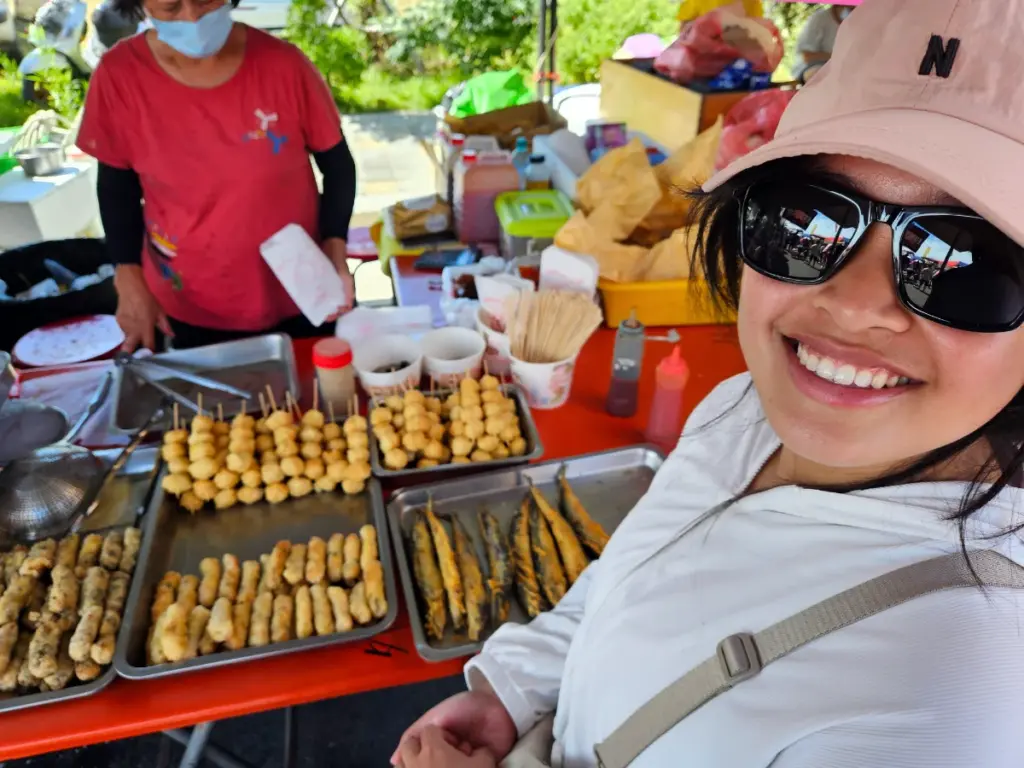
There were vendors everywhere selling local sausages, snails, skewers of fried seafood, mango slushies, and many many more. The nearby restaurants were just as packed, filled with families enjoying massive plates of fresh seafood.
It was a day of constant eating. We’d walk to find a new vantage point for the races, pass a stall selling something irresistible, and inevitably stop to buy it.
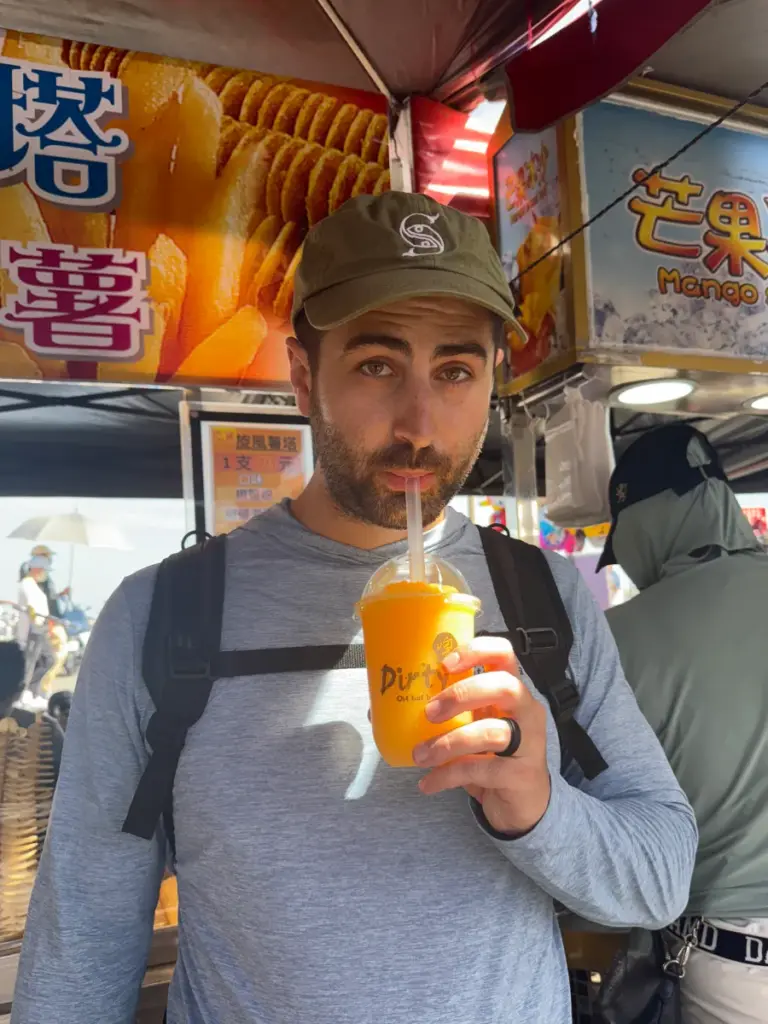
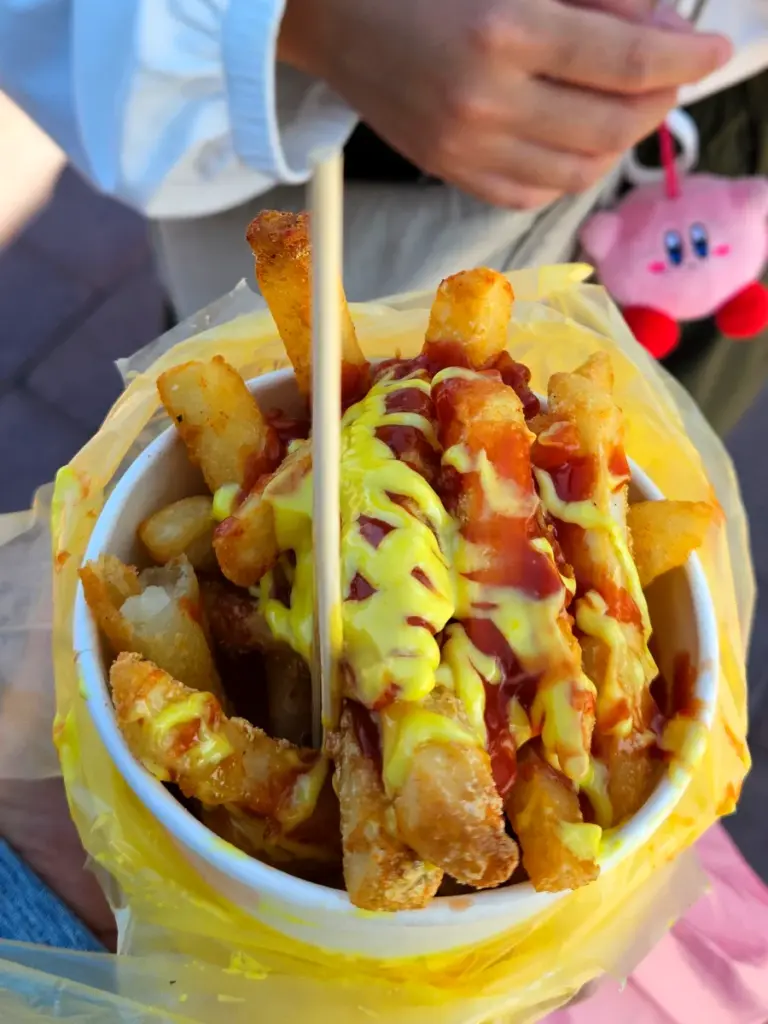
The mango slushy was so refreshing (and a lifesaver when I started overheating). The dumplings were meaty and delicious. We even had french fries drizzled with mustard and ketchup because we wanted to have festival food we were familiar with as well (although the mustard drizzle is still new to me).
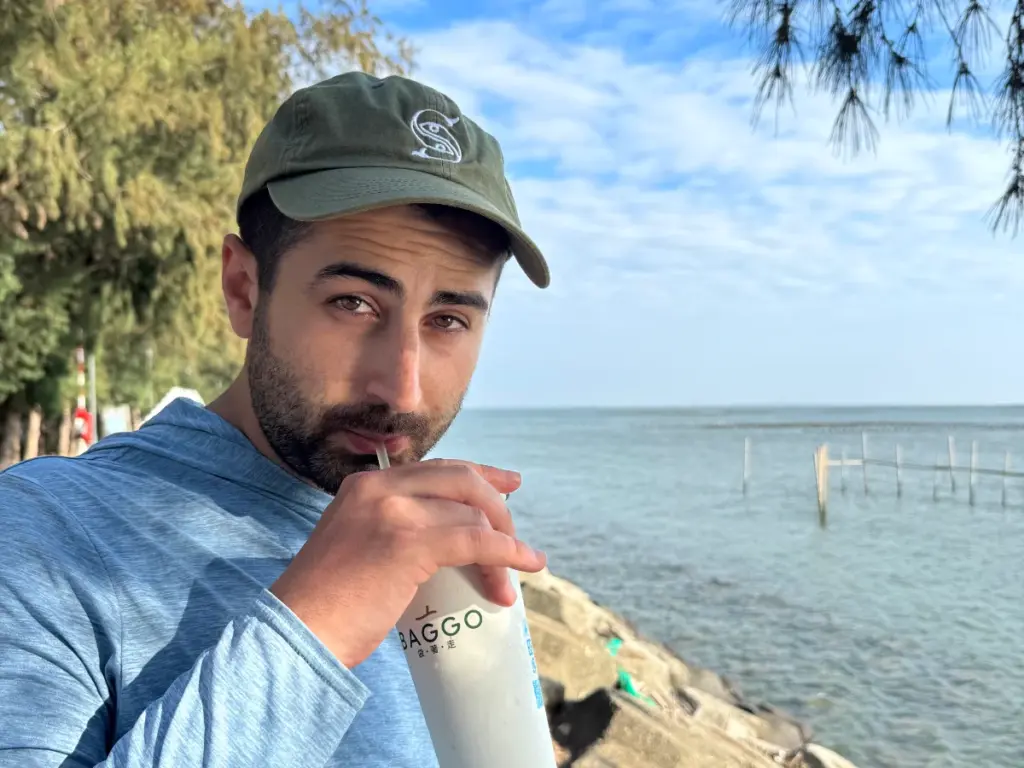
By mid-afternoon, we stopped by a cafe for iced milk teas and found a quiet spot under a tree where we could savor our drinks, enjoy the ocean breeze, and just soak in the festival energy.
The Grand Finale
As the sun began to set, the energy of the Dragon Boat Festival started to wind down. Families began packing up their belongings and gathering tired children. The painted dragon boats were finally docked after surviving a long day of competition.
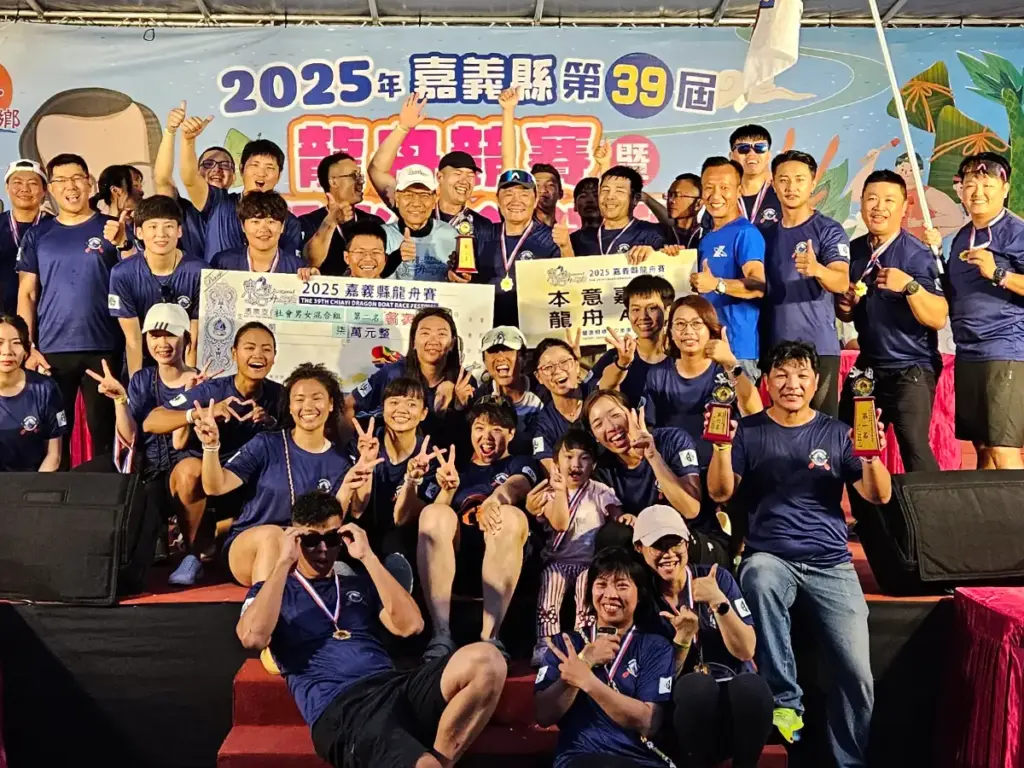
We made our way to the main stage, where the awards ceremony was underway, filled with music and medals.
The entire event was in Taiwanese and Tim and I didn’t understand any words being spoken, but it was impossible not to get swept up in the energy of the crowd and we cheered alongside the locals for the winning teams.
We still had to make our way back to Chiayi so we decided to head out before it got too dark. We were just making our way back to where we parked our scooter when we heard the unmistakable sound of fireworks. We almost missed it!
Standing there on the edge of the festival grounds, watching the vibrant colors explode over the harbor, it was the most spectacular, unexpected end to a long, hot, and deeply memorable day.
Tips for Experiencing Local Festivals in Taiwan
If you are planning to attend a local Taiwanese festival, here are a few tips to help your day run smoothly.
Scooter Rentals and Rules of the Road
You need an International Driving Permit (IDP) to rent a scooter as a foreigner. Always wear your helmet and stick to the dedicated scooter lanes. And never forget the two-stage left turns. On larger roads, scooters cannot turn left directly. You must proceed straight into a painted “motorcycle box” in the intersection and wait for the light to change in your intended direction.
Beating the Summer Heat
Summer in Taiwan is scorching. A lightweight sunshirt, a hat, sunglasses, and high-quality sunscreen are essential. Bring plenty of water and definitely take advantage of the local iced tea and slushy stands when you need a cooldown!
Cash is King
These festivals are locally run and the food stalls and games are gonna need cash. Bring enough to enjoy your day fully. You don’t want to skip out on a mango slushie because you ran out of cash halfway through the day.
Conclusion
Taking part in the festivities, getting to see exciting races and melting into the crowd of festival goers waiting for their order of dumplings, really puts the joy in traveling.
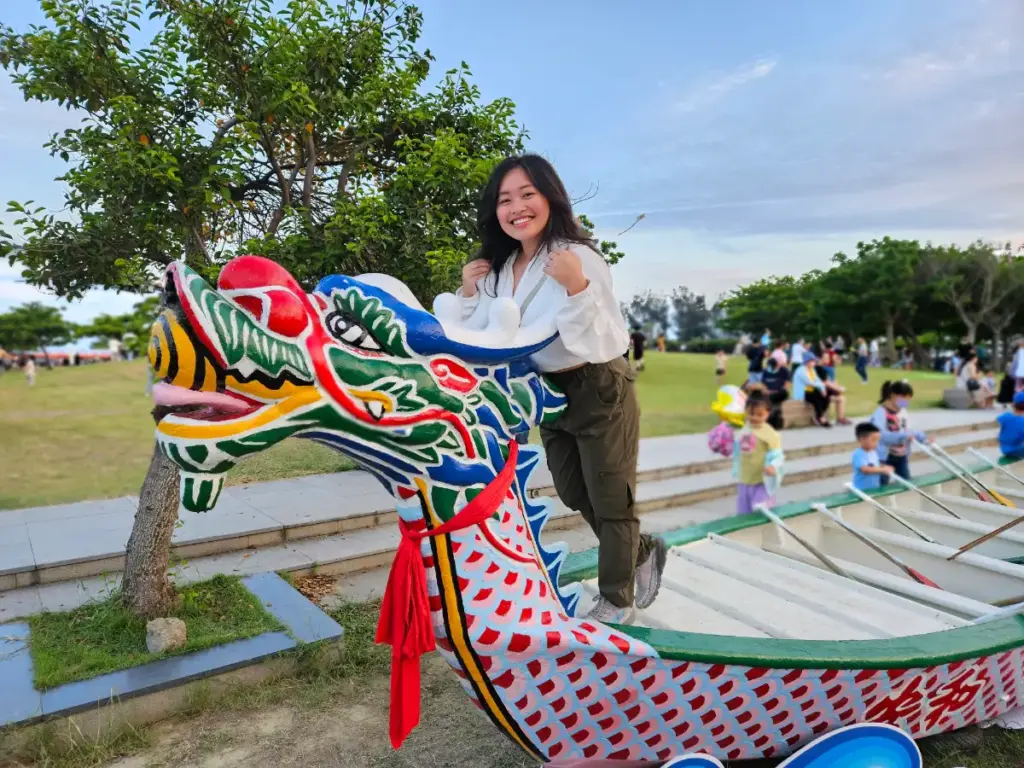
But the experience of taking part in a family’s traditions for the Duanwu jie and gaining a deeper connection with the festival and the people who celebrate it is exactly why we love slow travel.
We get to really learn about the culture. We get to learn the meaning behind the ghost money, standing over a hot stove to honor ancestors we’ve never met, and saying a wholehearted “yes” when a local invites us to share in their traditions.
Planning your next trip but don’t know where to start?
Join our newsletter to get our free Slow Travel Toolkit!
It includes our essential pre-departure checklist, a budget guide and tracker, and the packing list we used for 15 months of travel.

Leave a Reply