
If you ask me what my favorite part of traveling is, I will definitely say it’s the food. Even more specifically, the street food. There’s always something new and delicious to try, and there’s just something so exciting about trying out unique tastes and seeing how each culture approaches different ingredients. It’s such a fun way to get to know more about your destination.
So when Tim and I looked into the must dos in Fukuoka and read about yatai, we immediately added it to our plans.
Table of Contents
What Are Yatai?
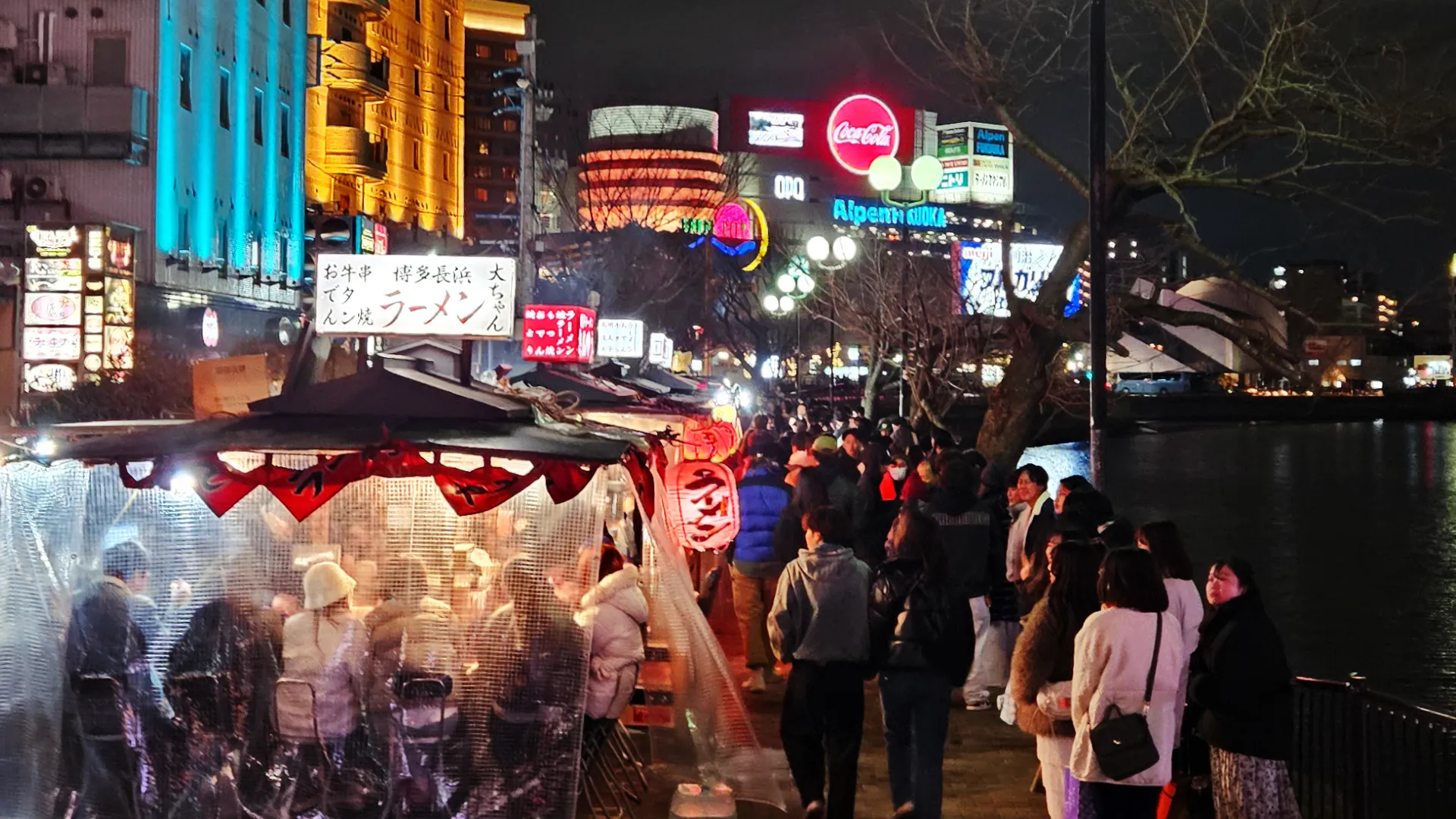
If you’re walking around Fukuoka at night and you pass by a small warmly lit stall with people sitting clustered together and the delicious smell of grilled meat in the air, you’ve probably stumbled upon a yatai.
Yatai are Japanese food stalls serving traditional street food like ramen and gyoza, as well as drinks like beer and sake. You can visit them in the evenings, from around 6pm to 2am.
Space is limited at a yatai, where maybe 8 to 10 people are seated at a time, so you’re sitting shoulder to shoulder with other patrons. This just means that you can get to know your neighbors, locals and travelers alike, over some drinks and delicious food.
You can find the biggest collection of yatai in the Nakasu and Tenjin areas, which are easily accessible by both bus and subway. The energy here is vibrant, with stalls lining the streets, warm glowing lights from lanterns, and laughter filling the air from people waiting in line. Yatai are super popular with tourists, so plenty of the stalls will offer English menus.
The Yatai Experience
After spending a cold February day window-shopping and getting lost in the Tenjin Underground Mall, Tim and I decided to end the night by visiting a yatai. The place we went to is listed as なんしようと屋 on Google Maps.
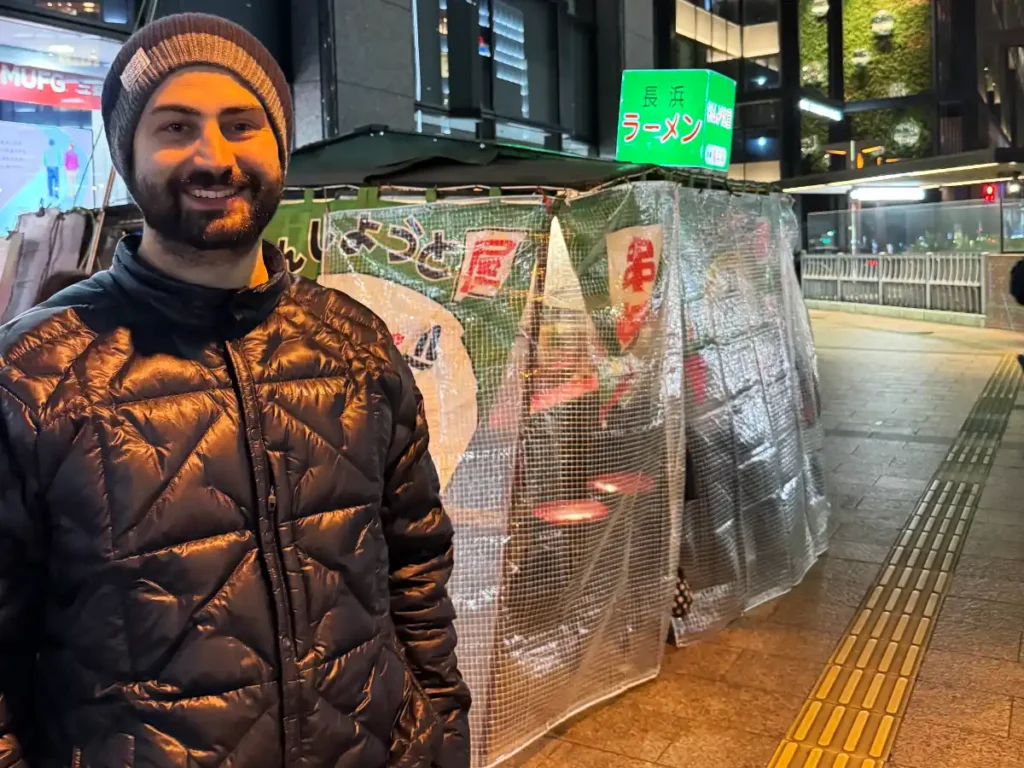
We weren’t sure exactly how to even enter a yatai, but we saw a group of four standing outside the stall so we decided to stand behind them. A few moments later, a woman peels back a section of clear tarp covering the stall and beckons us in.
Inside the stall is such a stark contrast to the outside world. Here, you are protected from the cold February winds by the tarp lining the stall. You’re kept warm by the heat of the oden simmering in its pot, from the heat of the charcoal where yakitori (skewers of grilled meat) are being grilled to order, and from the warmth of the bodies lining the counter where you sit shoulder to shoulder with your neighbors. It’s a loud and lively environment, with patrons calling out their orders and friends chatting over beer.
We sat there, taking pictures of the menu to translate, when the man next to us leaned over and asked us if it was our first time visiting a yatai. He looked like he had just gotten out of work, with his nicely tailored suit, clean haircut, and bright smile, and he also happened to be a regular. We immediately said yes and he immediately started pointing out his favorite menu items.
He called out to the stall owners and ordered for us two servings of his favorite yakitori, enoki mushrooms wrapped in pork.
It was so delicious.
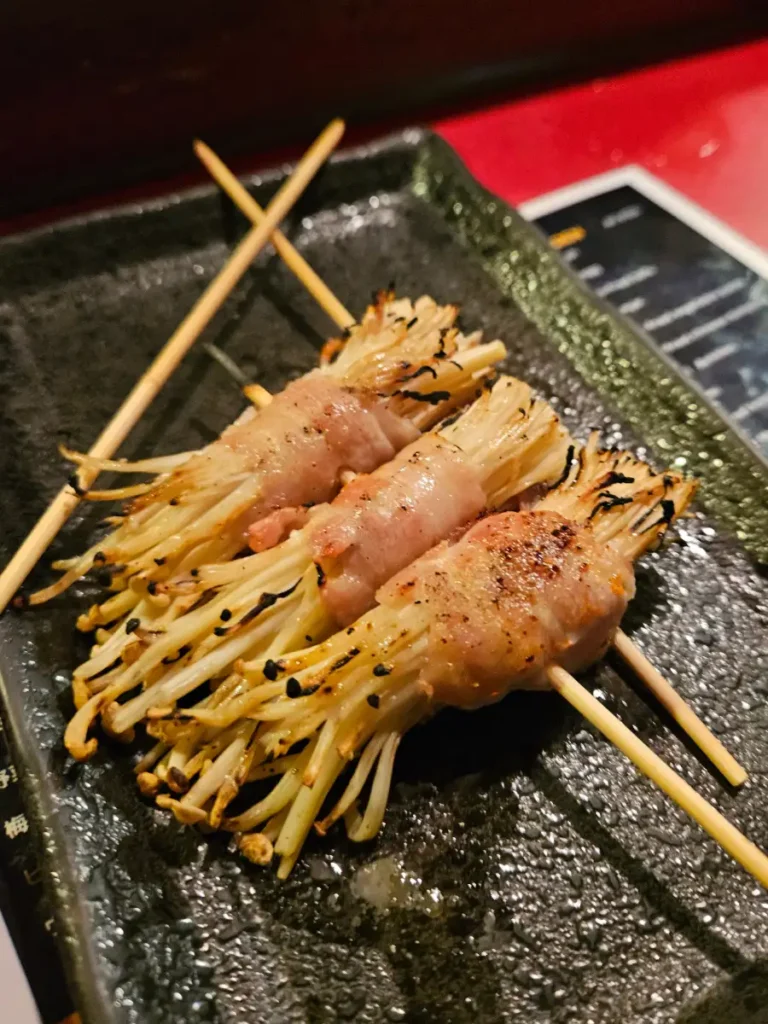
The enoki mushroom captured the charcoal flavor from the grill, and their springy texture gave such a satisfying chew. The pork wrapped around the mushrooms was so succulent, with the perfect amount of grease to leave us wanting a refreshing sip of soda.
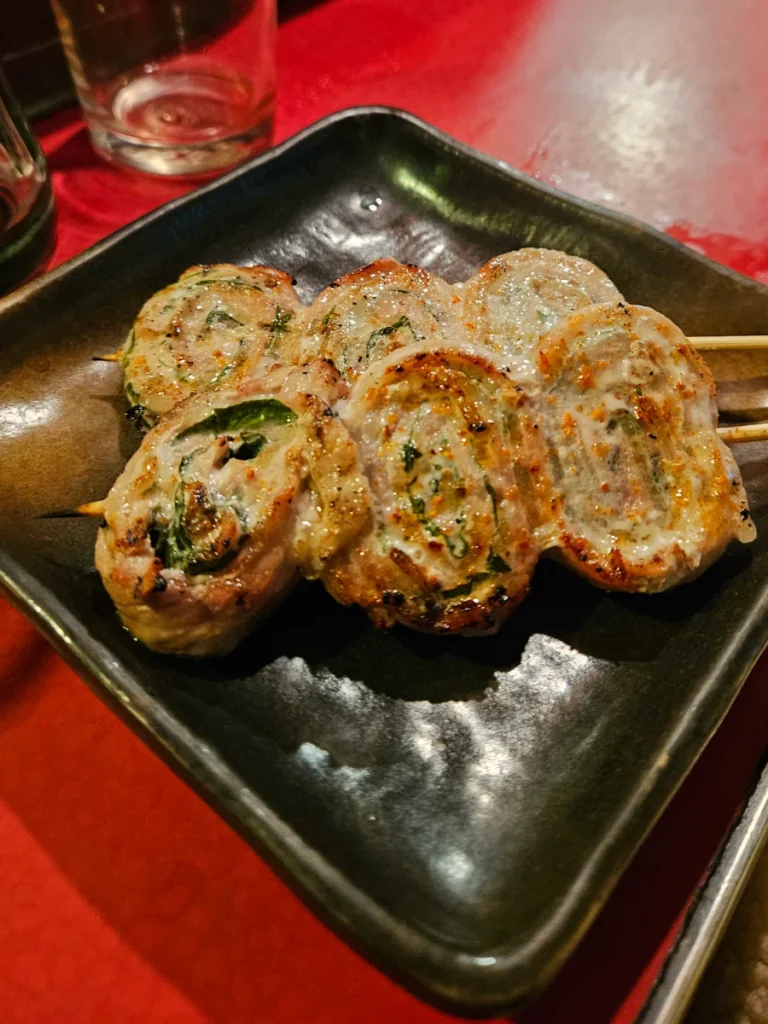
We immediately ordered more yakitori after that: pork belly and shiso leaf pinwheels, and pork belly wrapped around green onion. Our new friend approved.
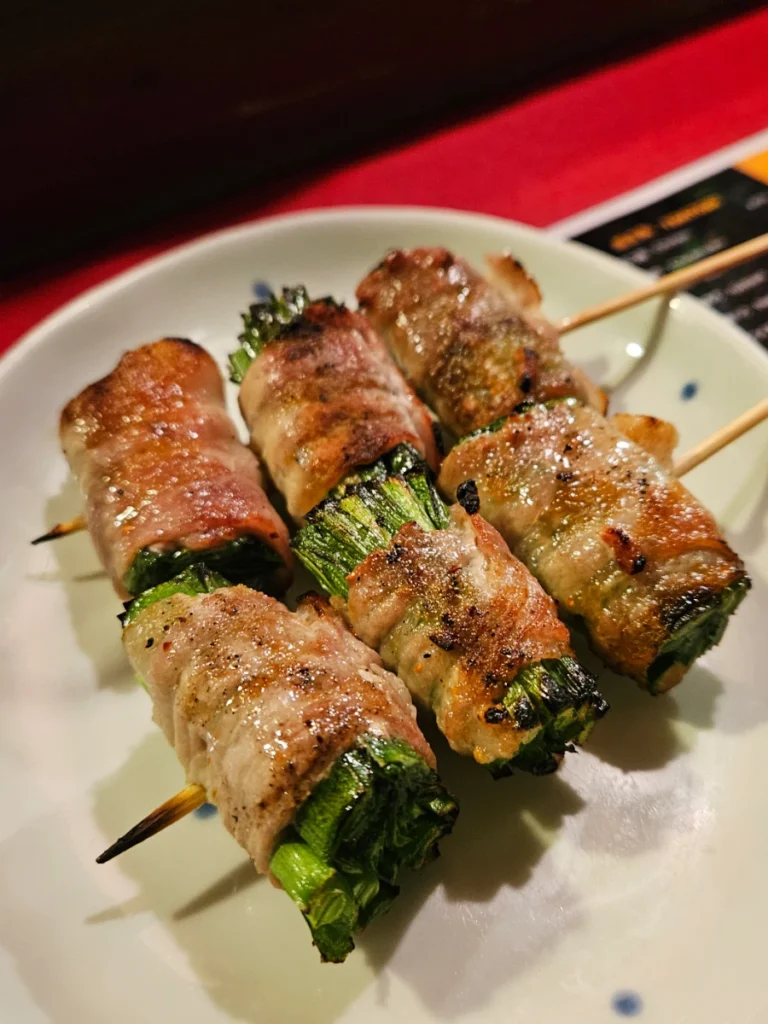
While waiting for the food to be grilled, we chatted with our friend about his favorite things to do in Fukuoka, as well as our plans on what we were doing on our visit. He loves walking by the beach at Momochi Seaside Park and catching a baseball game at the stadium there, and we told him that we were planning on biking around Shikanoshima Island.
When it was time for him to leave, he made sure to tell us that we needed to end our meal with a bowl of Hakata ramen. I’m not sure if this is a Fukuoka custom or his personal tradition but we took it to heart.
But before ending the meal with ramen, we decided to try oden first. Oden is a stew made up of different kinds of ingredients like tofu, radish, fish cakes, and boiled eggs in broth. When you order, you don’t simply say that you want oden. Instead, you pick out exactly what ingredients you want from the pot. We got tofu, radish and konjac, and it was served with a dollop of mustard on the side. So simple. So comforting.
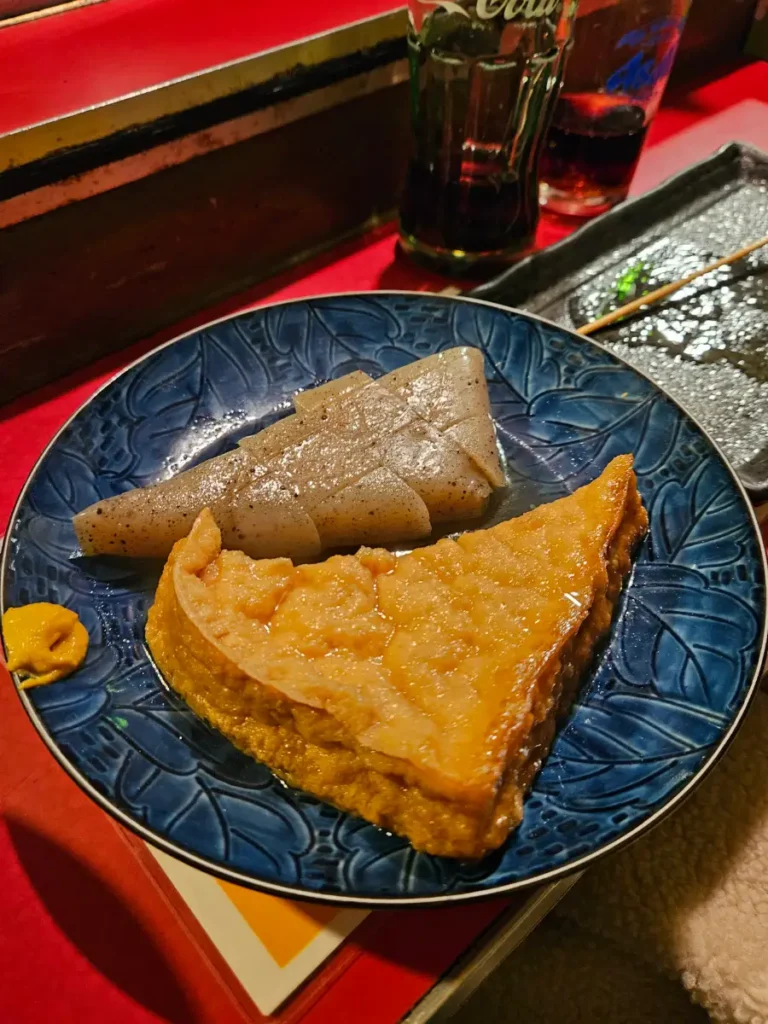
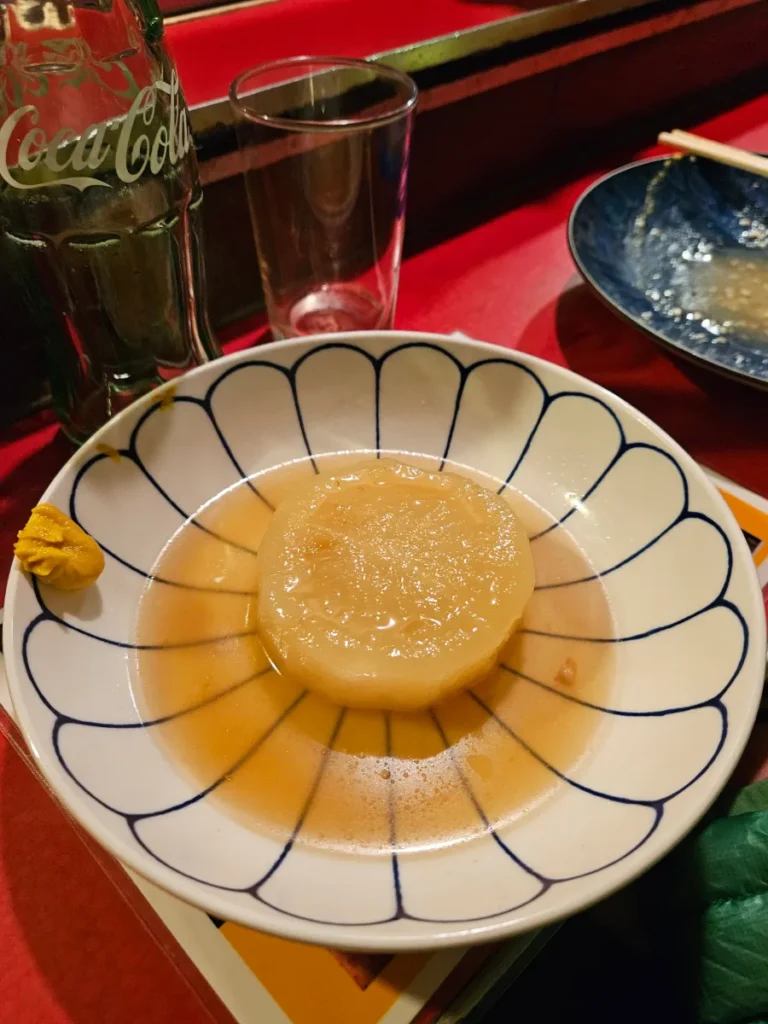
Since the yatai is so small, there’s a constant turnover of people so you could end up sitting with different groups of people in one night. While enjoying our oden, we struck up a conversation with our new neighbors, Osaka native Asami-san and her group of friends. We shared stories about our travels and she gave us a few pointers for when we visit Osaka. We now have plans to meet for dinner when we get to Osaka!
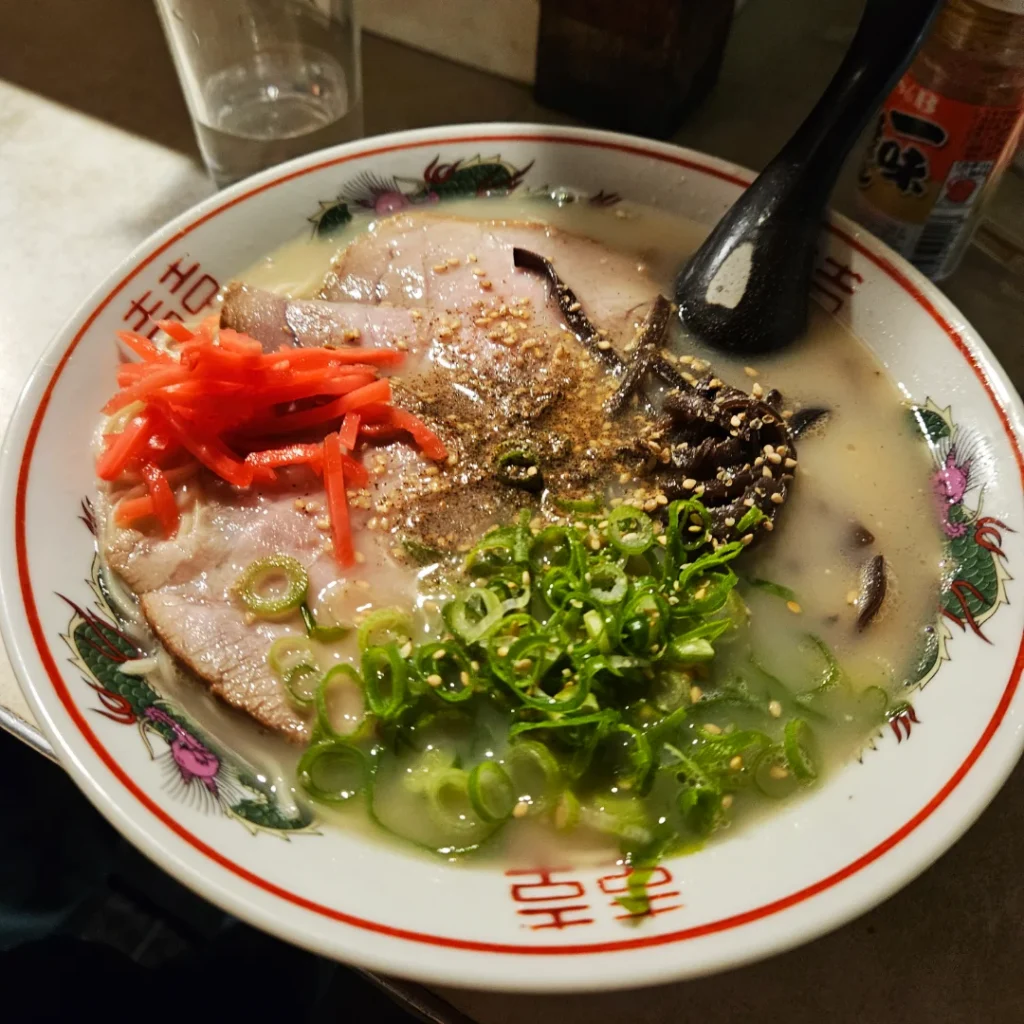
Finally, we ordered our bowl of Hakata ramen. You cannot go to Fukuoka without getting a bowl of this ramen. It originates in Fukuoka and is made with thin noodles in tonkotsu (pork bone based) broth. The broth made from pork bones is simmered for hours until it gets this cloudy milky look and super rich and mouth watering flavor. It’s then topped with slices of chashu pork, green onions, and pickled ginger.
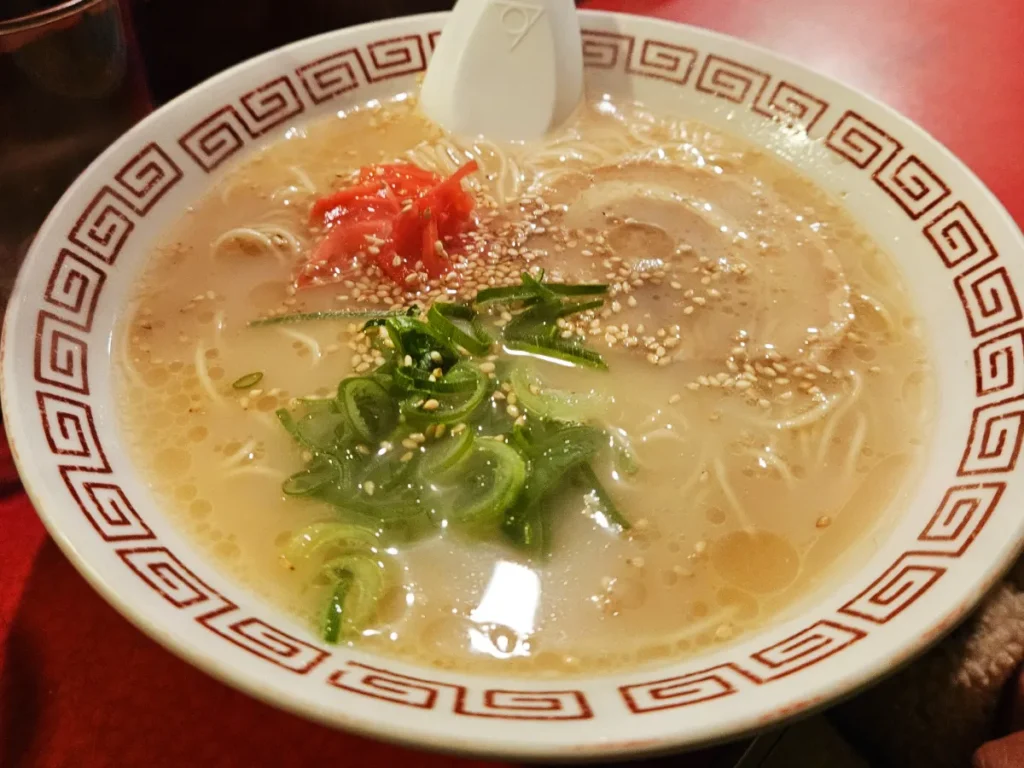
We were so excited as we watched the owner ladle warm broth from a huge pot into a bowl of noodles. And the taste – amazing.
As we walked out of the yatai, through the clear tarp, and out into the cold street, we couldn’t help but laugh at how surreal that experience was. We got to meet amazing people, eat amazing food, and walk away with full bellies while smelling like charcoal.
Another Day, Another Yatai
Two days later, Tim and I decided to make a quick stop at another yatai, Nasuno Daihachi. We were greeted by a very boisterous man who welcomed us in and took our orders.
We ordered whiskey highballs and two orders of pork belly yakitori (followed by an additional four). We shared a kanpai (cheers!) with the elderly couple next to us, clinked our glasses, and settled down for lively night of food and good company.
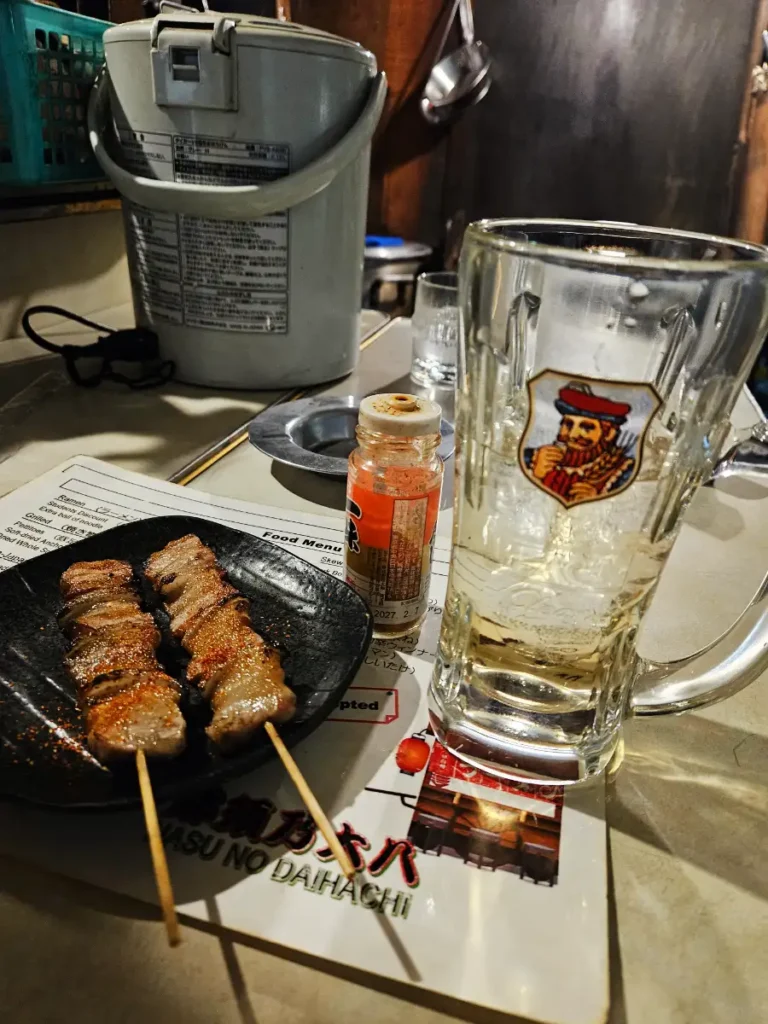
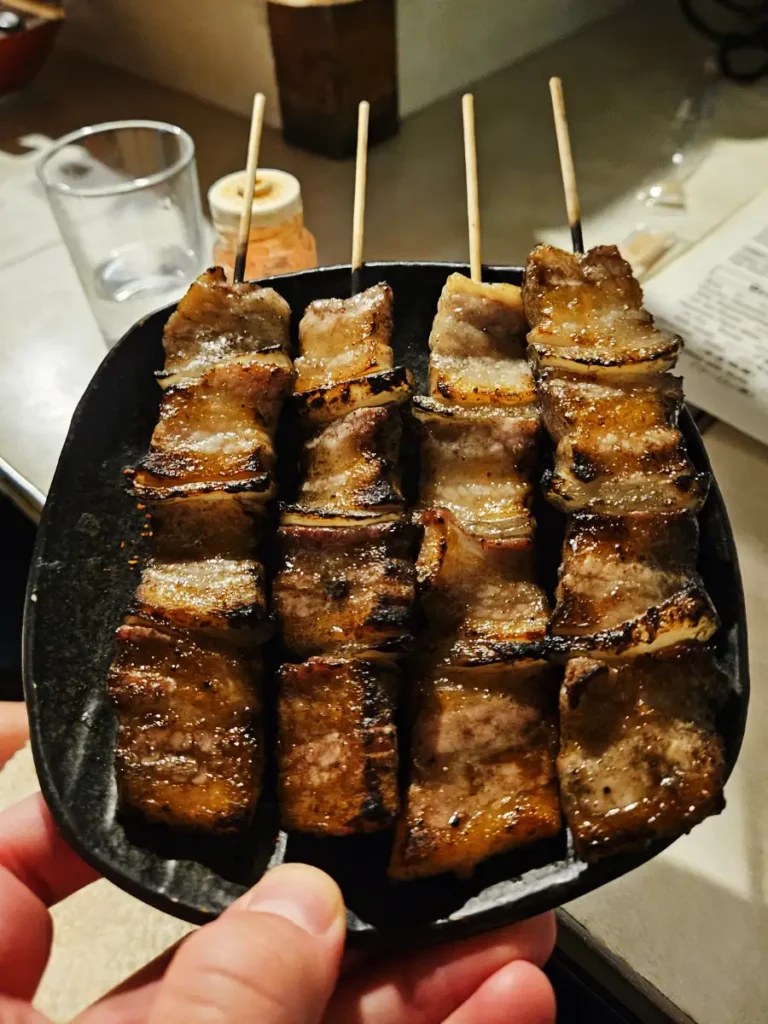
We learned from the couple that they had actually just retired (a kanpai as we drank to their retirement!), that they were planning to travel around Japan in a campervan (another kanpai because how cool is that?), and that they were at the stall to visit their son, the boisterous man who greeted us when we first came in (another kanpai for family!).
The combination of the juicy pork belly, the refreshing alcohol, and the lovely conversation – heavenly.
We once again ended the visit with a bowl of Hakata ramen, and it might be our favorite bowl to date.
Tips For Visiting a Yatai
- No restrooms. Since yatai are food stalls, there’s no designated restroom for the public to use. Instead, try to find the closest public restrooms or convenience stores near you. At some point during our visit to Nasuno Daihachi, a group of girls wanted to use the restroom so they invited me with them and we used the public restrooms at the Tenjin Underground Mall.
- Bring cash. While credit cards are widely accepted in Fukuoka, not a lot of food stalls accept them. You can withdraw cash at the nearest 7-Eleven near you!
- Because yatai have to be set up each time, stalls are closed during bad weather.
- Be aware that some stalls have otoshi, an appetizer surcharge. This is a compulsory appetizer with the charge added to your bill. Check the price sheet or ask before you order.
- Stalls are closed one day a week, but which day differs based on the stall. So if there’s a particular yatai you really want to go to, look up what days they’re open!
Conclusion
So when you’re in Fukuoka, don’t forget to visit a yatai. It’s a great way to enjoy delicious food, get to know new people – locals and tourists alike, and take part in the local culture.
You get to trade stories over skewers of grilled meat, share laughter over drinks, and enjoy a piece of Fukuoka history through a bowl of Hakata ramen.
And when you do visit yatai, let us know your favorite foods in the comments below!
Planning your next trip but don’t know where to start?
Join our newsletter to get our free Slow Travel Toolkit!
It includes our essential pre-departure checklist, a budget guide and tracker, and the packing list we used for 15 months of travel.

Leave a Reply